Birding · migration · bird species

Birding in South Africa: the best birding areas

Birding in South Africa means switching between savanna, fynbos, highland grassland, coastal lagoons, wetlands and the Kalahari in a single trip. Discover where to go birding in South Africa, which nature reserves are easy to reach, which species to expect in each season and how to plan your own birding trip.

  • Expected bird species by location
  • Birding hotspots worldwide
  • Keep your own species list
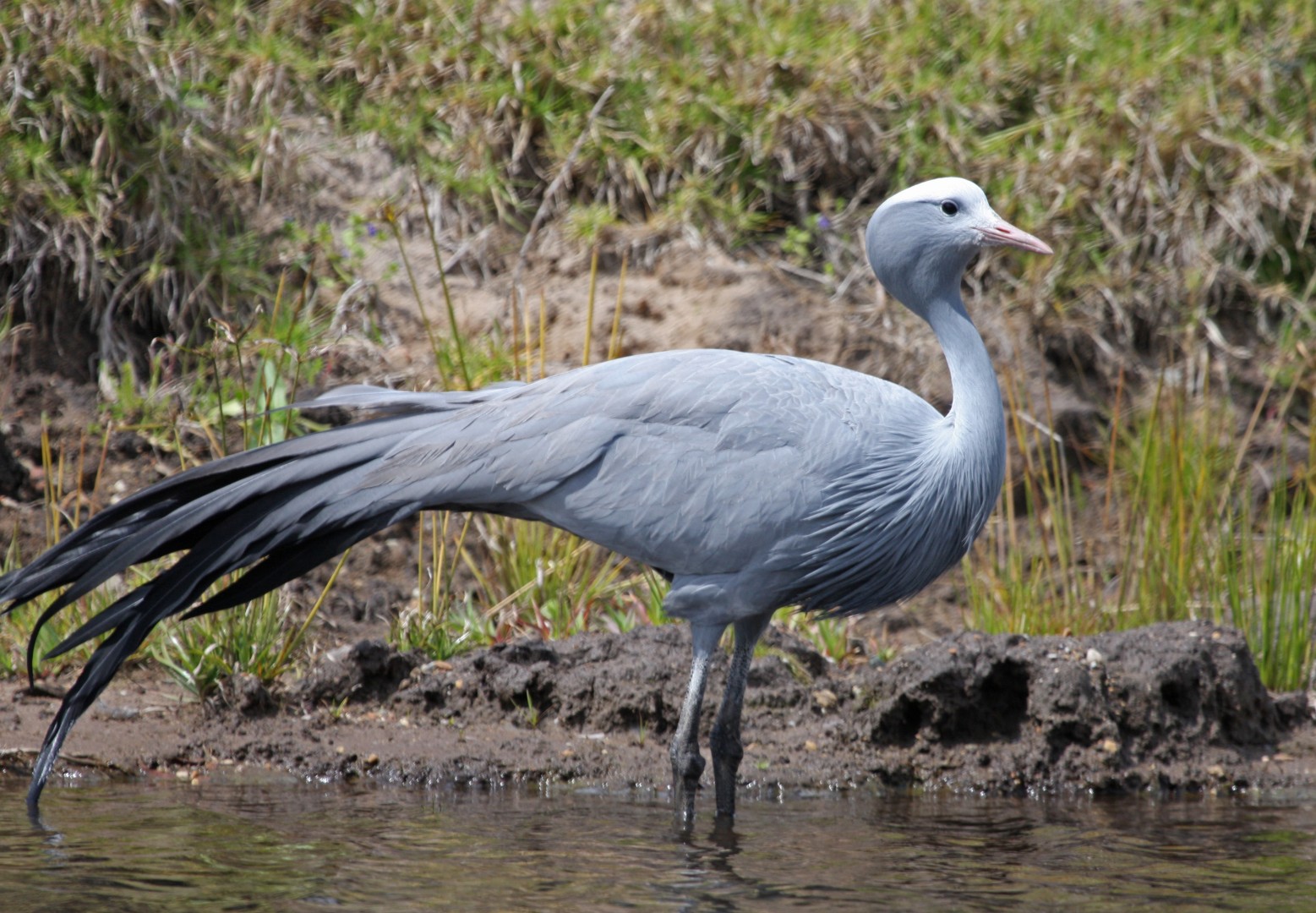
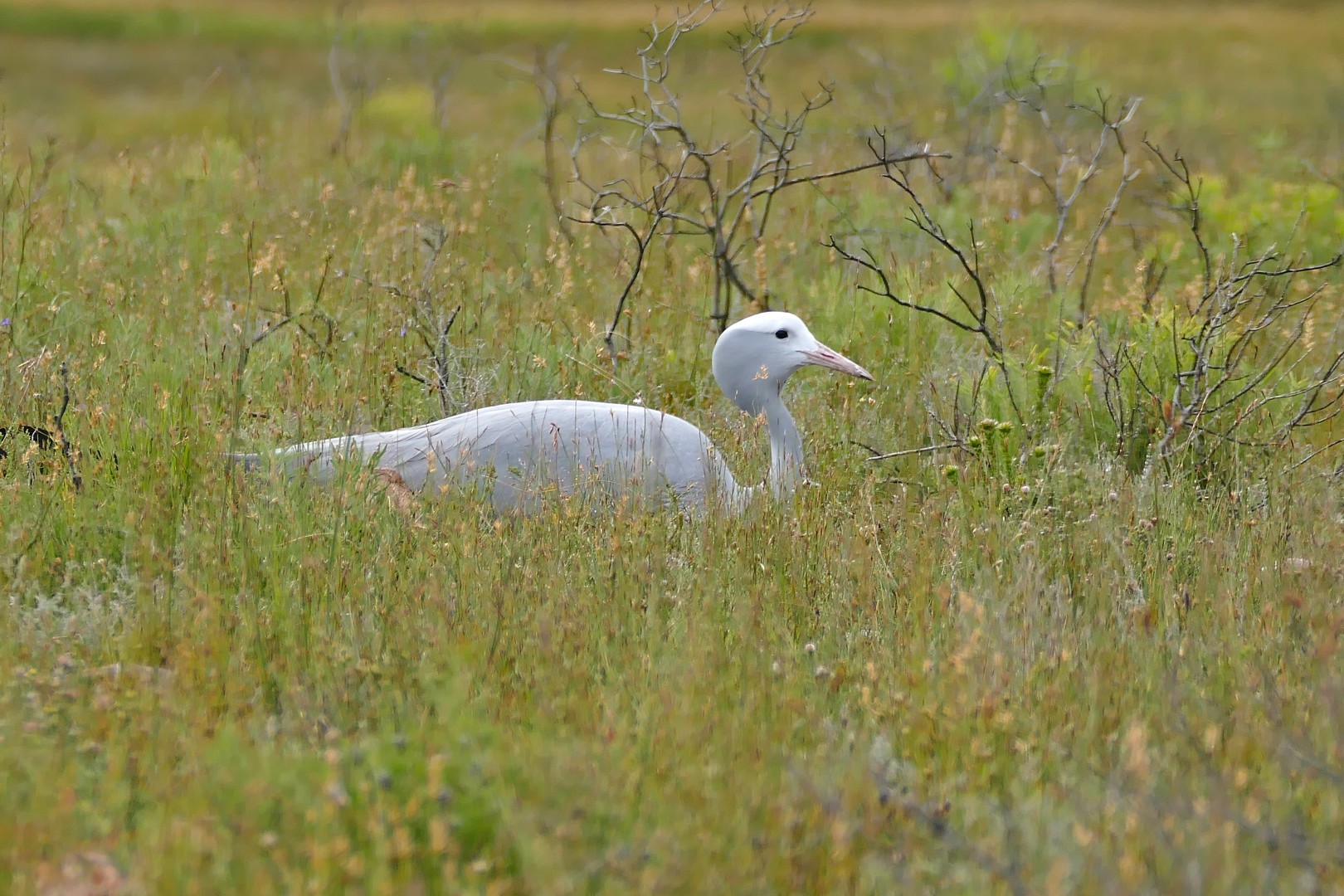
Blue Crane among the grass in Bontebok National Park, South Africa
National bird of South AfricaThe Blue Crane
Photo: Blue Crane, Bernard Dupont, Wikimedia Commons · CC BY-SA 2.0.

Why go birding in South Africa?

South Africa is one of Africa’s most diverse birding destinations

From the fynbos slopes around Cape Town to the riverine forests of Limpopo and the open wetlands of KwaZulu-Natal, South Africa’s key bird habitats are spread across strikingly different regions. That makes it possible to build a birding trip around very different species, landscapes and climates.

In the north and east, savanna, bushveld, rivers and waterholes shape the birding experience. The dry season often makes birds easier to spot around drinking points, while summer rains turn the landscape green and bring songbirds, cuckoos, bee-eaters and raptors to life. In Kruger National Park, Mapungubwe and iSimangaliso, you can also combine excellent birding with a self-drive safari.

In the western and southern provinces, the focus shifts to fynbos, coastal lagoons, grasslands and forests. The Cape region is especially good for species rarely seen elsewhere, the West Coast is famous for migrants and waders, and Wakkerstroom offers a completely different birding experience with cranes, larks and grassland specialists. FaunaMap helps you check recent sightings, birding points, hotspots and expected species for each area before you set out.

Landscapes and biodiversity

The main bird habitats in South Africa

The best birding areas in South Africa are often defined by their habitat. Including savanna, fynbos, wetlands, grassland, Kalahari and indigenous forest in your plans gives you a much more complete picture of South African bird diversity.

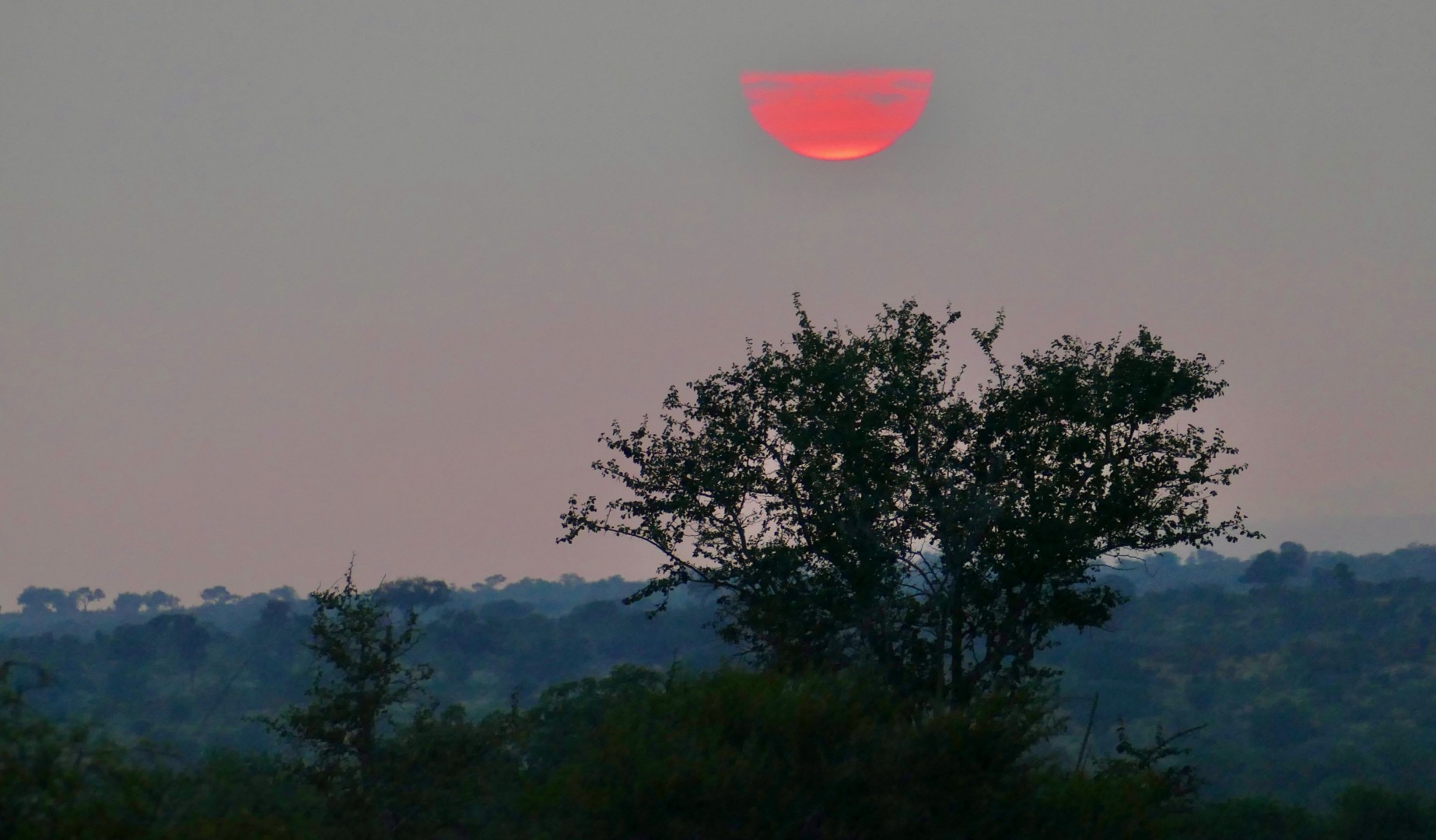
Red sun over a savanna landscape with tree silhouettes in Kruger National Park, South Africa
Bernard DUPONT · CC BY-SA 2.0

Savanna and bushveld

The savanna of Limpopo, Mpumalanga and KwaZulu-Natal is the classic birding habitat of a South African safari. Open grassland, acacias, mopane woodland and riverbanks attract many different species in a short time. Waterholes, picnic sites and rest camps are often excellent places to stop and scan at your own pace.

Typical species

  • Lilac-breasted Roller
  • Southern Ground Hornbill
  • Bateleur
  • African Fish Eagle
  • Southern Yellow-billed Hornbill
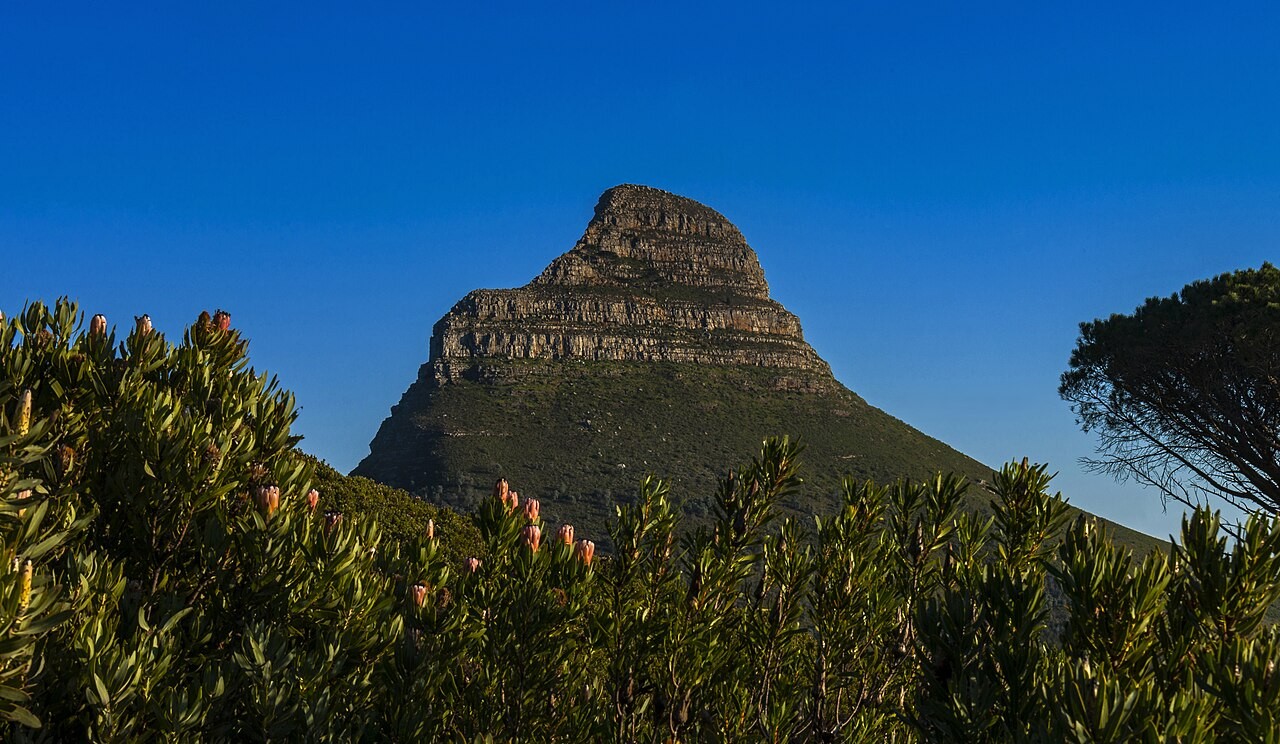
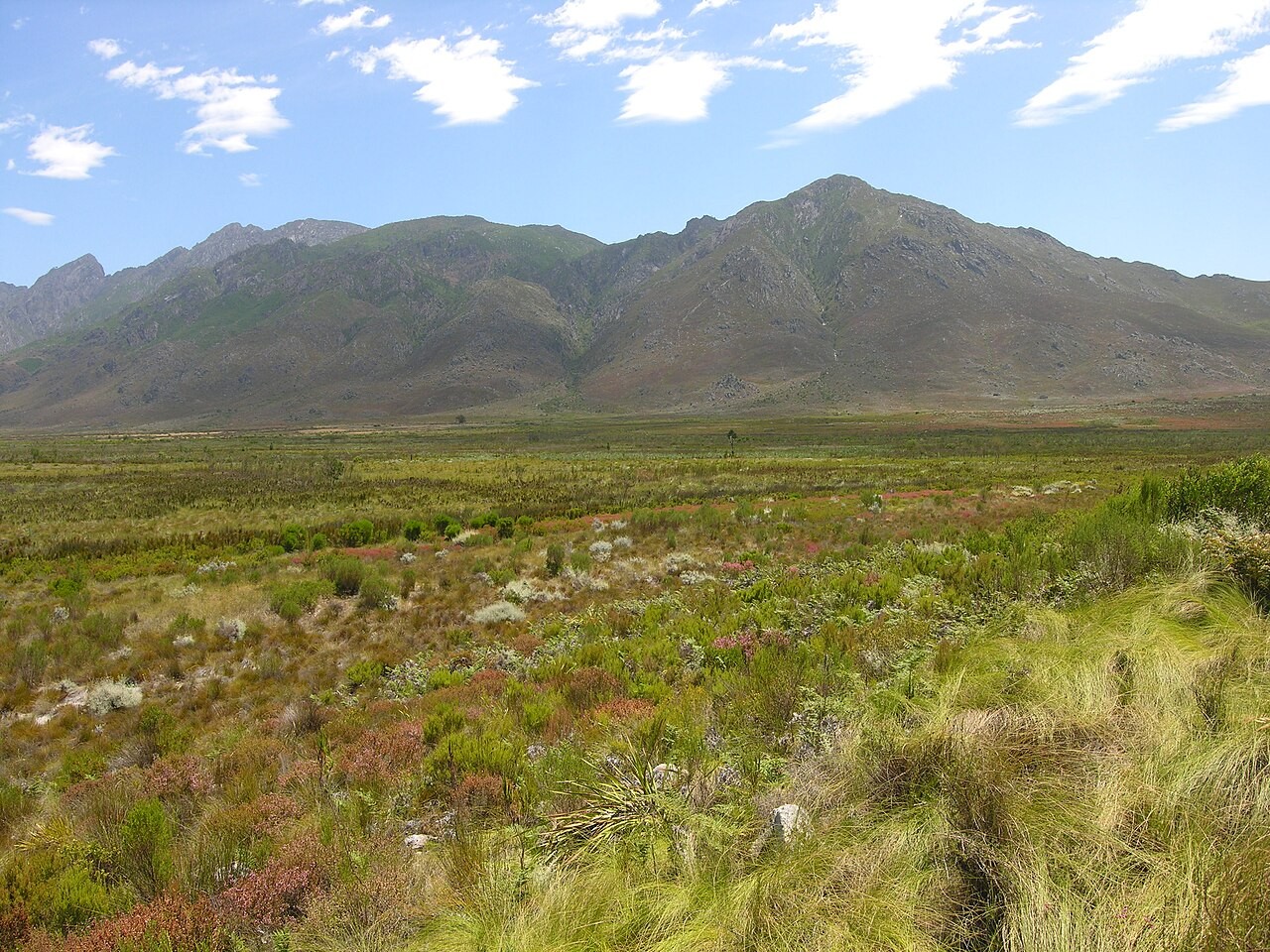
Fynbos landscape near Franschhoek in the Western Cape
Chris Eason · CC BY 2.0

Fynbos and Cape mountains

Fynbos is one of South Africa’s most distinctive landscapes. On mountain slopes, among proteas and ericas, and along the coast, you can find small, specialized songbirds and sunbirds. When proteas and other fynbos plants are in bloom, some sites become especially attractive to nectar-feeding birds.

Typical species

  • Cape Sugarbird
  • Orange-breasted Sunbird
  • Malachite Sunbird
  • Cape White-eye
  • Cape Grassbird
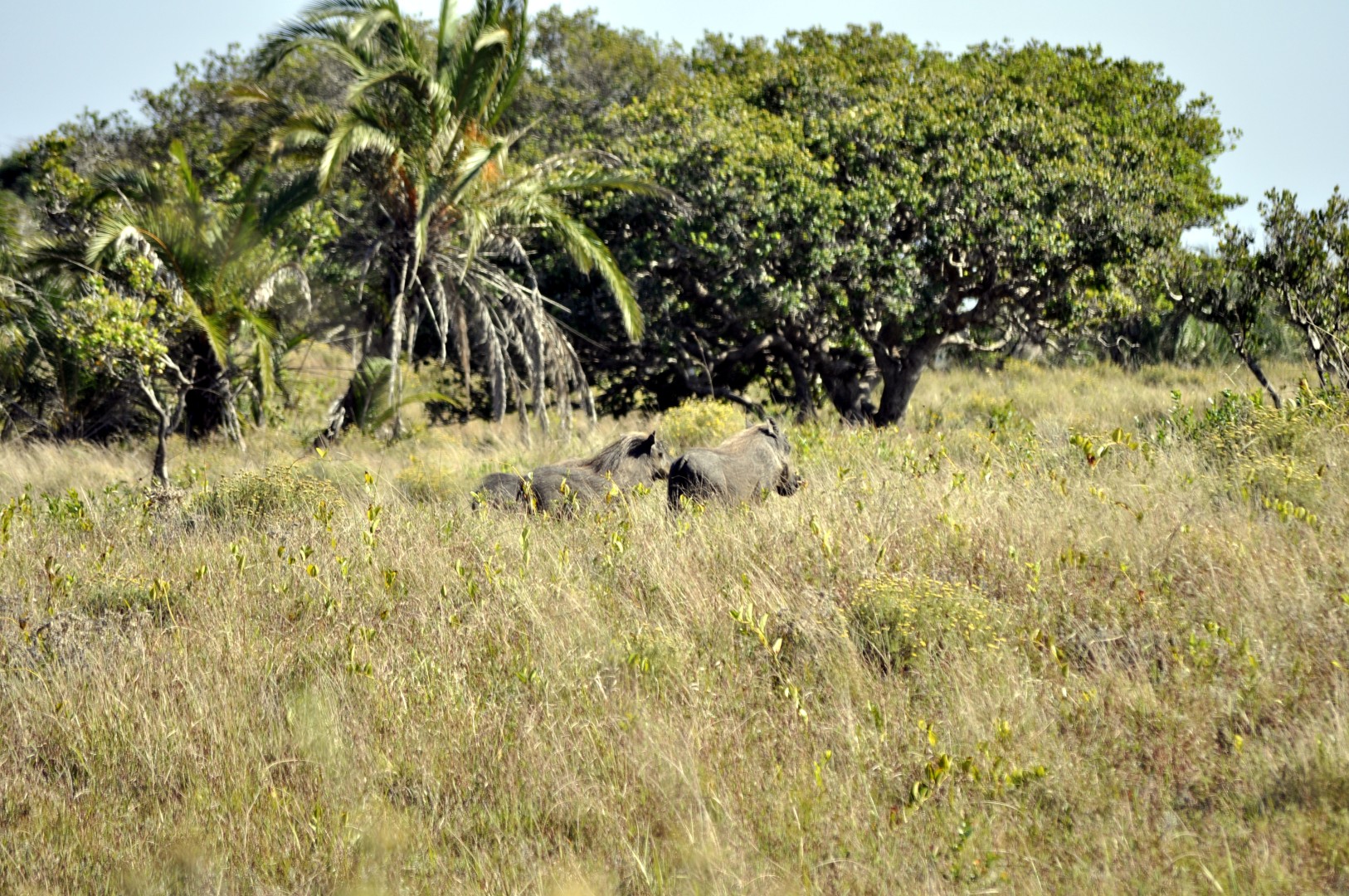
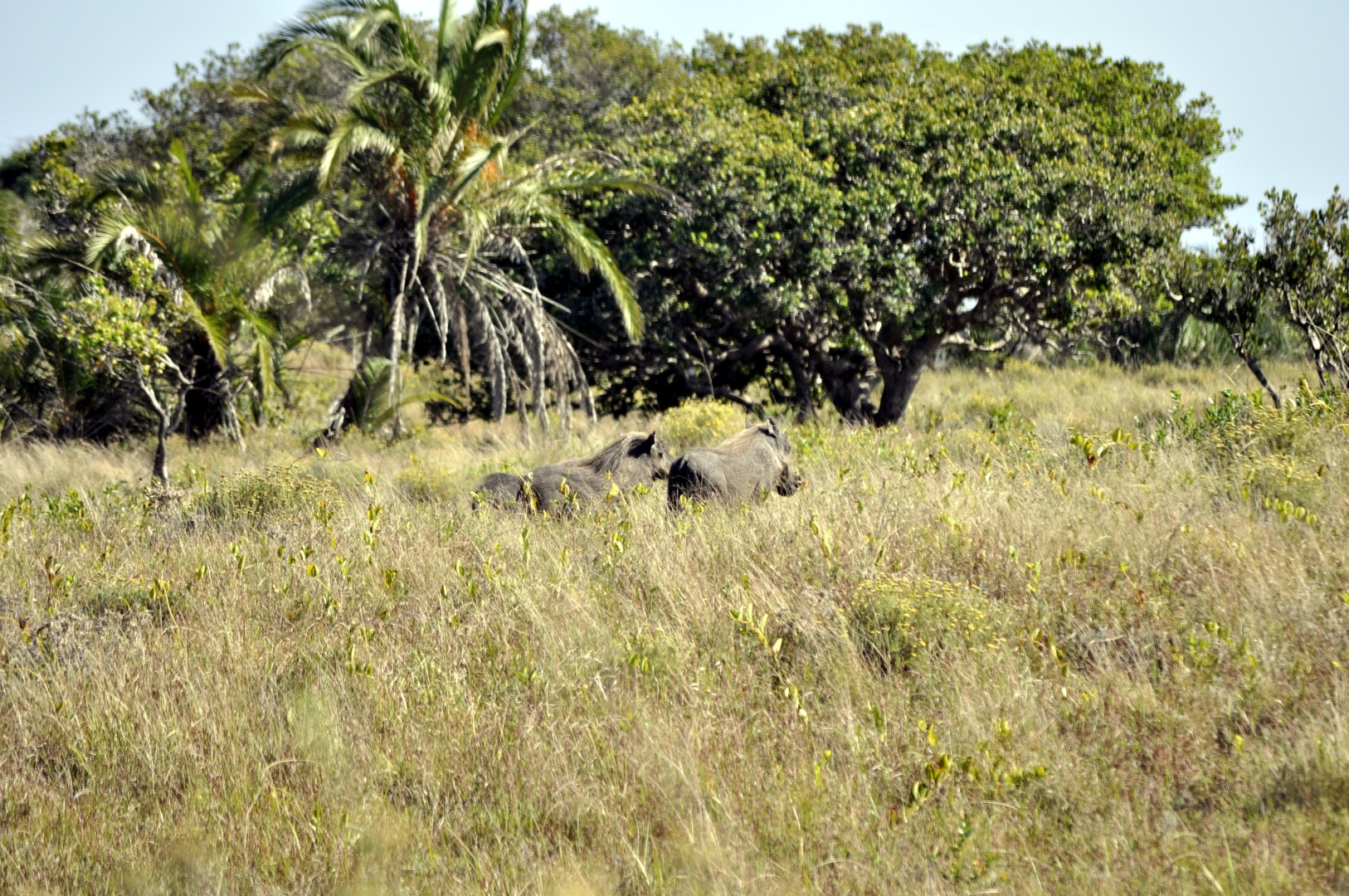
Landscape with grassland and palm trees in iSimangaliso Wetland Park
Darren Glanville · CC BY-SA 2.0

Wetlands, lakes and estuaries

Around Lake St Lucia, iSimangaliso and other South African wetlands, waterbirds, coastal birds and forest species come together. Bird numbers change with water levels, rainfall and salinity. Check reedbeds, shallow shores and river mouths, and take time to scan above the water for raptors as well.

Typical species

  • African Fish Eagle
  • Yellow-billed Stork
  • Great White Pelican
  • African Jacana
  • Greater Flamingo
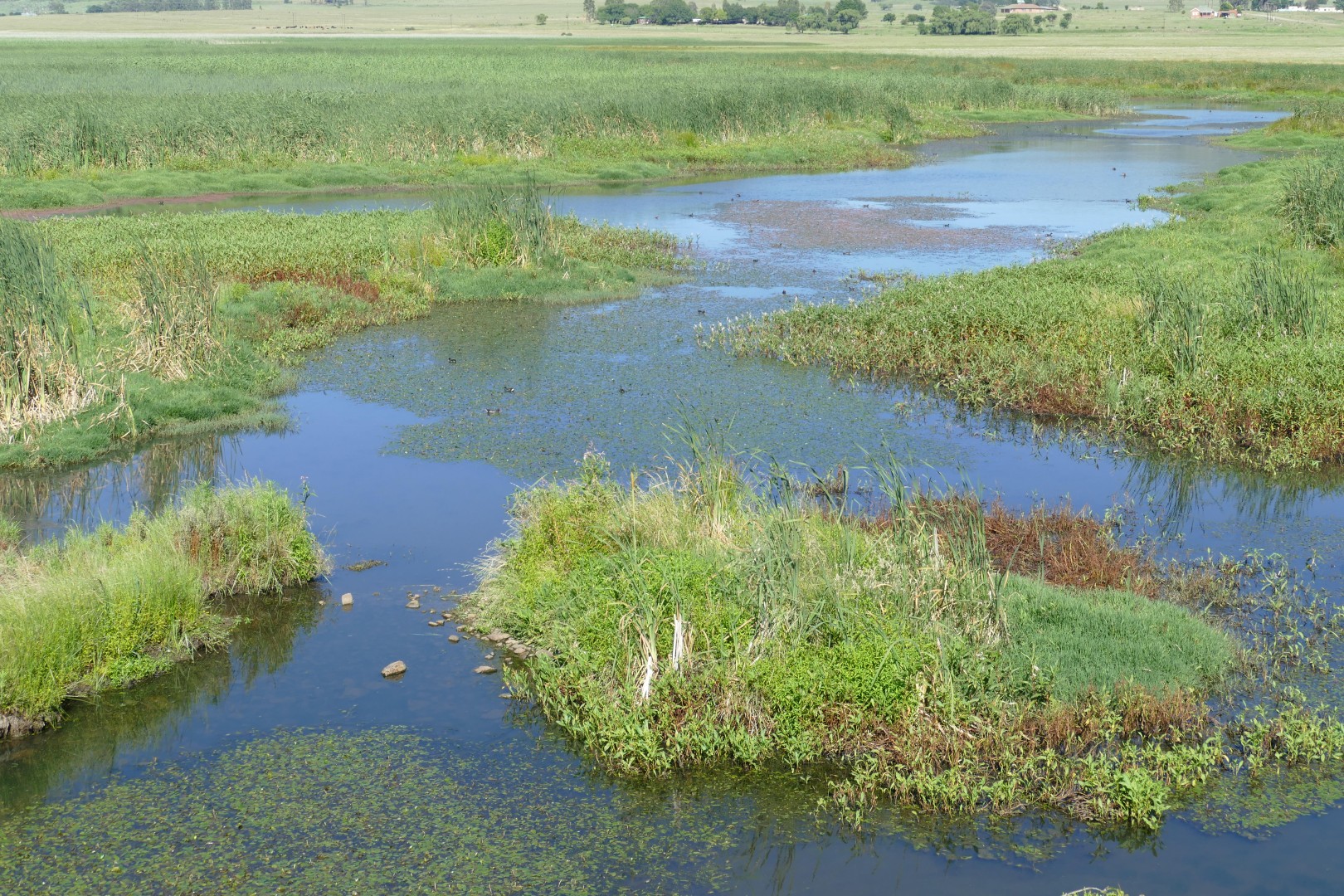
Wetland and grassland near Wakkerstroom in Mpumalanga
Bernard DUPONT · CC BY-SA 2.0

Highland and wet grasslands

The highlands of Mpumalanga, KwaZulu-Natal and the eastern Free State are important for grassland birds you will not find in the savanna. Wakkerstroom combines a large wetland with open hills and rural gravel roads. Especially early in the day, calling larks, pipits, cranes and bustards are active.

Typical species

  • Blue Crane
  • Grey Crowned Crane
  • Yellow-breasted Pipit
  • Rudd’s Lark
  • Denham’s Bustard
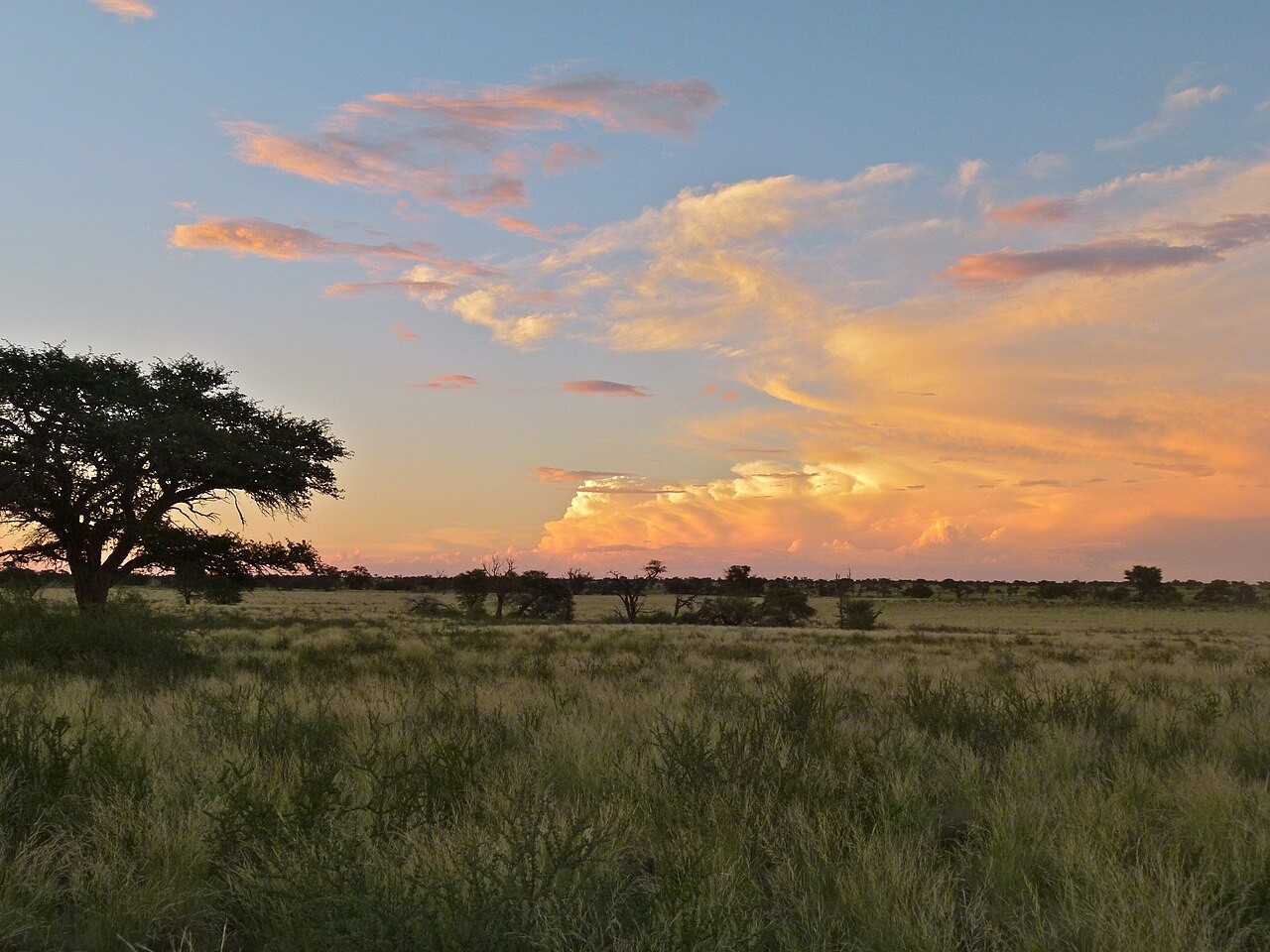
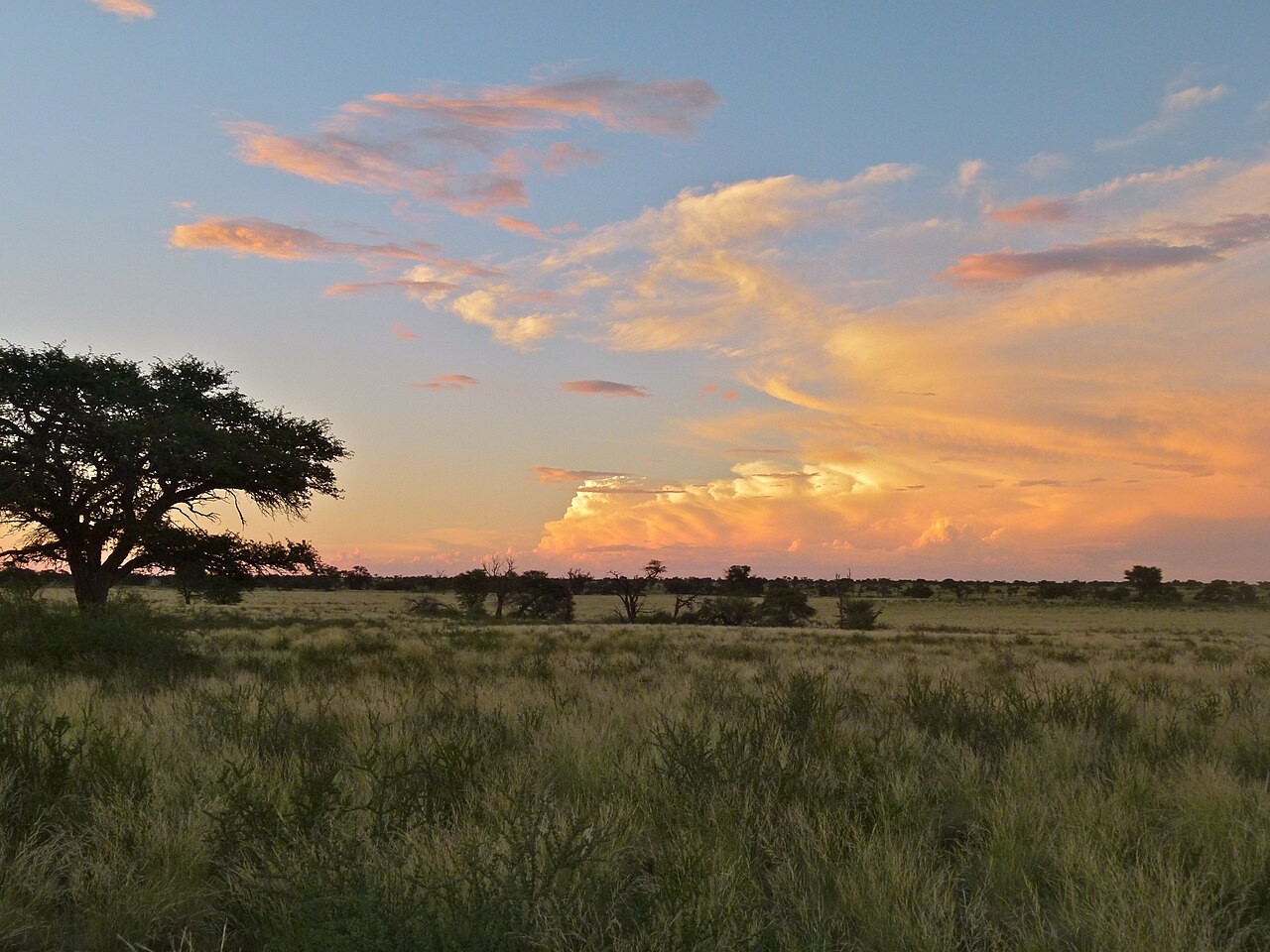
Sunset over the dry Nossob riverbed in Kgalagadi
Bernard DUPONT · CC BY-SA 2.0

Kalahari and Nama-Karoo

In the Kalahari and the drier Karoo, birds gather around riverbeds, large thorn trees and waterholes. The landscape may look empty, but that often makes raptors, bustards, larks and brightly colored bush birds easier to find. Summer rain and migration bring extra activity to the area.

Typical species

  • Kori Bustard
  • Crimson-breasted Shrike
  • Sociable Weaver
  • Pygmy Falcon
  • Southern Yellow-billed Hornbill
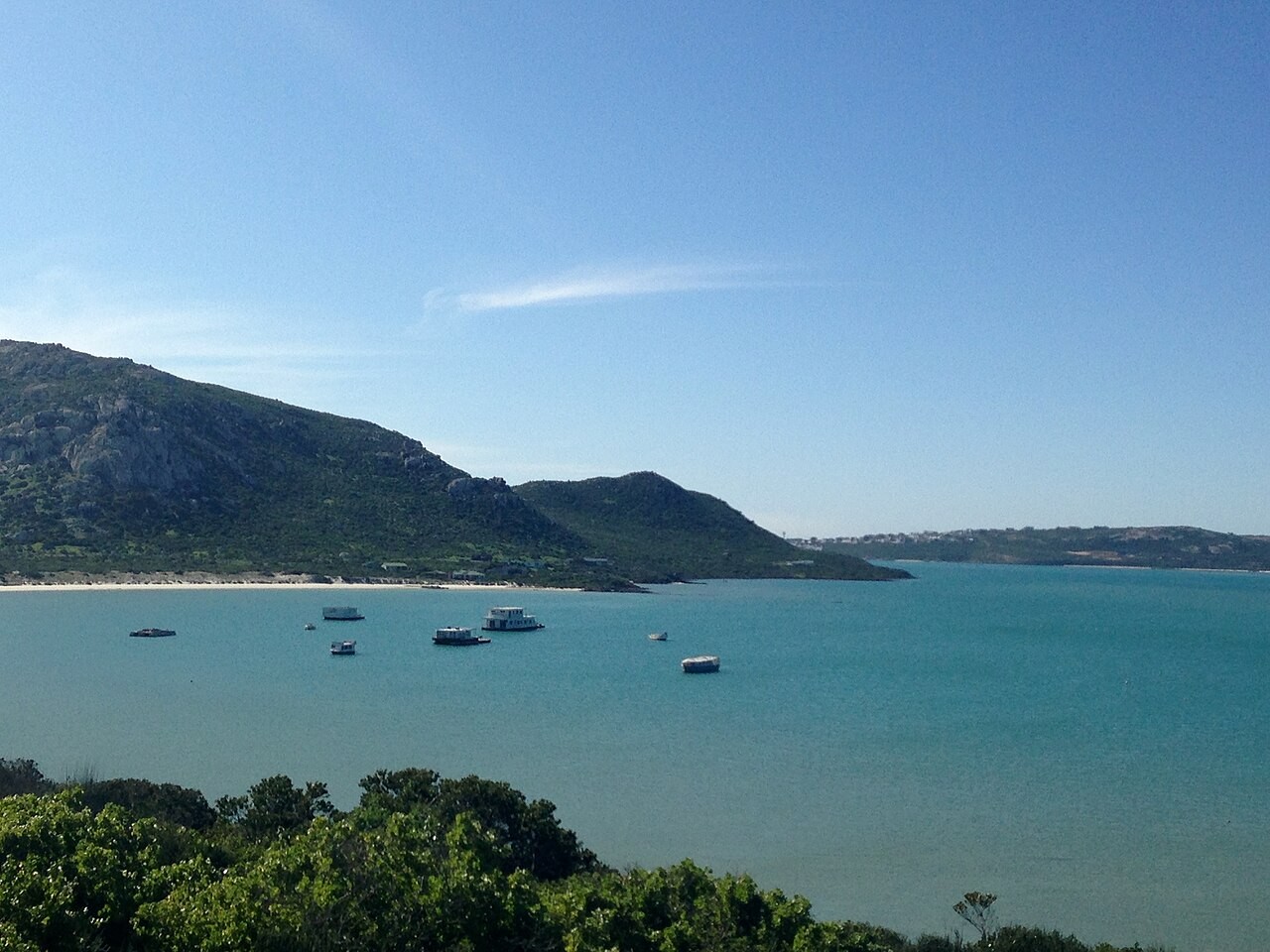
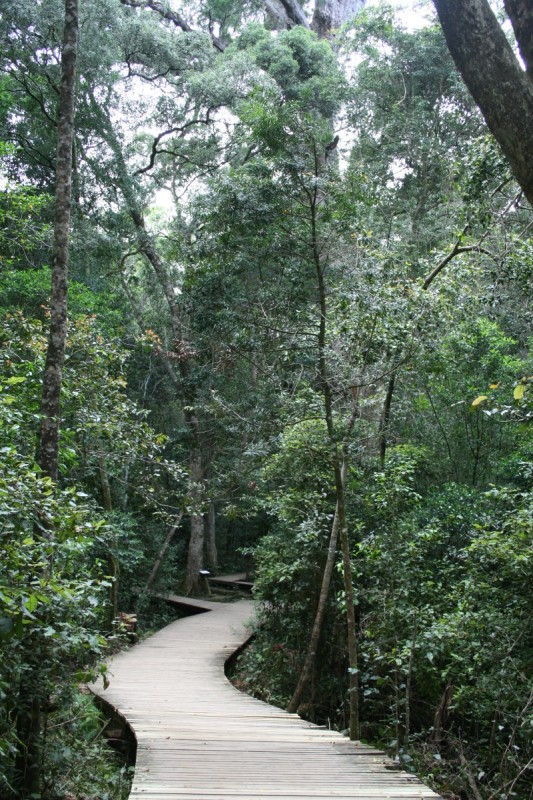
Indigenous forest in the Tsitsikamma area along the Garden Route
NJR ZA · CC BY-SA 3.0

Indigenous forest and subtropical scrub

The forests of Knysna, Tsitsikamma and the Garden Route require a different approach from open savanna. Listen for calling birds in the canopy, check forest edges and watch flowering shrubs. Dense forest can hold many species without revealing them immediately.

Typical species

  • Knysna Turaco
  • Narina Trogon
  • Knysna Woodpecker
  • Chorister Robin-Chat
  • Trumpeter Hornbill

Birding throughout the year

South Africa birding calendar: what can you expect each season?

South Africa lies in the Southern Hemisphere, so its seasons are opposite to those in Europe and North America. The dry winter, summer rains, Palearctic wader migration and fynbos flowering season create a different birding experience every few months.

SummerDecember – FebruaryAutumnMarch – MayWinterJune – AugustSpringSeptember – November
  1. January

    Summer

    Summer rain and breeding savanna birds

    In Kruger, Mapungubwe and other eastern reserves, summer storms create a green landscape and plenty of bird activity. Cuckoos, bee-eaters, rollers, weavers and raptors are especially active. Temporary pools can attract additional waders and waterbirds.

    Recommended areasKruger, Mapungubwe, iSimangaliso and the wetlands of KwaZulu-Natal.

  2. February

    Summer

    Plenty of song, color and summer visitors

    Summer is often lush and bird-rich in the east. Young birds are being fed, songbirds defend their territories and migrants from the north are still widespread. Plan walks and game drives early, as the heat makes afternoons quieter.

    Recommended areasSavanna, riverine forest, coastal forest and open water around St Lucia.

  3. March

    Autumn

    Waders gather along the coast

    As summer ends, the birding scene begins to change. Migrants gather around Langebaan Lagoon to build up energy for their return journey. Inland, the greenery slowly fades, making birds in open bushveld easier to spot.

    Recommended areasWest Coast National Park, Langebaan Lagoon, coastal lagoons and waterholes.

  4. April

    Autumn

    Clear birding in the drier interior

    After the summer rains, inland vegetation gradually opens up. This helps when searching for raptors, hornbills, bustards and rollers. Riverine forest and dams remain species-rich even as the surrounding landscape becomes drier.

    Recommended areasKruger, Addo, Mapungubwe and the dry valleys of the Karoo.

  5. May

    Autumn

    Transition to the dry winter

    May is a good month for combining open landscapes with bird concentrations around water. Birds are less spread out than during the green summer and visibility is often excellent. In the Cape region, the weather shifts toward the winter rainfall season.

    Recommended areasWaterholes in Kruger and Kgalagadi, riverbanks, dams and open grassland.

  6. June

    Winter

    Dry season and birds around water

    In Kruger and the north, the dry winter brings shorter vegetation and better visibility. Water points become important meeting places for drinking birds, kingfishers, storks and raptors. In the south, the Cape’s wet winter begins at the same time.

    Recommended areasKruger, Kgalagadi, Addo and wetlands with open shorelines.

  7. July

    Winter

    Fynbos, coast and winter wetlands

    Cape winter brings rain to the western mountains and can create excellent conditions for fynbos birds. Look for sugarbirds and sunbirds in flowering vegetation and combine mountain habitats with the coast. In the interior, the dry season remains favorable for visibility.

    Recommended areasTable Mountain National Park, Kirstenbosch, Cape Point and the southern coast.

  8. August

    Winter

    First signs of spring in the Cape

    As winter ends, activity increases in fynbos and grassland. The first flowers attract nectar-feeding birds, while coastal lagoons may still hold wintering and migrant species. In August, changing weather can bring plenty of variety within a single day.

    Recommended areasFynbos reserves, West Coast National Park, coastal dunes and highland grassland.

  9. September

    Spring

    Spring in fynbos and grassland

    September is an excellent month for Cape flora and for birds drawn to flowers and insects. In the grasslands, cranes and other species begin their breeding season. Along the west coast, many waders and flamingos can be seen in and around the lagoon.

    Recommended areasWest Coast National Park, Table Mountain, Overberg and Wakkerstroom.

  10. October

    Spring

    Peak month for song, migration and breeding

    In October, many summer-rain species return and calling activity increases sharply. Savanna birds become more colorful and vocal, while fynbos species in the Cape benefit from flowers and fresh growth. For a broad birding trip, this is often one of the most varied months.

    Recommended areasKruger, iSimangaliso, Cape fynbos areas and Wakkerstroom.

  11. November

    Spring

    Many summer visitors and the first rainstorms

    November marks the transition to the wet season in the north and east. Cuckoos, rollers, bee-eaters and weavers are active, and many species are breeding. In wetlands, rain can quickly create new pools and productive shorelines.

    Recommended areasKruger, Mapungubwe, iSimangaliso and the Limpopo River.

  12. December

    Summer

    Green landscapes and summer migrants

    With the first heavy summer rains, the savanna changes quickly. Fresh leaves, insects and temporary pools attract a wide range of birds. The best hours are around sunrise, especially when temperatures rise quickly later in the day.

    Recommended areasKruger, Kgalagadi, iSimangaliso and the eastern bushveld regions.

Seasonal information and area examples: SANParks Kruger, West Coast National Park, BirdLife South Africa and iSimangaliso.

Birding areas in South Africa

The best birding areas in South Africa: where can you go birding?

South Africa is too large to explore fully on one short trip. This selection combines popular nature reserves with high species diversity, clear landscape contrasts and good opportunities for self-guided birding. From bird-rich Langebaan Lagoon to the riverine forests of Limpopo, every area has its own reason to include it in your birding itinerary.

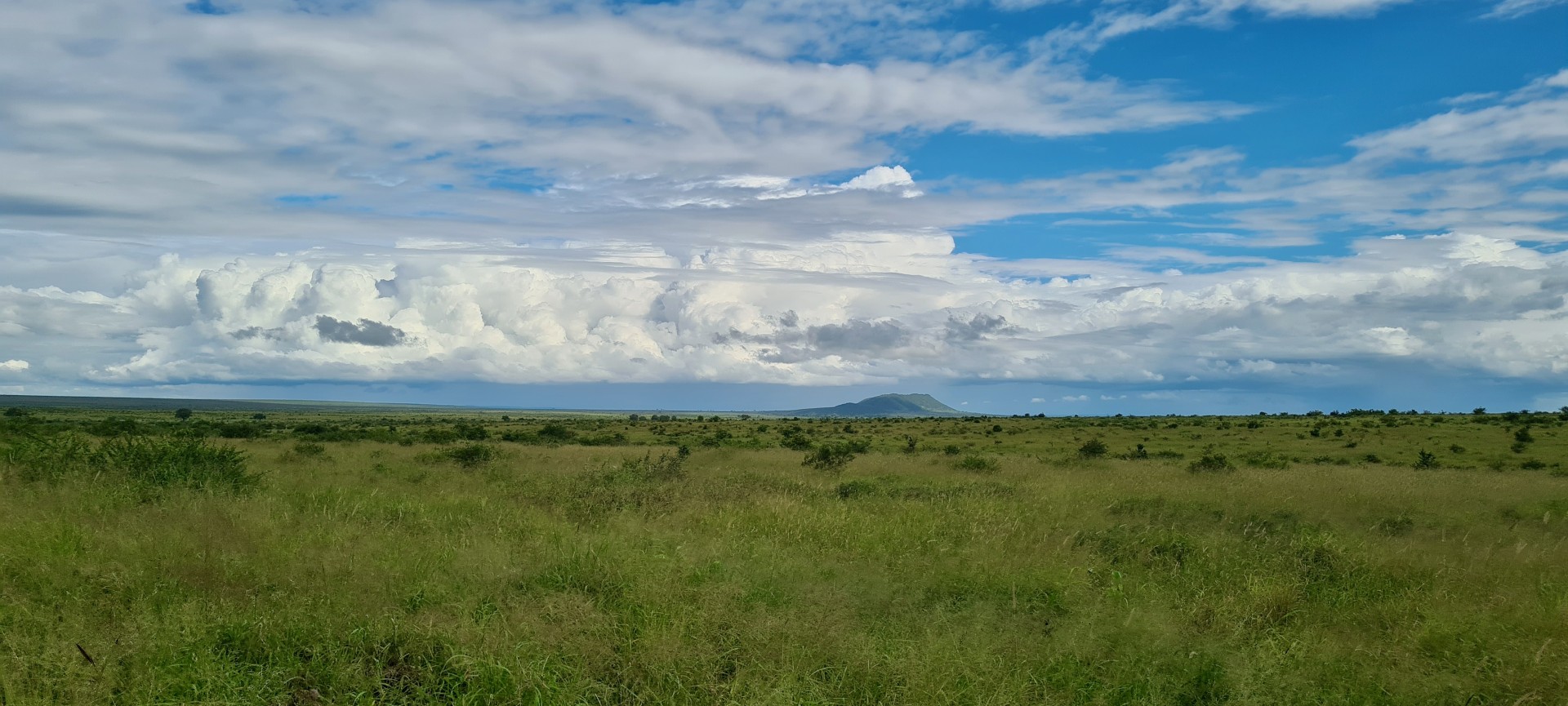
Storm clouds over Muntshe in Kruger National Park
Photo: Bernard DUPONT · Wikimedia Commons · CC BY-SA 2.0

Limpopo & Mpumalanga

Savanna · riverine forest · waterholes

Kruger National Park

The best-known birding destination for a self-drive safari

Kruger is the starting point for birding in South Africa for many visitors. The current park checklist includes 546 species, and the area combines savanna, mopane woodland, riverbanks and permanent water points. Species diversity is especially high in the north around Pafuri and Punda Maria, while rest camps and bird hides can also produce excellent sightings.

Look for
Lilac-breasted Roller, Bateleur, African Fish Eagle, Southern Ground Hornbill and Pel’s Fishing Owl.
Plan around
Early game drives, water points, distances between camps and official gate times.
Grassland and palm trees in iSimangaliso Wetland Park
Photo: Darren Glanville · Wikimedia Commons · CC BY-SA 2.0

KwaZulu-Natal

Lake · estuary · coastal forest

iSimangaliso Wetland Park

Lake St Lucia, coastal lagoons and bird-rich wetlands

More than five hundred bird species occur around Lake St Lucia in a landscape of estuary, lake, reeds, coastal forest and grassland. From roads and official viewpoints, look for pelicans, flamingos, storks and raptors, or take a boat trip from St Lucia. Numbers change with water levels and the season, so repeat visits can produce a very different experience.

Look for
African Fish Eagle, Great White Pelican, African Jacana, flamingos and kingfishers.
Plan around
Water levels, access to the different sections and the light over the lake.
Fynbos and Table Mountain near Cape Town
Photo: Daniel Case · Wikimedia Commons · CC BY-SA 3.0

Western Cape

Fynbos · mountain · coast

Table Mountain National Park and Cape Point

Accessible fynbos birding around Cape Town

For birders staying in Cape Town, Table Mountain National Park is an obvious first choice. The combination of fynbos, cliffs, beach, forest and urban gardens produces a long species list without requiring days of driving. Search flowering vegetation for sugarbirds and sunbirds, and check forest edges for songbirds.

Look for
Cape Sugarbird, Orange-breasted Sunbird, Malachite Sunbird, Cape Grassbird and Cape White-eye.
Plan around
Wind, fynbos flowering, crowds on popular routes and an early start.
Langebaan Lagoon in West Coast National Park
Photo: Pipples91 · Wikimedia Commons · CC BY-SA 4.0

Western Cape

Lagoon · mudflat · fynbos

West Coast National Park

Langebaan Lagoon and the Geelbek bird hide

West Coast National Park is one of the best places in South Africa for coastal birds and migrants. Around Langebaan Lagoon, mudflats and shallow water bring waders closer to the hides as the tide comes in. The park records more than 250 bird species each year and combines coastal birds with fynbos species and South African Shelducks.

Look for
Red Knot, Curlew Sandpiper, flamingos, Cape Gannet and South African Shelduck.
Plan around
Low tide followed by the incoming tide, the Geelbek hide and wildflower season.
Kalahari landscape at sunset in Kgalagadi Transfrontier Park
Photo: Bernard DUPONT · Wikimedia Commons · CC BY-SA 2.0

Northern Cape

Kalahari · dry riverbed

Kgalagadi Transfrontier Park

Raptors and desert birds along the Nossob and Auob

Kgalagadi is drier and more open than most other safari areas in South Africa. The two dry riverbeds form green lines through the sand and draw birds to thorn trees and waterholes. SANParks describes the Nossob as one of the best places in South Africa to watch raptors, especially when summer migrants move through the area.

Look for
Kori Bustard, Crimson-breasted Shrike, Pygmy Falcon, Sociable Weaver and Black-chested Sandgrouse.
Plan around
Long distances, fuel, water, road conditions and limited facilities between camps.
Wetland reserve near Wakkerstroom in Mpumalanga
Photo: Bernard DUPONT · Wikimedia Commons · CC BY-SA 2.0

Mpumalanga

Highland wetland · grassland

Wakkerstroom

One of the best areas for South African grassland birds

Wakkerstroom is a practical base for anyone looking for special grassland birds. Gravel roads from the village lead to wetlands, hills and open farmland. The area is excellent for cranes, pipits, larks, bustards and other species that are difficult to find in dense forest or savanna. A local bird guide can help with route choices and access to private land.

Look for
Rudd’s Lark, Botha’s Lark, Yellow-breasted Pipit, Blue Crane and Blue Korhaan.
Plan around
Early mornings, changing mountain weather, gravel roads and permission for private land.
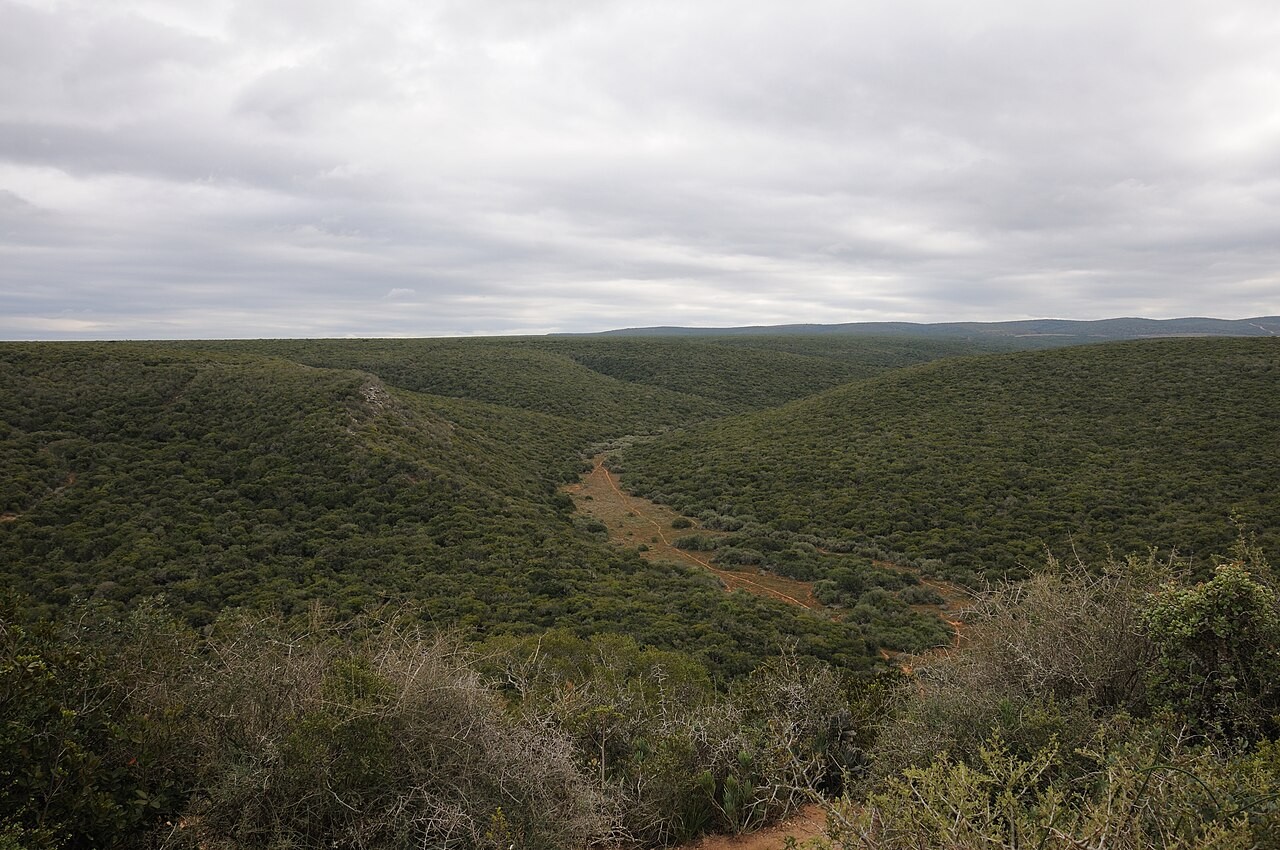
Thicket landscape in Addo Elephant National Park
Photo: Josep M. Gracia · Wikimedia Commons · CC BY-SA 4.0

Eastern Cape

Thicket · grassland · coastal forest

Addo Elephant National Park

An accessible mix of thicket, open fields and coastal habitat

Addo is best known for elephants, but the park’s expansion has also created a varied range of bird habitats. The checklist includes 418 species, with thicket around the main area, open grasslands in the game-viewing section and additional forest and coastal habitats toward Zuurberg and Woody Cape. It is an interesting stop between the Garden Route and the Eastern Cape.

Look for
Blue Crane, Black Korhaan, Secretarybird, African Fish Eagle and Bokmakierie.
Plan around
Morning light, the different park sections and the route between the main area and the mountains.
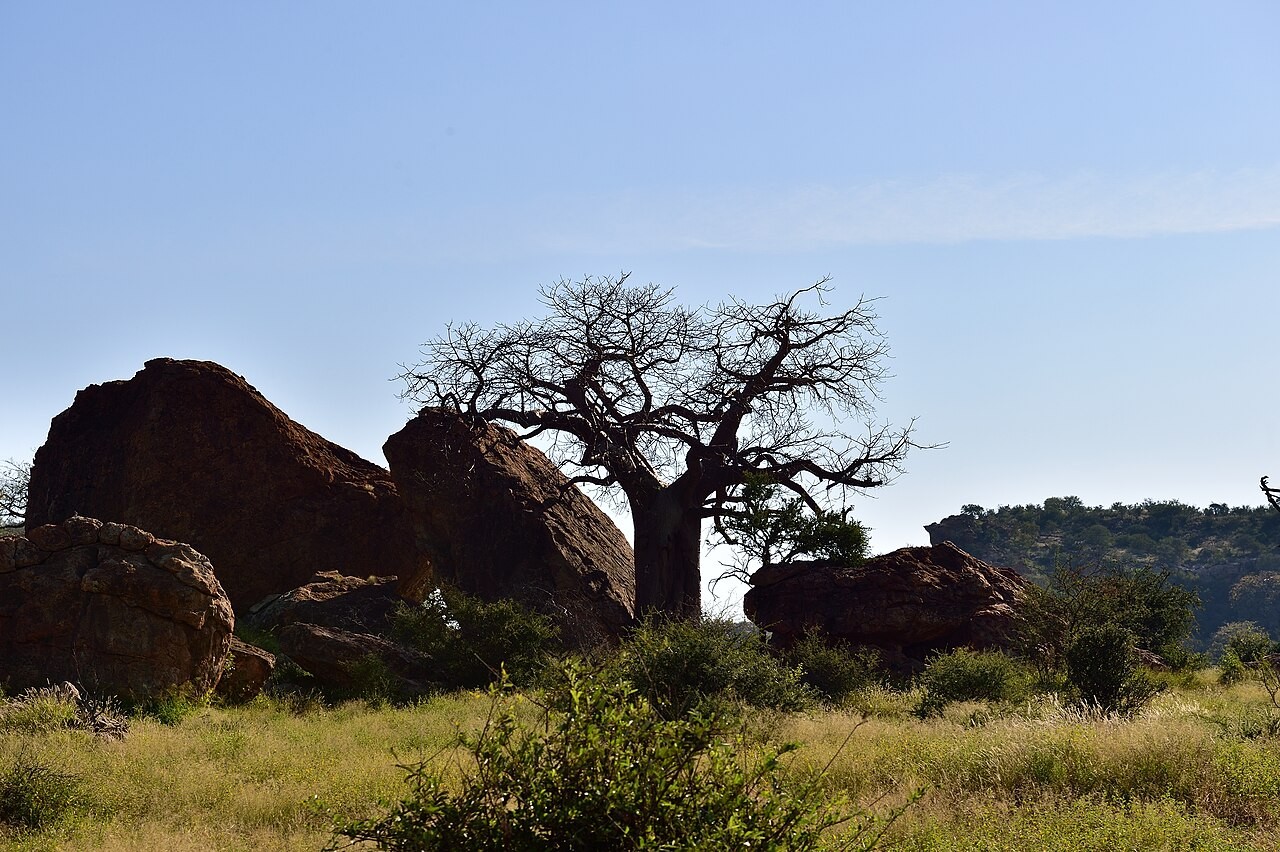
Baobab and rocks in Mapungubwe National Park
Photo: South African Tourism · Wikimedia Commons · CC BY 2.0

Limpopo

Riverine forest · baobab · rocky terrain

Mapungubwe National Park

Where the Limpopo, bushveld and dry landscapes meet

Mapungubwe lies where South Africa, Botswana and Zimbabwe meet, creating a distinctive birding experience. The park checklist includes 447 species. Along the Limpopo you can find riverine forest and bee-eaters, while raptors and shrikes appear around the rocks and baobabs. Several cuckoo species arrive in summer.

Look for
Meves’s Starling, White-fronted Bee-eater, Pel’s Fishing Owl, Verreaux’s Eagle and African Fish Eagle.
Plan around
River levels, the Limpopo Tree-top Boardwalk, open viewpoints and hot afternoons.

Popular birds of South Africa

Five remarkable South African birds and where to find them

From the elegant Blue Crane and loudly calling African Fish Eagle to the colorful Lilac-breasted Roller, Cape Sugarbird and impressive Southern Ground Hornbill, these are five species high on many birders’ lists. They are special, but in the right places they are also realistic targets for a birding trip through South Africa.

  1. Blue Crane in South Africa
    Photo: Brian Snelson, Wikimedia Commons, CC BY 2.0

    Blue Crane

    The Blue Crane is South Africa’s national bird and one of the species that gives the landscape an unmistakable character. Look for pairs or small groups in open grassland and farmland. The species is locally distributed, so choosing the right area matters more than simply visiting any national park.

    Where can you see Blue Cranes in South Africa?

    • Overberg · open farmland and grassland around the southwestern Cape
    • Karoo · dry, open landscapes with enough food and visibility
    • Wakkerstroom and the Highveld · highland grassland and routes beside wetlands
    • Addo and the Eastern Cape · open areas of the park and surrounding grasslands
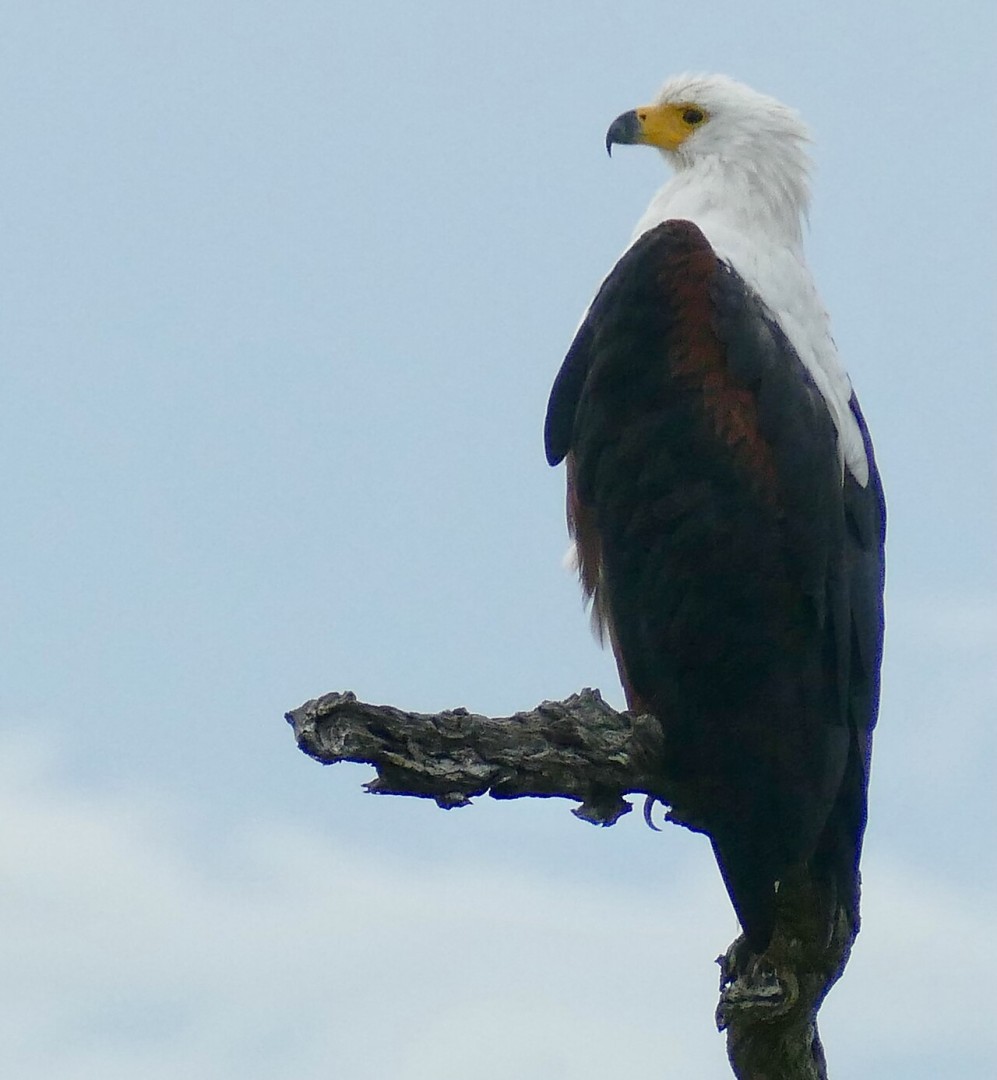
  2. African Fish Eagle beside water in Kruger National Park
    Photo: Bernard DUPONT, Wikimedia Commons, CC BY-SA 4.0

    African Fish Eagle

    The call of the African Fish Eagle belongs to the great lakes, rivers and lagoons of Africa. Look for a high tree beside the water, where the bird often surveys its surroundings before hunting. The contrasting plumage and white tail make adults easy to recognize, even at a distance.

    Where can you see African Fish Eagles in South Africa?

    • iSimangaliso · Lake St Lucia, river mouths and coastal lagoons
    • Kruger National Park · the Sabie, Letaba, Olifants and other rivers and dams
    • Mapungubwe · the Limpopo River and riverine forest around viewpoints
    • Addo · wetlands and the forested parts of the expanded park
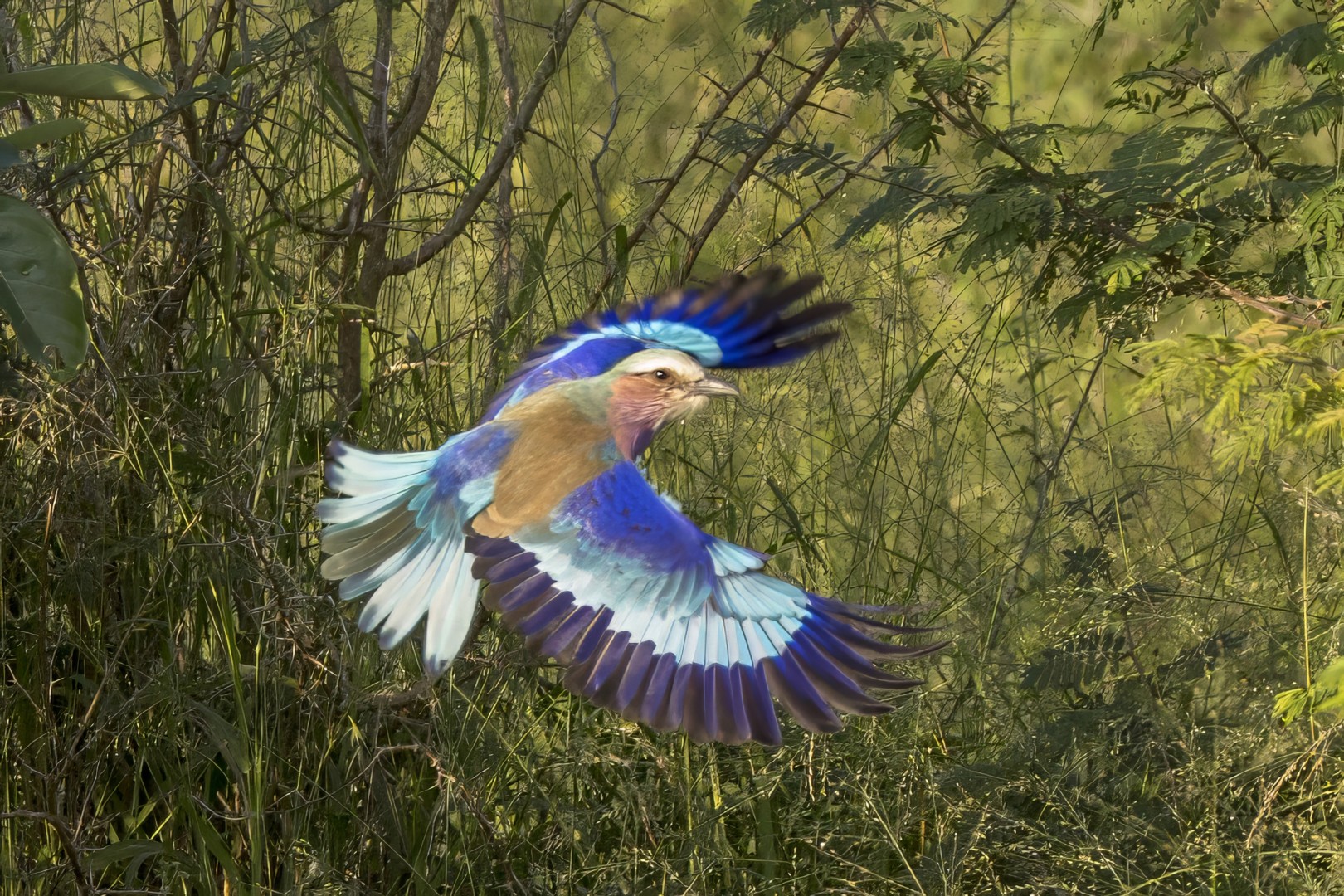
  3. Lilac-breasted Roller in flight in Kruger National Park
    Photo: Charles J. Sharp, Wikimedia Commons, CC BY-SA 4.0

    Lilac-breasted Roller

    The Lilac-breasted Roller is one of the most photographed birds on a South African safari. Look for a brightly colored bird perched on a bare branch beside the road, and watch for fast dives after insects or small prey. In open savanna, the species is often easier to find than in dense woodland.

    Where can you see Lilac-breasted Rollers in South Africa?

    • Kruger National Park · savanna, woodland edges and roads beside open grassland
    • Mapungubwe · dry riverbanks, baobabs and open bushveld
    • Kgalagadi · riverbeds and thorn trees, especially when insects are active
    • Northern bushveld areas · waterholes and open farmland with scattered trees
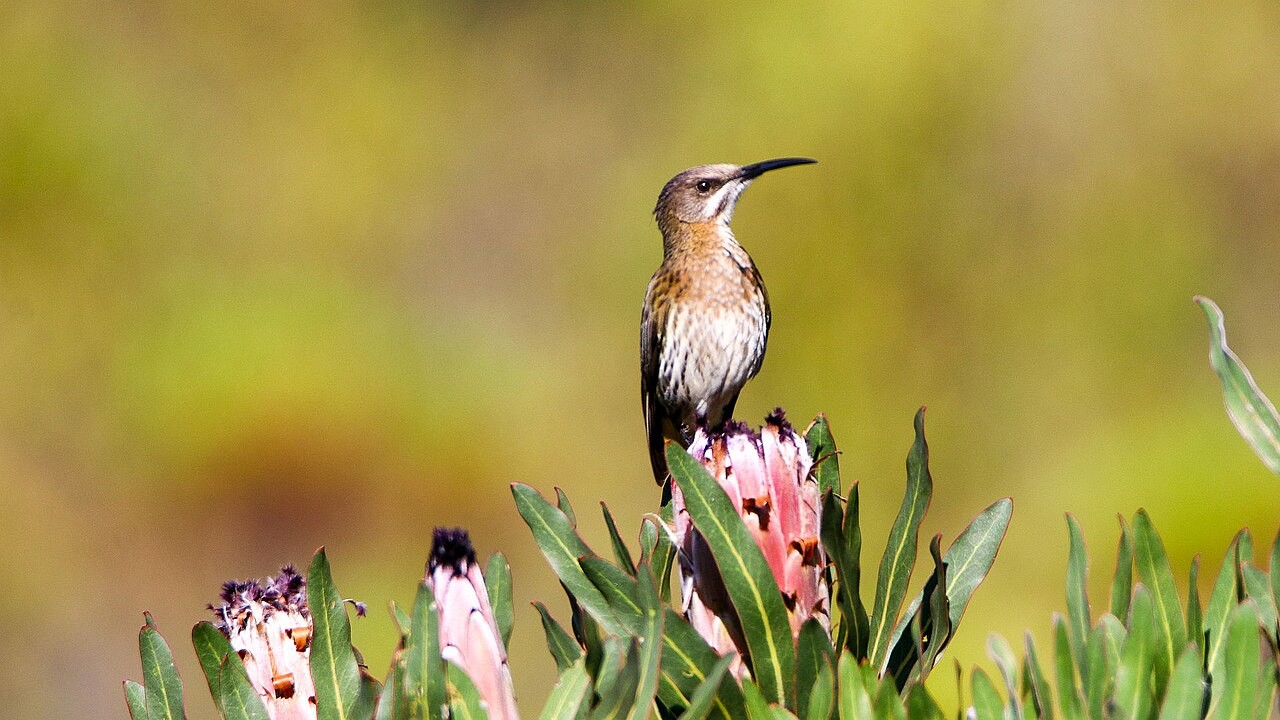
  4. Cape Sugarbird in fynbos in the Western Cape
    Photo: MartinEtsebeth, Wikimedia Commons, CC BY-SA 4.0

    Cape Sugarbird

    The Cape Sugarbird is closely associated with fynbos and stands out with its long tail and behavior around flowering proteas. It is an excellent target for birders who want to look for several endemic or near-endemic species around Cape Town without long safari drives.

    Where can you see Cape Sugarbirds in South Africa?

    • Kirstenbosch and Table Mountain · flower-rich fynbos slopes and forest edges
    • Cape Point · open fynbos and coastal vegetation in the national park
    • Fernkloof near Hermanus · proteas, ericas and mountain fynbos
    • Garden Route · fynbos edges around Knysna, George and Tsitsikamma
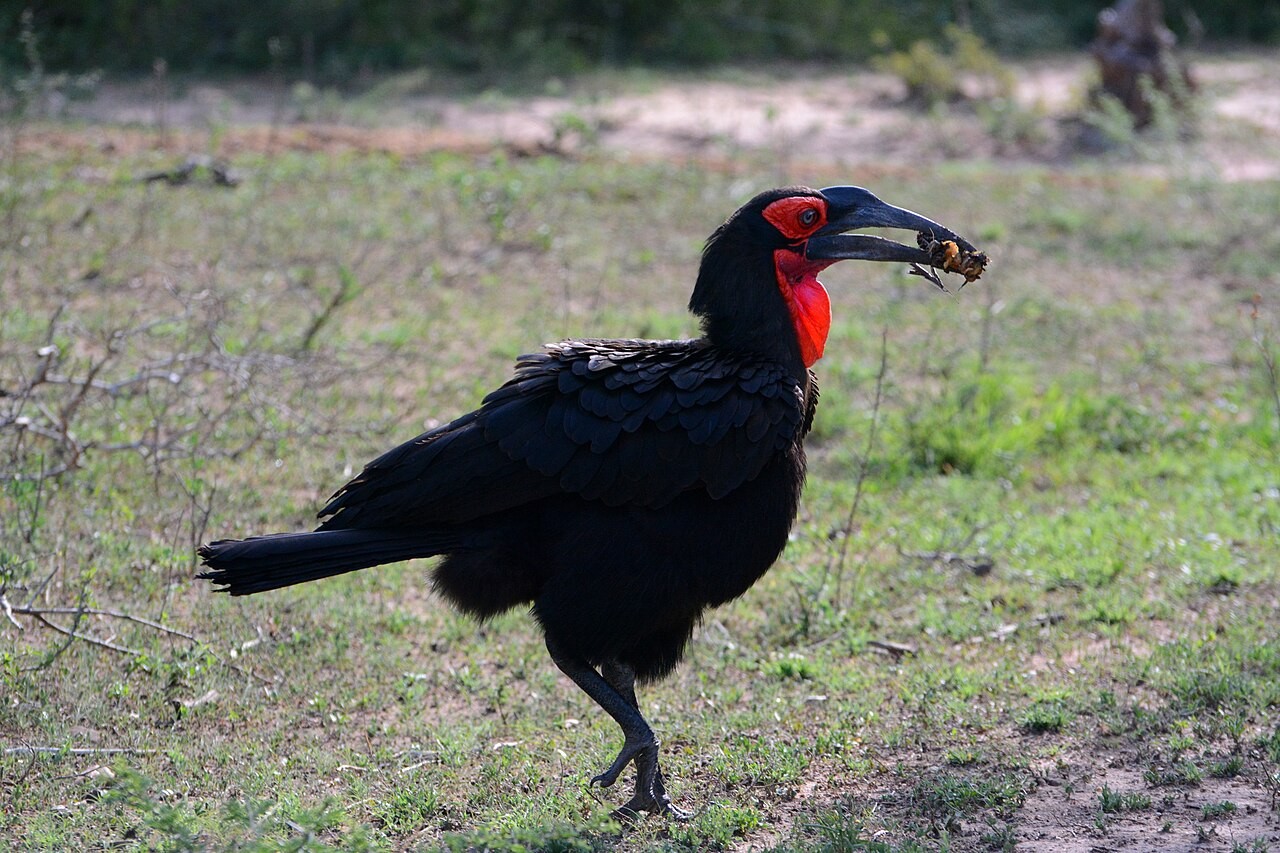
  5. Southern Ground Hornbill in Kruger National Park
    Photo: Kore, Wikimedia Commons, CC BY-SA 3.0

    Southern Ground Hornbill

    The Southern Ground Hornbill often walks through open grassland instead of flying high above the trees. The large black bird with red skin around its eyes is therefore an impressive sight on a game drive. Look along quiet roads with short grass and in areas where the species forages in family groups.

    Where can you see Southern Ground Hornbills in South Africa?

    • Kruger National Park · open savanna and grassland, with good chances in the north
    • Mapungubwe · dry bushveld, open plains and the area around Maloutswa Hide
    • Addo Elephant National Park · open sections of the park and the Eastern Cape
    • KwaZulu-Natal · protected grasslands and savanna with enough large habitat

Useful tips and information

Practical questions about birding in South Africa

Want to know when to visit South Africa for birding, where to see Blue Cranes or fynbos birds, and how to plan your own birding route? Below you will find practical answers about seasons, access, national parks, tides, bird guides and current information in FaunaMap.

There is no single best month for the entire country. For a broad combination of summer migrants, breeding birds and active savanna species, September through November is often excellent in the north and east. December through February brings more rain, greenery and bird activity, although dense vegetation can sometimes make searching more difficult.

For Kruger and Kgalagadi, many birders also choose the dry winter months from June through August, when the landscape is more open and birds gather more often around water. July through October is interesting for fynbos and coastal birds, while Langebaan Lagoon can hold many migrants during the South African summer and autumn. Before you leave, check the current BirdLife South Africa checklist and the park’s area information.

Blue Cranes are mainly found in open landscapes. Key areas include the Overberg and Karoo, while the highlands of KwaZulu-Natal, Mpumalanga and the Highveld can also be productive. Wakkerstroom is a practical base because it combines wetlands with extensive grasslands.

In South Africa, look for open farmland, quiet grasslands and ridgelines with good visibility. The species can be locally common, but it is not automatically guaranteed in every national park. The BirdLife South Africa species information describes its distribution and current conservation status. Use FaunaMap to see which areas have recent sightings and known birding points before you travel.

Kruger is an excellent choice for both beginner and experienced birders. The current SANParks checklist includes 546 species, and the park has a wide range of savanna, riverine forest, dams and waterholes. Many species can be found from the car, so you can bird independently without booking a separate excursion for every sighting.

For special species, the north around Pafuri and Punda Maria, river crossings, picnic sites and bird hides are good starting points. Do not plan too many kilometers in one day, because driving slowly and making longer stops usually produces more birds than simply covering as many roads as possible. See the official Kruger birding page for park-specific information.

West Coast National Park and Langebaan Lagoon are the best-known choices for coastal birds, waders and Palearctic migrants. The Geelbek hide is especially interesting as the tide comes in and rising water pushes birds closer to the shore. Flamingos and pelicans can be found in the deeper parts of the lagoon.

iSimangaliso, Lake St Lucia, the KwaZulu-Natal south coast and several estuaries along the Garden Route are also valuable. In coastal areas, look not only at the calendar but also at tides, wind and water levels. The West Coast National Park birding page provides practical information about the best lagoon conditions.

The easiest starting points are Kirstenbosch, Table Mountain National Park, Cape Point and the fynbos reserves on the Cape Peninsula. These areas offer chances for Cape Sugarbird, Orange-breasted Sunbird, Malachite Sunbird, Cape Grassbird and Cape White-eye. Flowering proteas and ericas attract nectar-feeding birds to reliable food sources.

Fynbos bird activity can vary greatly with altitude, flowering and weather conditions. Set out early, listen at shrub edges and do not focus only on busy viewpoints. The Table Mountain National Park bird checklist and information about Kirstenbosch and the Cape Peninsula can help you choose a route.

Independent birding is easy in many national parks and nature reserves. In Kruger, Addo, West Coast National Park and parts of iSimangaliso, you can discover a great deal with a rental car, binoculars and a species list from public roads and official walking trails. Always follow the rules of the area, and in wildlife reserves only leave your vehicle where it is permitted.

A local guide is especially valuable for hidden forest birds, shy grassland species, private land and areas with many similar calls. Around Wakkerstroom, a guide can also help with gravel roads, access and identifying local specialties. A good approach is to spend several days driving independently and book one or two focused guided excursions.

That depends on the area. For accommodation in SANParks, popular camps and some busy entrances, booking ahead is sensible. Day visits, opening hours, entrance fees, vehicle rules and temporary closures can also vary by park. Birding itself usually does not require a separate birding permit, but you must follow the access rules of the nature reserve.

Before leaving, check the park’s official website, especially if you are using a rental car or want to visit several sections in one day. At iSimangaliso, rules and access differ between sections. Check SANParks and iSimangaliso for current visitor information.

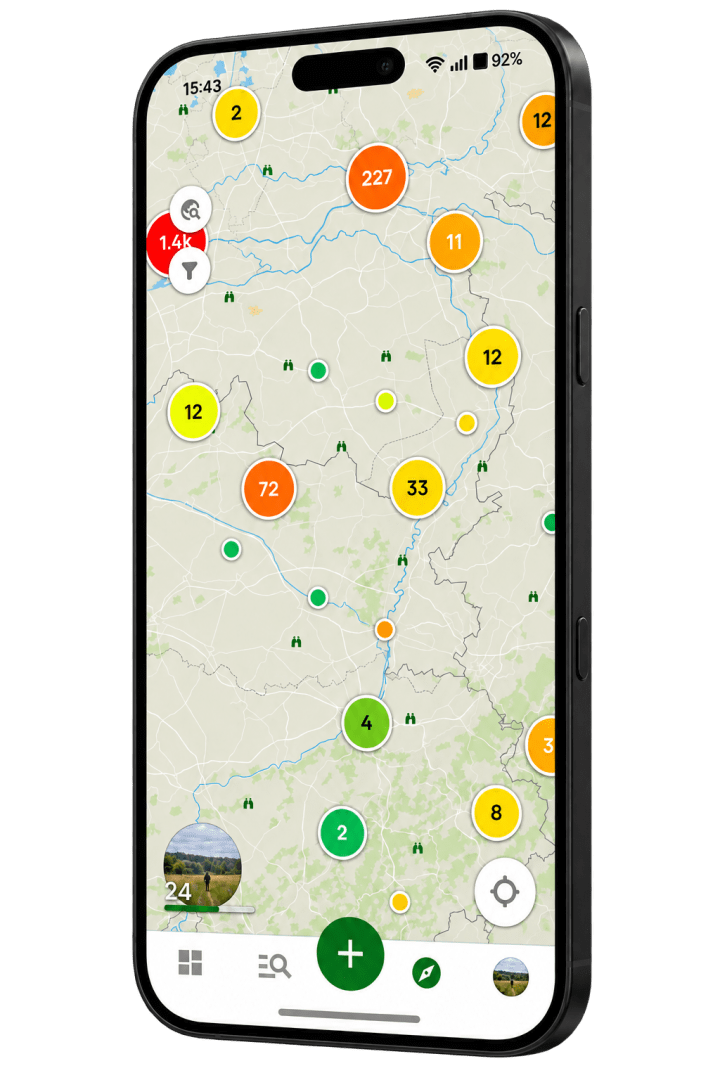
In FaunaMap, you can explore South Africa on an interactive map with recent bird sightings, birding points and interesting hotspots. Each location also shows which species can be expected based on historical data. This is useful when you want to explore a large area such as Kruger, the Cape region or the Kalahari independently and plan an efficient route in advance.

Open FaunaMap before you leave, compare different locations and keep your own species list during the trip. This lets you combine general information about nature reserves with information that is immediately useful for the day you go birding.

View South Africa in FaunaMap

Discover more while birdwatching

  • See recent bird sightingsSee which birds have recently been spotted near you.
  • Explore biodiverse nature areasFind the best places to spot birds and other wildlife.
  • Find sightings by speciesQuickly find sightings of the bird species you want to see.