Birding areas · bird migration · Spanish bird species

Birdwatching in Spain: the best birding areas by season

Birdwatching in Spain means choosing between Mediterranean forests, vast steppes, bird-rich deltas and wetlands along the migration route between Europe and Africa. Discover where to spot Spanish birds independently, which nature reserves are most rewarding and what to expect each month on a birding trip through Spain.

  • Expected bird species by location
  • Birding hotspots worldwide
  • Keep your own life list
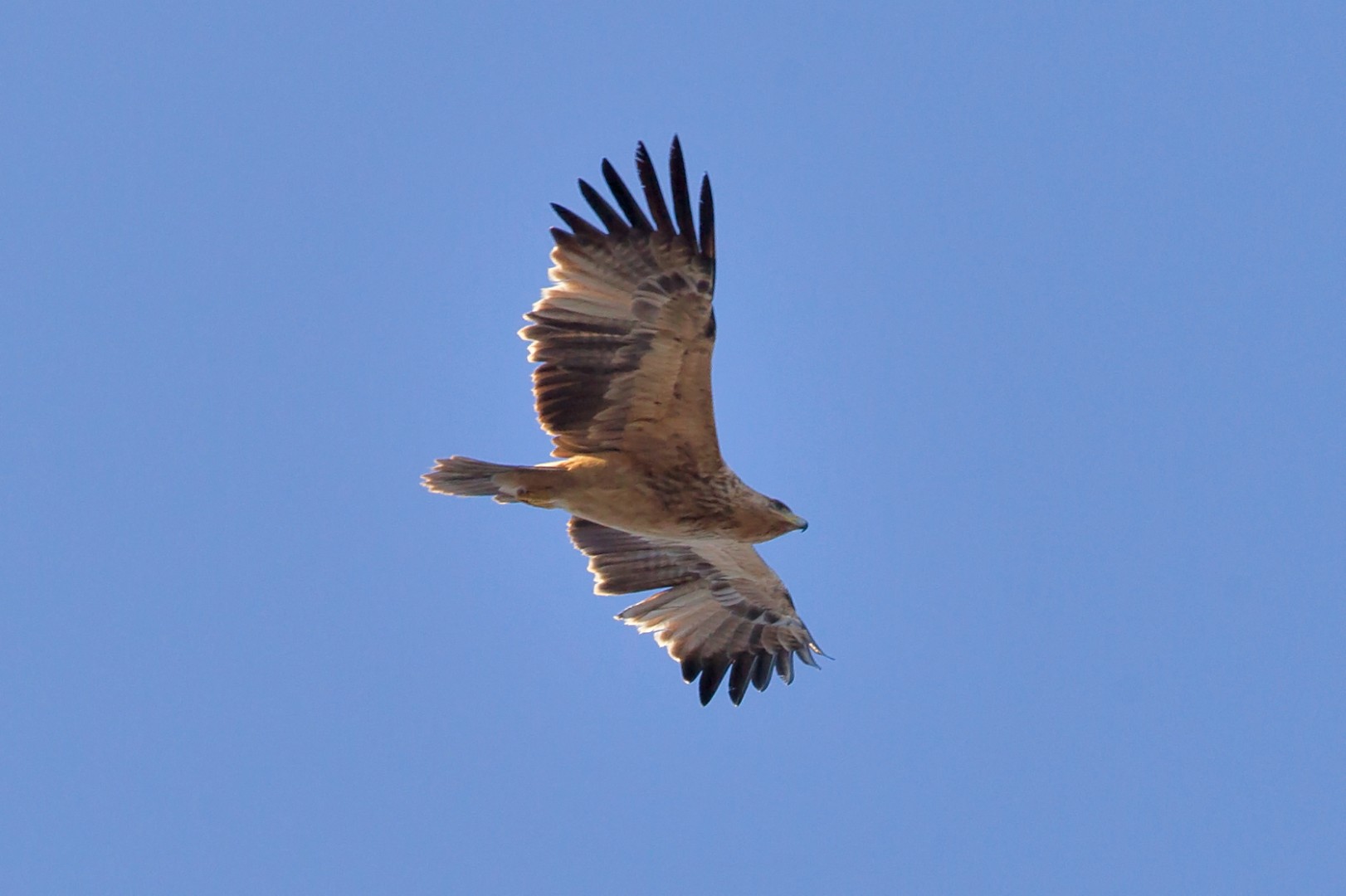
Spanish Imperial Eagle flying against a blue sky
Spain’s iconic birdThe Spanish Imperial Eagle
Photo: Juan Lacruz via Wikimedia Commons · CC BY-SA 3.0.

Why go birdwatching in Spain?

Spain brings European migration and Mediterranean biodiversity together

Spain is one of Europe’s most diverse birding destinations. On one trip you can see flamingos in a salt lagoon, Griffon Vultures above a river gorge, Great Bustards in open farmland and a Spanish Imperial Eagle over the dehesa. Its position between the Atlantic Ocean, the Mediterranean and North Africa also creates a long and spectacular migration season.

In the south lie Doñana, the salt pans of Andalusia and the Strait of Gibraltar. These are excellent areas for waterbirds, waders, raptors and migrants moving between Europe and Africa. Further west, Extremadura and Castilla y León offer a mosaic of holm oak landscapes, steppes, farmland and cliffs. Here you will find some of the best places to see vultures, storks, bustards and Iberian birds of prey.

On the east coast, the Ebro Delta, Aiguamolls de l’Empordà and other lagoons combine rice fields, reedbeds, mudflats and salt pans. In the north, the Picos de Europa and the Pyrenees completely change the birding scene. With the right location and timing, independent birders can see a remarkable variety of species. FaunaMap helps with birding viewpoints, hotspots, recent sightings and expected species by location.

Landscapes and biodiversity

The main bird habitats in Spain

Spain’s best birding areas make more sense when you first look at the habitat. Water levels, elevation, vegetation and land use determine which species you will find. Together, these six landscape types form the core of Spain’s birdlife and help you plan a more focused birding trip.

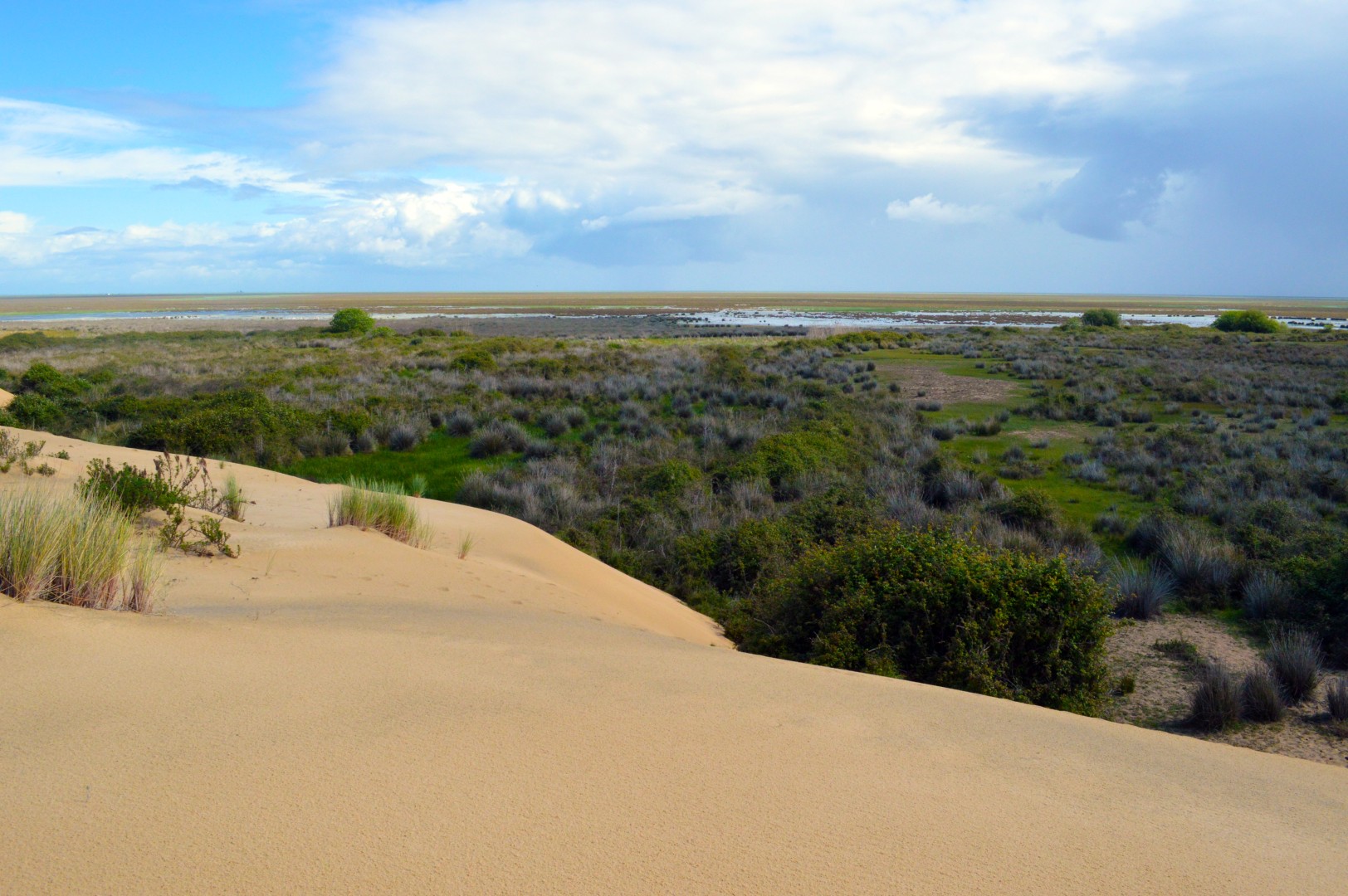
Wetland landscape with open water in the Marismas de Doñana
Dvazquezq via Wikimedia Commons · CC BY-SA 3.0 ES

Marshes, lagoons & rice fields

The seasonal marshes of Doñana, the Ebro Delta, the lagoons of La Mancha and Catalonia’s coastal wetlands are essential for migratory birds. In wet years, large feeding areas appear. During dry periods, birds gather around the remaining pools, canals and salt lagoons.

Characteristic species

  • Greater Flamingo
  • Glossy Ibis
  • Purple Swamphen
  • Avocet
  • Marbled Teal
Mediterranean holm oak woodland in the Sierra de Andújar
Lichinga via Wikimedia Commons · CC BY-SA 4.0

Dehesa & Mediterranean woodlands

Open cork oak and holm oak woodlands with grassland between the trees are typical of Extremadura, Andalusia and parts of Castilla-La Mancha. The combination of old trees, rabbits, livestock and open views makes the dehesa ideal for large raptors and Black Storks.

Characteristic species

  • Spanish Imperial Eagle
  • Cinereous Vulture
  • Griffon Vulture
  • Black Stork
  • Short-toed Snake Eagle
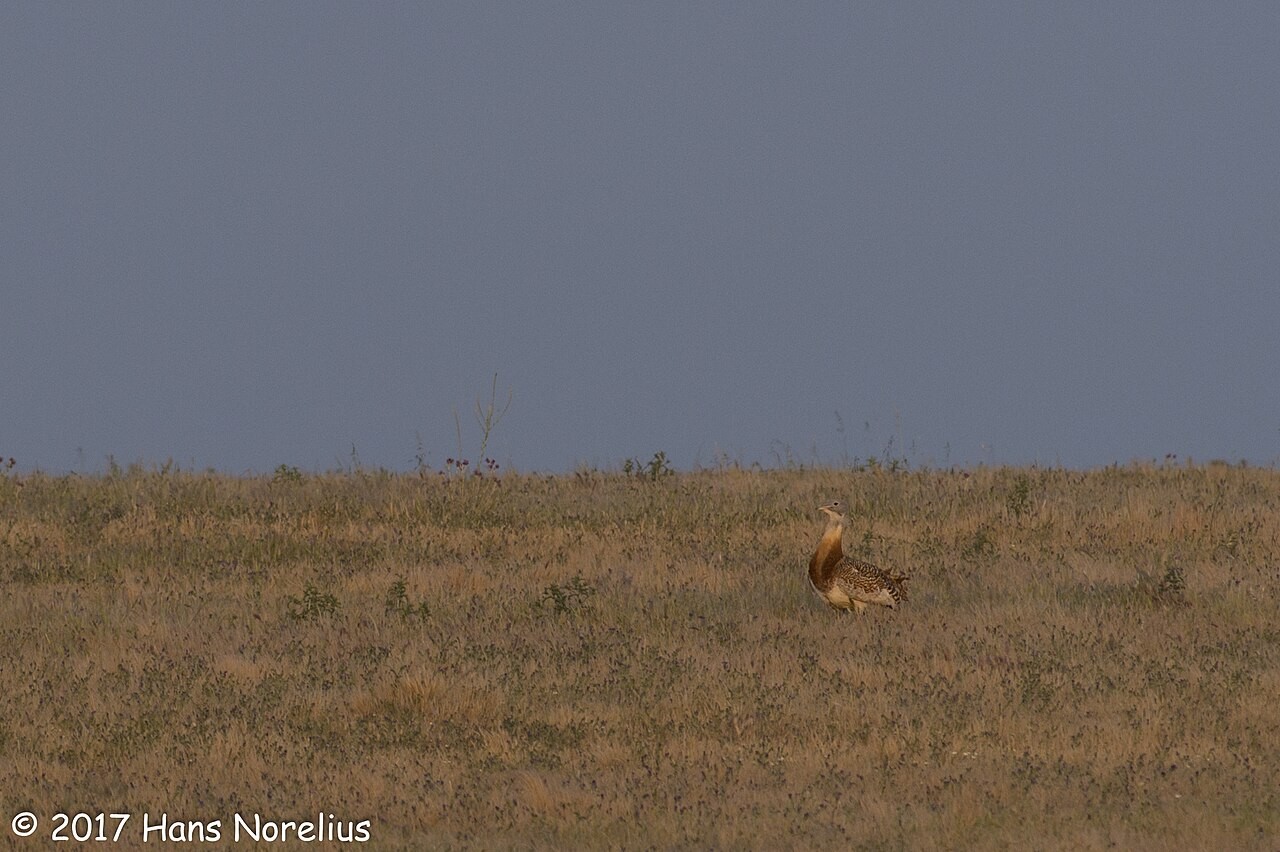
Great Bustards in the open steppe of Extremadura
Hans Norelius, Great Bustards, via Wikimedia Commons · CC BY 2.0

Steppes, farmland & dry plains

Spain’s steppes are not limited to desert-like landscapes. Grain fields, fallow land and dry high plateaus around Villafáfila, Extremadura, Aragón and Castilla-La Mancha are also important. The open terrain calls for patient scanning from the road or an official viewpoint.

Characteristic species

  • Great Bustard
  • Little Bustard
  • Eurasian Stone-curlew
  • Calandra Lark
  • Lesser Kestrel
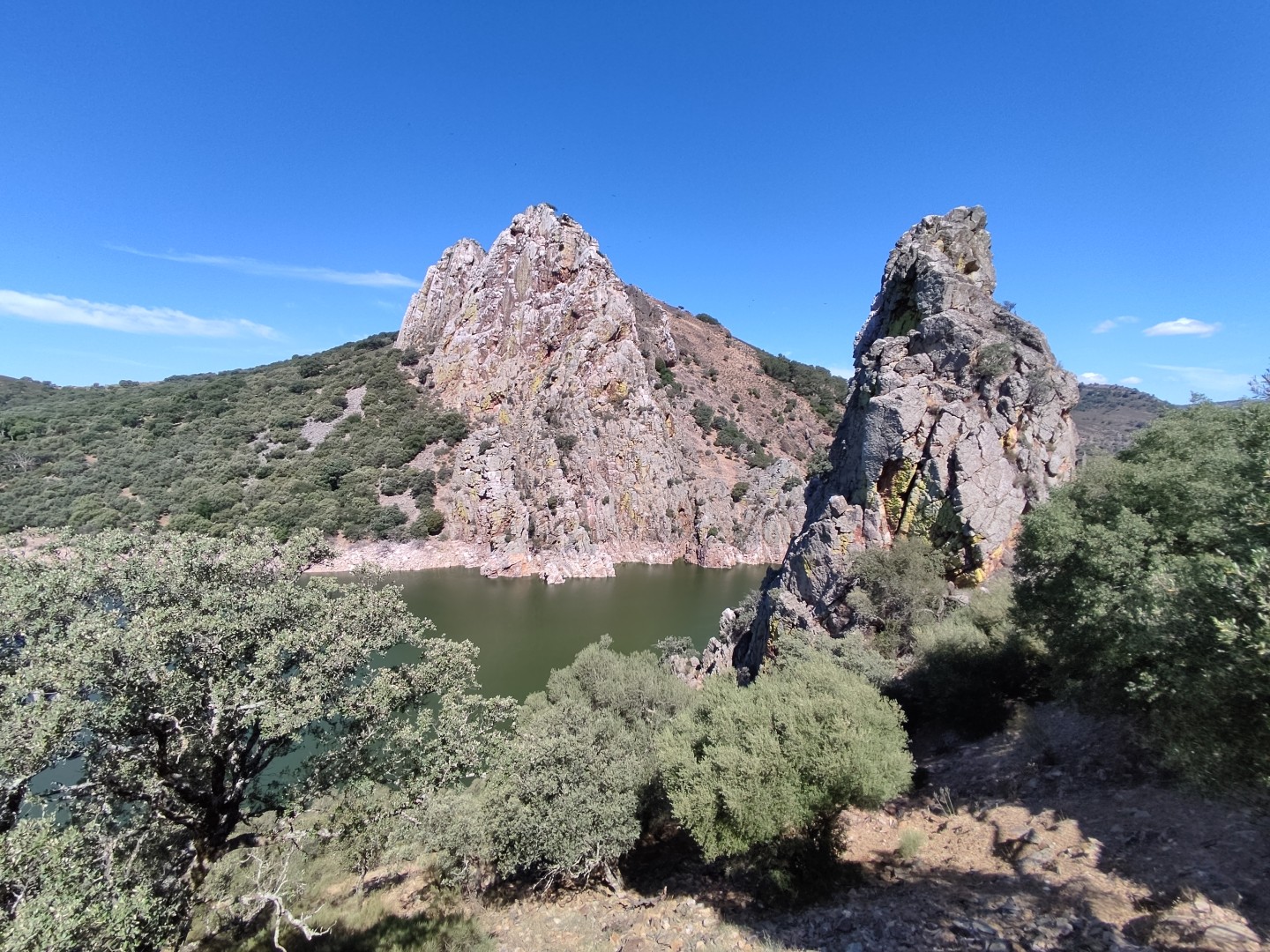
Rock cliffs and the Tagus at Salto del Gitano in Monfragüe
Gonzalo 11789 via Wikimedia Commons · CC BY-SA 4.0

River gorges & rocky cliffs

In Monfragüe, Hoces del Duratón, Arribes del Duero and Sierra de Grazalema, steep cliffs provide safe nesting sites and strong thermals. From bridges, roads and designated viewpoints, you can often watch large raptors circling above the gorge without a long hike.

Characteristic species

  • Griffon Vulture
  • Cinereous Vulture
  • Black Stork
  • Golden Eagle
  • Peregrine Falcon
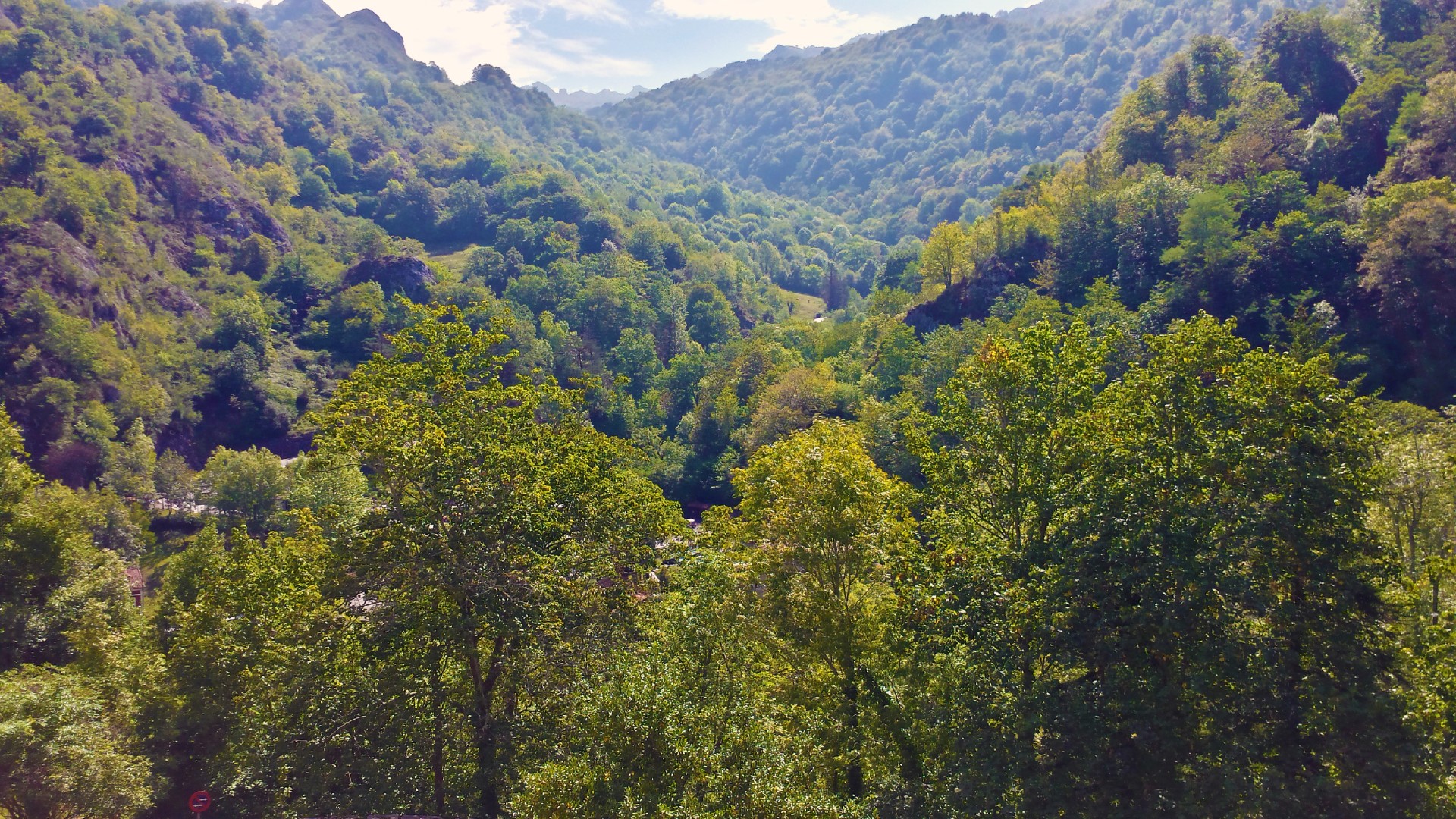
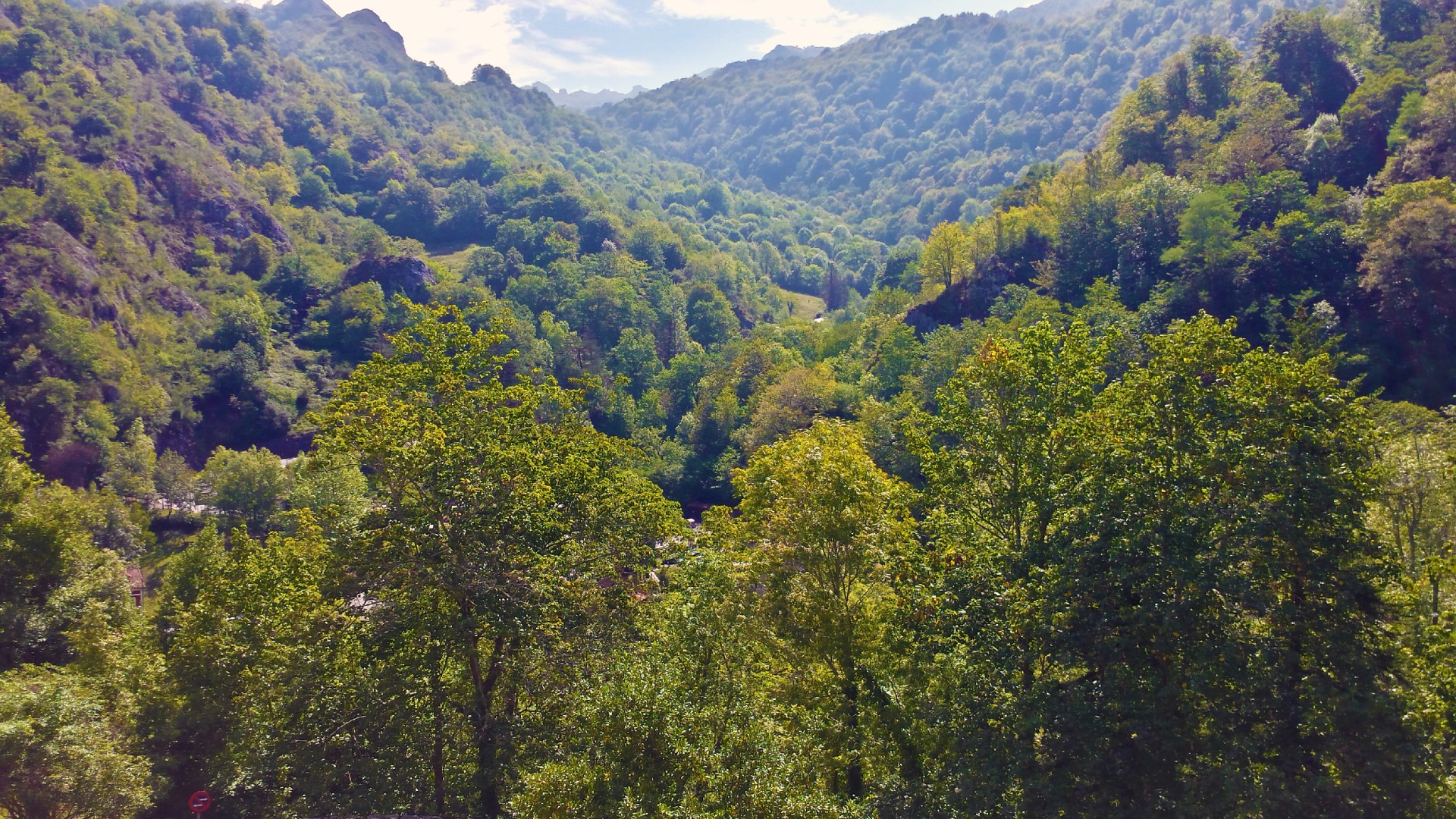
Wooded mountain slopes in Picos de Europa National Park
Miriam.nh via Wikimedia Commons · CC BY-SA 3.0 ES

High mountains, treeline & alpine slopes

The Picos de Europa, Pyrenees and Sierra Nevada add species that are rarely seen in the lowlands. Elevation changes create different bird communities in a single day, from woodpeckers and woodland birds in the valleys to choughs, eagles and alpine species above the treeline.

Characteristic species

  • Bearded Vulture
  • Alpine Chough
  • Alpine Accentor
  • Wallcreeper
  • Golden Eagle
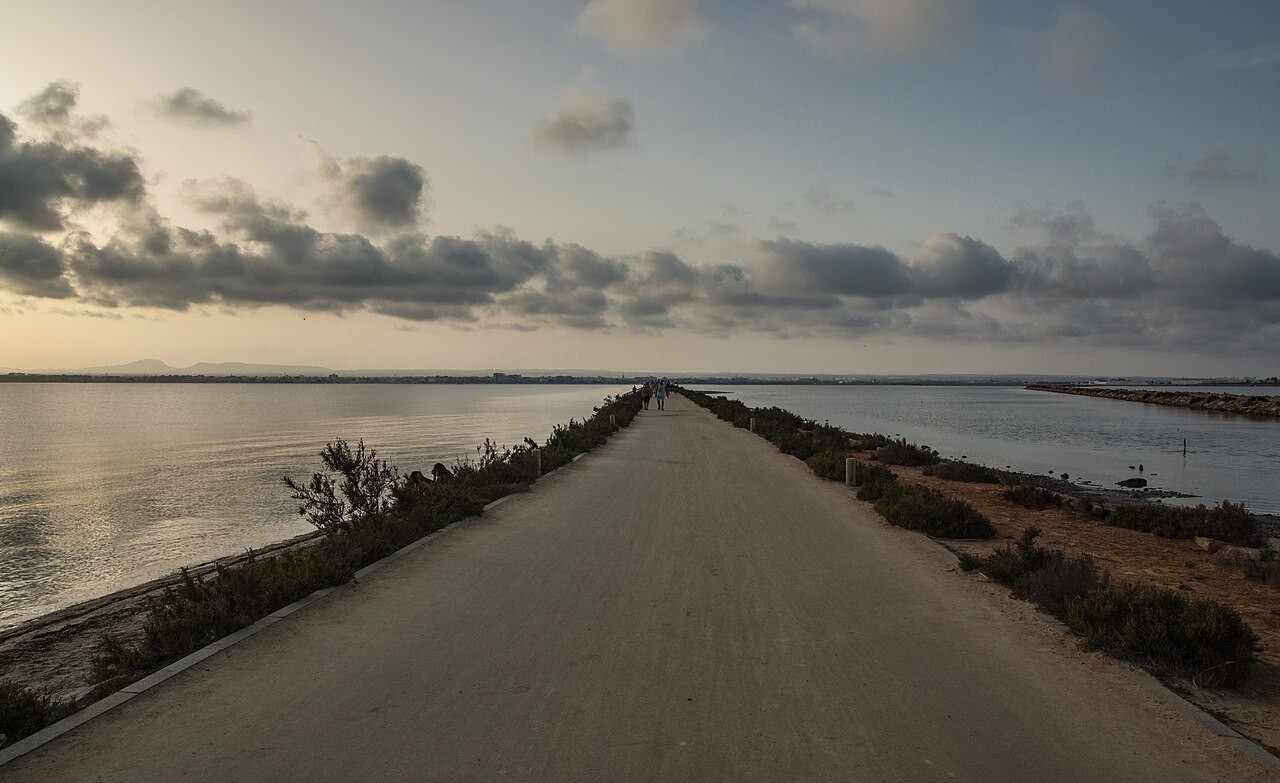
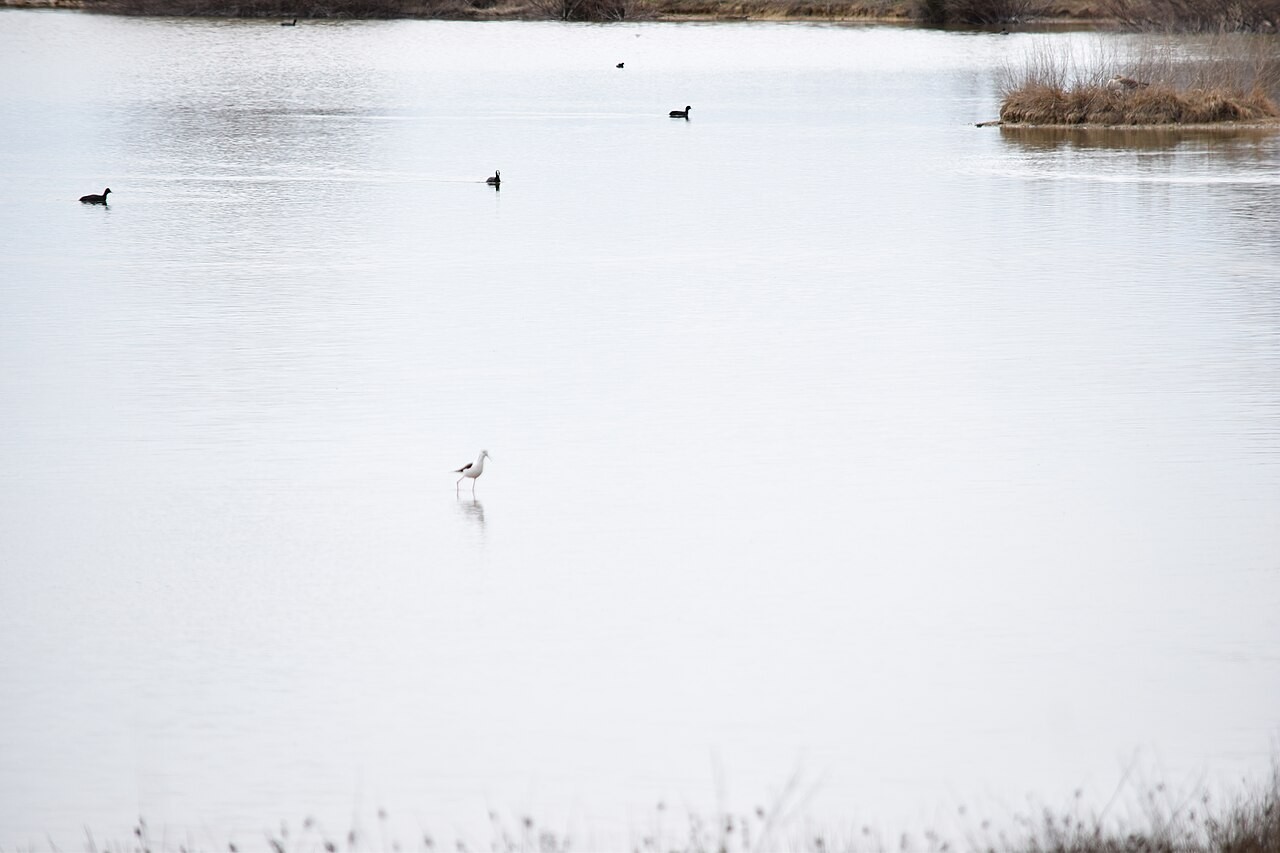
Path beside shallow lagoons at Salinas de San Pedro del Pinatar
Pedro J Pacheco via Wikimedia Commons · CC BY-SA 4.0

Delta coasts, salt pans & beaches

The Mediterranean coast offers much more than beaches. In the Ebro Delta, around Santa Pola, at Valencia’s Albufera and near Tarifa, you will find salt pans, mudflats, dunes and shallow water. These transition zones are important for breeding terns, waders and wintering waterbirds.

Characteristic species

  • Audouin’s Gull
  • Slender-billed Gull
  • Black-winged Stilt
  • Kentish Plover
  • Greater Flamingo

Birdwatching throughout the year

Spain birding calendar: what can you expect each season?

Spain is interesting in every season, but the best bird species and nature reserves change throughout the year. Winter brings cranes and waterbirds, spring brings song and the arrival of summer visitors, while autumn makes the major migration across the Strait of Gibraltar visible.

WinterDecember through FebruarySpringMarch through MaySummerJune through AugustAutumnSeptember through November
  1. January

    Winter

    Cranes and winter wetlands

    In January, Spain’s lagoons and marshes are at their best for winter birds. Gallocanta attracts large numbers of cranes, while Doñana, the Ebro Delta and coastal lagoons hold groups of flamingos, ducks, waders and Glossy Ibises.

    Recommended areasGallocanta, Doñana, the Ebro Delta and the salt pans of Andalusia.

  2. February

    Winter

    Late winter visitors and early displays

    Gallocanta’s cranes are still present but preparing for their return migration. In the steppes, Great Bustards and Little Bustards begin displaying when conditions are favourable. In the south, longer days bring the first raptors higher into the thermals.

    Recommended areasGallocanta, Villafáfila, Extremadura and the Andalusian dehesa.

  3. March

    Spring

    Spring migration gets underway

    March is a transition month with winter birds, returning waders and the first summer visitors. Activity increases in Doñana and along the southern coast. In open areas, raptors are easy to spot when the morning sun begins generating thermals.

    Recommended areasDoñana, the Strait of Gibraltar, the Ebro Delta and Aiguamolls de l’Empordà.

  4. April

    Spring

    Song, raptors and returning summer visitors

    In April, Mediterranean woodlands fill with birdsong. Black Storks, Short-toed Snake Eagles and other migrants return to their breeding grounds. Along the coast and in wetlands, passing waders and terns can provide unexpected sightings.

    Recommended areasMonfragüe, Sierra de Andújar, Doñana and the wetlands of Catalonia.

  5. May

    Spring

    Peak month for colourful summer visitors

    May is an excellent month for seeing Spanish birds in their breeding habitat. European Bee-eaters, Hoopoes, Golden Orioles, Montagu’s Harriers and songbirds are active. In Extremadura and Andalusia, an early morning outing can produce an impressive species list.

    Recommended areasExtremadura, Andalusia, the Ebro Delta and Aiguamolls de l’Empordà.

  6. June

    Summer

    Breeding season in Mediterranean landscapes

    In June, territorial behaviour, feeding flights and begging young are easy to observe. The heat makes an early start essential. In the mountains, temperatures are more comfortable and woodland edges, alpine meadows and rocky slopes come alive.

    Recommended areasMonfragüe, Sierra de Andújar, Picos de Europa and the Pyrenees.

  7. July

    Summer

    First signs of autumn migration

    From July onwards, attention shifts towards coastal areas and river deltas. Waders gather along mudflats and lagoons. Around the Strait of Gibraltar, the first larger groups of storks and raptors appear, especially when wind and thermals are favourable.

    Recommended areasTarifa, the Ebro Delta, Doñana and the Catalan coast.

  8. August

    Summer

    Raptor migration over southern Spain

    August is an excellent month for visible migration. White Storks, Black Kites, European Honey-buzzards, harriers and eagles use the Strait of Gibraltar on their way to Africa. On calm mornings, Bee-eaters and other summer visitors are still active.

    Recommended areasTarifa, Los Lances, Bolonia and the viewpoints of El Estrecho Natural Park.

  9. September

    Autumn

    Peak migration at Gibraltar

    For many birders, September is the main month for migration across the Strait of Gibraltar. Thousands of storks, raptors and smaller migrants can create an impressive spectacle. Along the coast, waders and songbirds also appear as they continue south.

    Recommended areasTarifa, Algarrobo, Cazalla and the coast between Algeciras and Tarifa.

  10. October

    Autumn

    Cranes arrive in Aragón

    In October, the first large crane flocks arrive at Gallocanta. Doñana, the Ebro Delta and Aiguamolls once again attract more winter birds. In open farmland, raptors and bustards are easiest to find in soft morning light.

    Recommended areasGallocanta, Villafáfila, Doñana and the Ebro Delta.

  11. November

    Autumn

    Winter birding in marshes and dehesa

    November brings a clear shift towards the winter birding scene. Cranes are present in large numbers, while Cinereous and Griffon Vultures use thermals and food sources in the dehesa. Waders and ducks become more numerous in coastal areas.

    Recommended areasExtremadura, Gallocanta, Doñana and the salt pans of Andalusia.

  12. December

    Winter

    Large winter flocks in open landscapes

    December is ideal for anyone who wants to see large groups of birds. At Gallocanta and in Extremadura, cranes gather in open grassland and farmland. Doñana and the coastal lagoons offer a mix of flamingos, ducks, ibises and waders.

    Recommended areasGallocanta, Monfragüe, Doñana, the Ebro Delta and Villafáfila.

Seasonal information and area examples: SEO/BirdLife, MITECO on Doñana wildlife, Fundación Migres, Gobierno de Aragón and Parc Natural del Delta de l’Ebre.

Birding areas in Spain

Spain’s best birding sites: where can you go birdwatching?

From the marshes of Doñana to the cranes of Gallocanta and the cliffs of Monfragüe, Spain has birding areas with very different character. This selection combines well-known, accessible locations with high species diversity and spreads the best birding sites across the south, west, north and east of the country.

Marshes of Doñana National Park with dunes and coastal wetlands
Photo: Gabriela Coronado Hernández via Wikimedia Commons · CC BY-SA 4.0

Andalusia

Marsh · dune · lagoon

Doñana

One of Europe’s best-known birding wetlands

Doñana is an obvious first choice for birdwatching in southern Spain. Its marshes, lagoons, dunes and pinewoods form one vast landscape where more than 400 bird species have been recorded. In a good winter, large numbers of geese, ducks, flamingos, ibises and waders can gather. Visit the public centres and trails, but remember that some parts of the core area are accessible only on an official tour.

Look for
Flamingo, Glossy Ibis, Purple Swamphen, Spoonbill and Spanish Imperial Eagle.
Plan around
Autumn and winter for waterbirds. Book guided tours early.
Salto del Gitano with cliffs and the Tagus in Monfragüe
Photo: Gonzalo 11789 via Wikimedia Commons · CC BY-SA 4.0

Extremadura

River gorge · dehesa

Monfragüe

Watch raptors from roads and viewpoints

Monfragüe is one of the best places for a first raptor trip to Spain. At Salto del Gitano, Peña Falcon and around Villarreal de San Carlos, roads and viewpoints lie close to cliffs where Griffon Vultures, Cinereous Vultures and Black Storks nest. The combination of Mediterranean woodland, reservoirs and rocky walls works well for short stops as well as multi-day hikes.

Look for
Griffon Vulture, Cinereous Vulture, Black Stork, Spanish Imperial Eagle and Egyptian Vulture.
Plan around
Early morning for songbirds, later in the day for thermals above the cliffs.
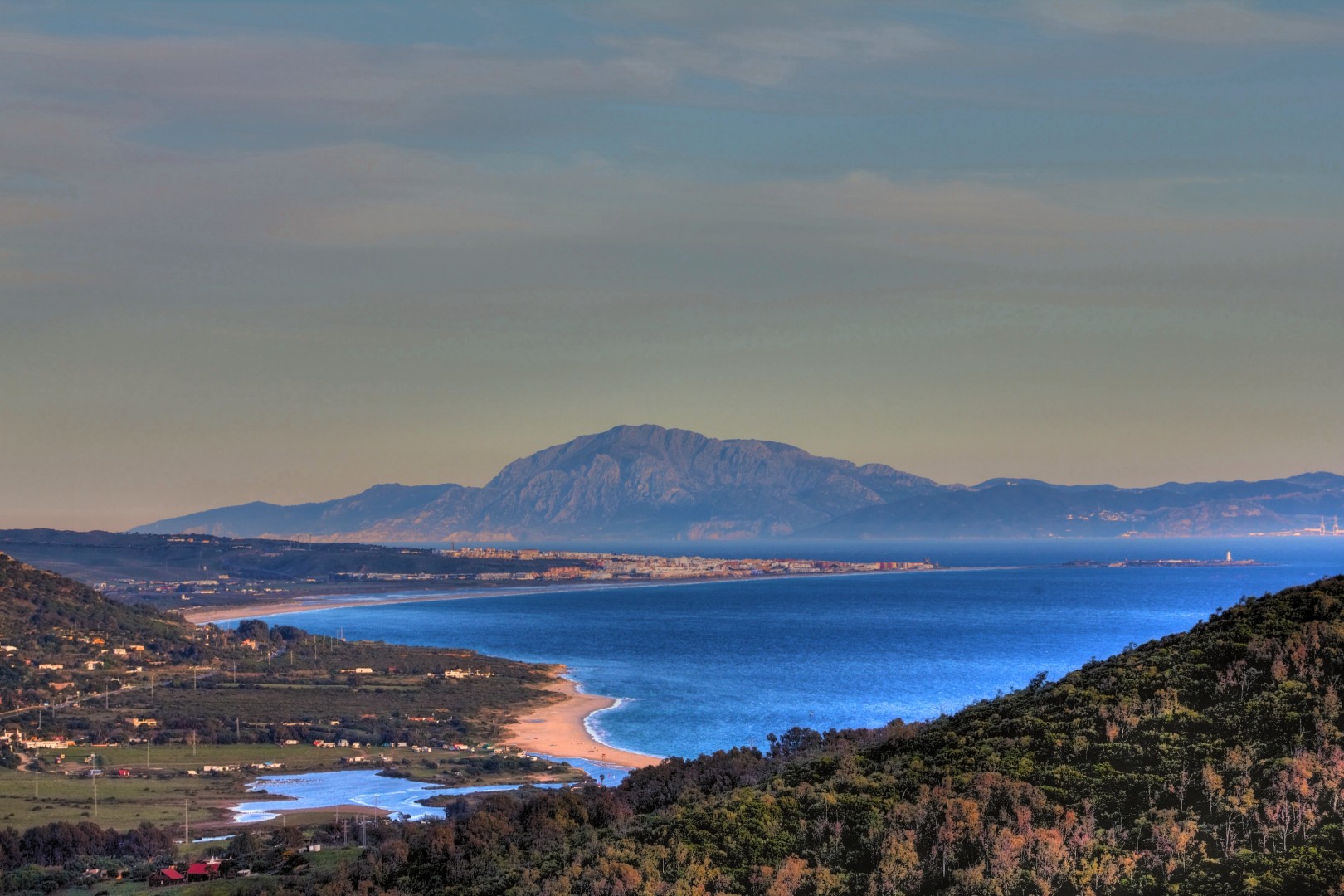
View of Tarifa and the Strait of Gibraltar towards Africa
Photo: jose rambaud via Wikimedia Commons · CC BY 2.0

Cádiz · Andalusia

Migration bottleneck · coast · hills

Strait of Gibraltar near Tarifa

A spectacular migration watchpoint

The Strait of Gibraltar is where many European migrants make the crossing to Africa. From the hills around Tarifa, Cazalla and Algarrobo, you can watch storks, kites, harriers, eagles and smaller migrants gathering before crossing the strait. Numbers depend heavily on wind, thermals and the timing of migration.

Look for
White Stork, Black Kite, European Honey-buzzard, Short-toed Snake Eagle and Egyptian Vulture.
Plan around
August and September for autumn migration. Check wind and visibility.
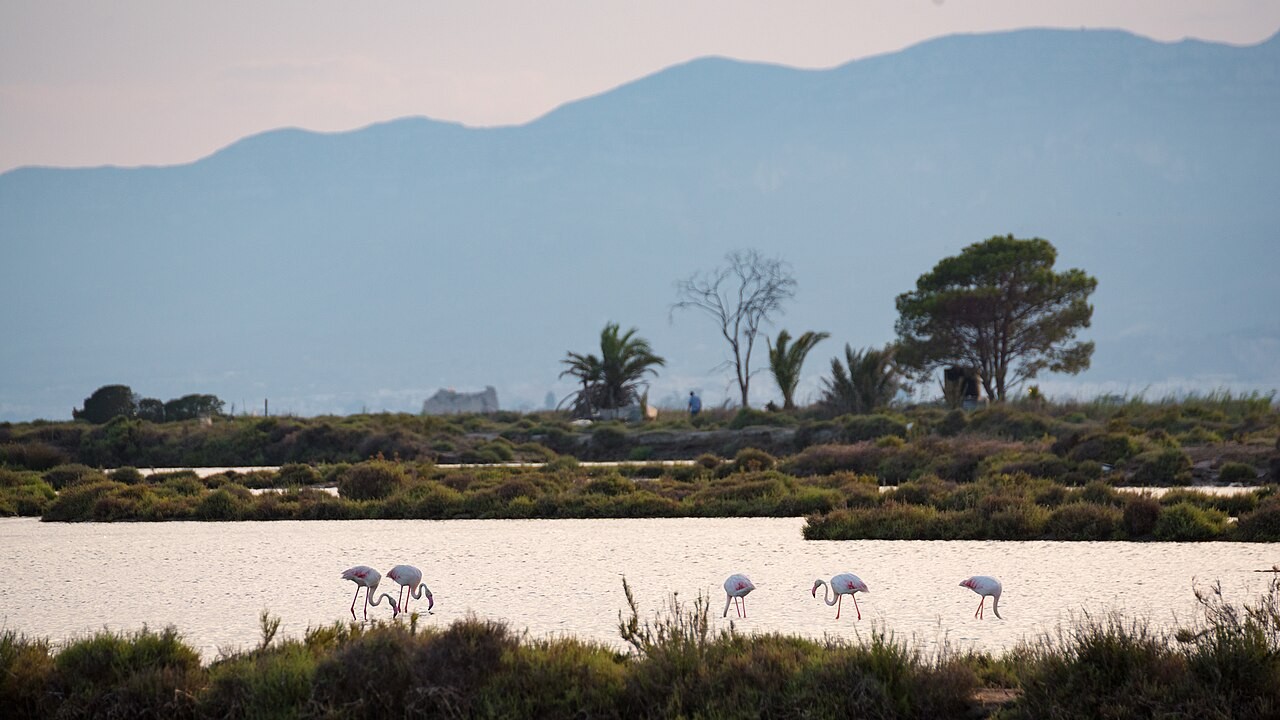
Flamingos in a lagoon of the Ebro Delta
Photo: ShipSpotterDE via Wikimedia Commons · CC BY-SA 4.0

Catalonia

Rice field · delta · salt pan

Ebro Delta

An accessible mix of rice fields and lagoons

The Ebro Delta is one of Spain’s most practical birding areas for independent birders. Rice fields, reedbeds, freshwater marshes, coastal lagoons and salt pans are close together and can be explored by walking and cycling routes. The birdlife changes with water levels and rice cultivation. Early mornings and the final hours of daylight offer the best light and most activity.

Look for
Flamingo, Audouin’s Gull, Black-winged Stilt, Purple Swamphen and Zitting Cisticola.
Plan around
Spring and autumn for migration, winter for waterbirds and coastal species.
Wetlands of Aiguamolls de l Empordà with the Gulf of Roses in the background
Photo: Alan Mattingly via Wikimedia Commons · CC0 1.0

Girona · Catalonia

Marsh · reedbed · coast

Aiguamolls de l’Empordà

Hides and walking trails around El Cortalet

Aiguamolls de l’Empordà is a compact nature reserve with plenty of variety. Around El Cortalet, El Matà and the lagoons, observation hides and walking trails pass through wet grassland, reedbeds, canals and coastal marshes. The park has recorded 338 bird species, making it an attractive stop on a Costa Brava road trip, especially during spring and autumn migration.

Look for
Kingfisher, Western Marsh Harrier, Bluethroat, Purple Heron and White Stork.
Plan around
Early morning. Stay on the trails and check for temporary closures.
Waterbirds in the lagoon of Lagunas de Villafáfila
Photo: Hispania Nostra via Flickr/Wikimedia Commons · CC BY 2.0

Zamora · Castilla y León

Salt lagoon · steppe · farmland

Lagunas de Villafáfila

Great Bustards and waterbirds in open country

Villafáfila combines shallow salt lagoons with extensive grain fields. The open horizon makes it especially good for finding Great Bustards, Little Bustards, cranes and Lesser Kestrels. With few trees or buildings, birds can often be discovered at a considerable distance. A spotting scope is particularly useful here.

Look for
Great Bustard, Little Bustard, Common Crane, Avocet and Lesser Kestrel.
Plan around
Winter for large flocks, spring for displaying bustards and breeding birds.
Cranes at Laguna de Gallocanta in Aragón
Photo: Manuel Muñoz Farriols via Wikimedia Commons · CC BY-SA 4.0

Aragón

Salt lake · steppe · cranes

Laguna de Gallocanta

One of Spain’s best places to see cranes

Gallocanta is a large endorheic salt lake on the border of Zaragoza and Teruel. From October through March, a large part of the western crane population passes through the area. The birds roost around the lake and fly to nearby fields at sunrise. Viewpoints are located around the reserve, and some observation facilities require reservations.

Look for
Common Crane, flamingo, Black-winged Stilt, Avocet and Great Bustard.
Plan around
October through March. Use an official viewpoint at sunrise.
Mountain landscape in Picos de Europa National Park near Covadonga
Photo: Miriam.nh via Wikimedia Commons · CC BY-SA 3.0 ES

Asturias · Cantabria · León

Mountain gorge · woodland · alpine meadow

Picos de Europa

Elevation and mountain birds in northern Spain

Picos de Europa is a good choice if you want to see mountain birds as well as wetlands and raptors. From Covadonga and Fuente Dé, among other places, trails pass through deciduous woodland, limestone gorges and open mountain meadows. Search the valleys for woodpeckers and woodland birds, then scan above the cliffs for Golden Eagles, Peregrine Falcons and Alpine Choughs. Weather can change quickly, so plan your elevation and route carefully.

Look for
Alpine Chough, Golden Eagle, Peregrine Falcon, Wallcreeper and Black Woodpecker.
Plan around
Spring through early autumn. Check mountain weather and access.

Popular birds of Spain

Five remarkable Spanish birds and where to see them

From the rare Spanish Imperial Eagle and impressive Griffon Vulture to the Great Bustard, colourful flamingo and lively Bee-eater, these are five species that make a birding trip through Spain especially memorable. They represent different Spanish landscapes and are realistic targets with good planning.

  1. Spanish Imperial Eagle in flight
    Photo: Juan Lacruz via Wikimedia Commons, CC BY-SA 3.0

    Spanish Imperial Eagle

    The Spanish Imperial Eagle is one of the most sought-after raptors on the Iberian Peninsula. Adults stand out with broad wings, dark plumage and white shoulder patches. Search above old Mediterranean woodlands and dehesa landscapes, while always keeping a safe distance from nests and roosting sites.

    Where can you see the Spanish Imperial Eagle in Spain?

    • Monfragüe · cliffs, dehesa and river valleys in Extremadura
    • Sierra de Andújar · Mediterranean woodland and open valleys in Jaén
    • Cabañeros and Doñana · large protected landscapes with suitable habitat
  2. Griffon Vulture flying above Monfragüe National Park
    Photo: Laureano Ruiz via Wikimedia Commons, CC BY 4.0

    Griffon Vulture

    The Griffon Vulture is one of Spain’s most visible large birds. In areas with cliffs and thermals, dozens can circle overhead for hours. The species is less scarce than the Cinereous Vulture, making it a realistic target for almost anyone visiting Spain for the first time.

    Where can you see Griffon Vultures in Spain?

    • Monfragüe · Salto del Gitano and the cliffs along the Tagus
    • Hoces del Duratón · a deep river gorge north of Madrid
    • Arribes del Duero and Sierra de Grazalema · rocky walls with strong thermals
  3. Great Bustard in the Spanish steppe near Villafáfila
    Photo: Luiz Lapa via Wikimedia Commons, CC BY 2.0

    Great Bustard

    The Great Bustard is an impressive steppe bird found mainly in open agricultural landscapes. Males are especially striking during their spring display, while birds are more often seen in groups on fields and fallow land in winter. Use a spotting scope and stay on roads or designated viewpoints.

    Where can you see Great Bustards in Spain?

    • Lagunas de Villafáfila · open farmland and lagoons in Zamora
    • Extremadura · including the steppes around La Serena and Cáceres
    • Castilla-La Mancha and Aragón · extensive grain landscapes with suitable resting areas
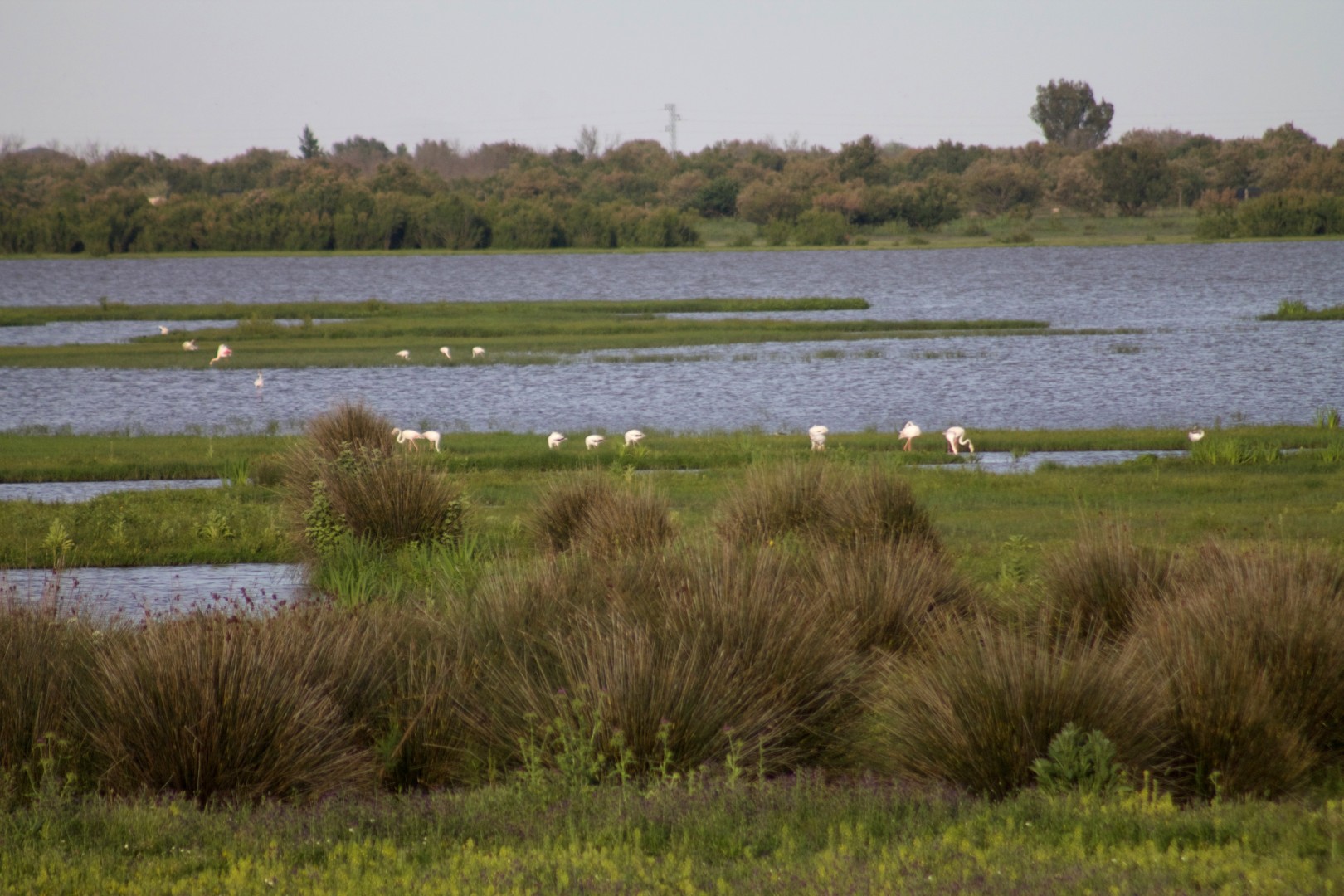
  4. Flamingos on open water in Doñana National Park
    Photo: Rameylauren via Wikimedia Commons, CC BY-SA 4.0

    Greater Flamingo

    The flamingo is one of the most recognisable birds of Spain’s wetlands. In shallow lagoons and salt pans, flocks feed while slowly moving through the water. Numbers and breeding success vary considerably from year to year, depending on rainfall, water levels and food availability.

    Where can you see flamingos in Spain?

    • Doñana · marshes, lagoons and temporary waters in Andalusia
    • Laguna de Fuente de Piedra · a well-known breeding site in Málaga
    • Ebro Delta and Santa Pola · coastal lagoons and salt pans on the Mediterranean
  5. European Bee-eater in flight above Spain
    Photo: Charles J. Sharp via Wikimedia Commons, CC BY-SA 4.0

    European Bee-eater

    The European Bee-eater is one of Spain’s most colourful summer visitors. Look for its long, slightly curved bill, yellow throat and green and blue plumage. Bee-eaters often perch on telephone wires or bare branches along sandy riverbanks, where they catch insects in flight.

    Where can you see European Bee-eaters in Spain?

    • Extremadura · riverbanks, dehesa and open farmland
    • Andalusia · warm valleys and sandy riverbanks
    • Ebro Delta and Valencia · open landscapes during spring and summer

Useful tips and information

Practical questions about birdwatching in Spain

Wondering when to visit Spain, where you have the best chance of seeing Spanish raptors or how to explore a nature reserve independently? Below you will find answers to frequently asked questions about birding trips, migration, national parks, wetlands and recent bird sightings in Spain.

For a first birding trip, Doñana is the most complete choice because it combines marshes, lagoons, dunes and Mediterranean vegetation. Monfragüe is stronger for vultures, Black Storks and Iberian raptors. The Strait of Gibraltar is the best choice for visible migration, while the Ebro Delta and Aiguamolls de l’Empordà excel for coastal birds, waders and waterbirds.

If Great Bustards are your main target, choose Villafáfila or the steppes of Extremadura. For cranes, Gallocanta in Aragón is one of the best-known destinations. Use FaunaMap to combine several birding viewpoints in the same area and adapt your route to the species you want to see.

More background is available in the official information about Doñana and Monfragüe.

April and May are excellent months for songbirds, raptors and summer visitors such as the European Bee-eater. September is especially strong for autumn migration at the Strait of Gibraltar. Anyone hoping to see large crane flocks will usually travel to Gallocanta or Extremadura between October and March. In Doñana, the Ebro Delta and other wetlands, winter is often the best season for large numbers of waterbirds.

Summer can be very hot in lowland areas. Start around sunrise and spend the afternoon in higher areas, shaded woodland or taking a siesta. For a broad species list, spring and autumn are the most varied seasons, but Spain offers a different birding experience throughout the year.

For seasonal information, also see the Spanish bird guide from SEO/BirdLife and information from Fundación Migres.

The best-known areas include Monfragüe in Extremadura, Sierra de Andújar in Andalusia, Cabañeros in Castilla-La Mancha and parts of Doñana. Monfragüe is the most practical option for many visitors because public roads and viewpoints overlook large parts of the habitat. In Sierra de Andújar, quiet roads and broad valleys are promising, but more preparation and patience are often needed.

Look early in the day for large raptors above woodland edges, valleys and open dehesa. A sighting is never guaranteed. Keep your distance, do not search for nests and follow the instructions of the site manager. The official information about Monfragüe wildlife gives a useful overview of the species found there.

Monfragüe is one of the most accessible places to see Griffon and Cinereous Vultures. The cliff at Salto del Gitano and the area around Peña Falcon are well-known viewpoints. Other good areas include Hoces del Duratón, Arribes del Duero, Sierra de Grazalema and various gorges in the Pyrenees.

Griffon Vultures often become visible once the sun warms the cliffs and thermals develop. Start by scanning the sky above the cliffs, then use a scope to check ledges and nests. Expect backlighting and avoid loud noises near breeding colonies. The official information about Monfragüe explains why the area is so good for raptors.

Yes. Around Doñana, several visitor centres, public trails and viewpoints can be explored independently on foot or by bicycle. Not every part of the national park is freely accessible, however. Official tours or guided excursions are required for some core areas, and places may be limited.

According to the park administration, autumn and winter are particularly good times to visit because of the winter birds and more comfortable temperatures. Bring binoculars, stay on marked trails and book guided tours in advance. Before leaving, check the current visitor rules and recommendations for Doñana.

Laguna de Gallocanta in Aragón is one of Spain’s best-known crane areas. The main season runs from October through March. Cranes roost around the salt lake and fly to nearby fields and grasslands at sunrise. Extremadura, especially its dehesa landscapes and reservoirs, is also excellent for large winter flocks.

Use official viewpoints and stay outside resting areas. At Gallocanta, some observation facilities and hides require reservations. Read the information from the Gobierno de Aragón in advance and allow plenty of time for the open landscape and sometimes considerable distances.

The best-known sites are Doñana, Laguna de Fuente de Piedra near Málaga, the Ebro Delta and the salt pans of Santa Pola. In all these areas, rainfall, water levels and food availability determine how many flamingos you see. In some years, the largest groups gather in temporary lagoons, while during drier periods birds move to permanent waters and salt pans.

Use a spotting scope or binoculars with enough magnification, as flamingos are often far from the trails. Combine your visit with other shallow wetlands, where you may also find waders, ibises, terns and ducks. The official information about Doñana wildlife and the Ebro Delta is a good starting point.

For autumn migration, plan your visit between August and October and choose several hilly viewpoints around Tarifa, Cazalla and Algarrobo. Wind direction and thermals determine where birds rise and how long they remain above the hills. In clear weather with suitable wind, storks and raptors can appear in large groups.

Spring migration takes place in the opposite direction, usually from March through May. Bring sun protection, water and a spotting scope, and expect long periods when little happens. Use information from Fundación Migres to better understand the migration phenomenon and research areas.

There is no single national rule covering every birding area. Many paths, roads and public viewpoints can be visited independently, but national parks, strict reserves and sensitive breeding areas may have their own regulations. Doñana uses guided tours for certain core areas, hides at Gallocanta may require reservations and trails or observation hides at Aiguamolls de l’Empordà may be temporarily restricted.

Always check the current rules from the regional manager, stay on marked trails and never enter closed areas. A local guide can save time, especially in large reserves, but with a good route, a spotting scope and current site information, Spain is also an excellent country for independent birding.

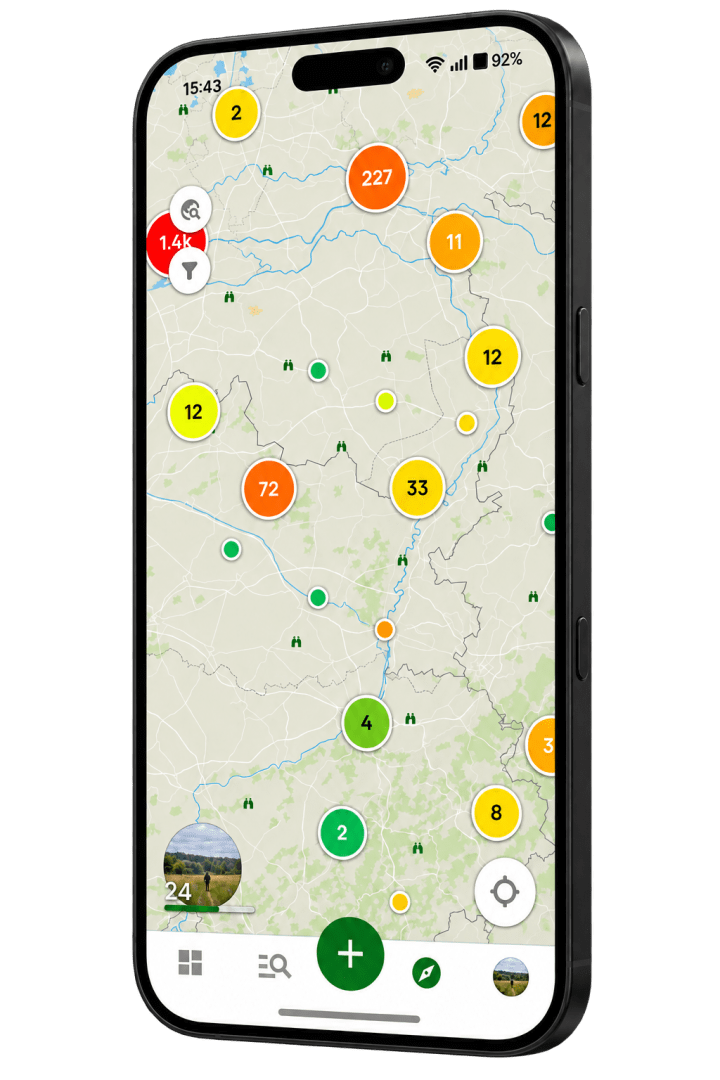
In FaunaMap, you can find recent bird sightings in Spain on an interactive map. Before your trip, select birding viewpoints and hotspots, see which species have historically been expected at a location and keep track of your own sightings and life list.

This is useful when visiting a large area such as Doñana, Monfragüe or the Ebro Delta and you do not want to stay at just one famous site. Open FaunaMap before you leave, choose several viewpoints and then check which species you actually encounter in the field.

View recent bird sightings and viewpoints in FaunaMap

Discover more while birdwatching

  • See recent bird sightingsSee which birds have recently been spotted near you.
  • Explore biodiverse nature areasFind the best places to spot birds and other wildlife.
  • Find sightings by speciesQuickly find sightings of the bird species you want to see.