Birding sites · bird migration · bird species

Birdwatching in Luxembourg: the best birding sites by season

Birdwatching in Luxembourg means moving between wetlands, river valleys, reservoirs, ancient forests, vineyards and small-scale farmland within a short distance. Discover where to go birding in Luxembourg, which bird species to expect each season and how to explore Haff Réimech, Schlammwiss, Mullerthal, the Sûre Valley and the Luxembourg Ardennes.

  • Expected bird species by location
  • Birding hotspots in Luxembourg and worldwide
  • Keep your own life list
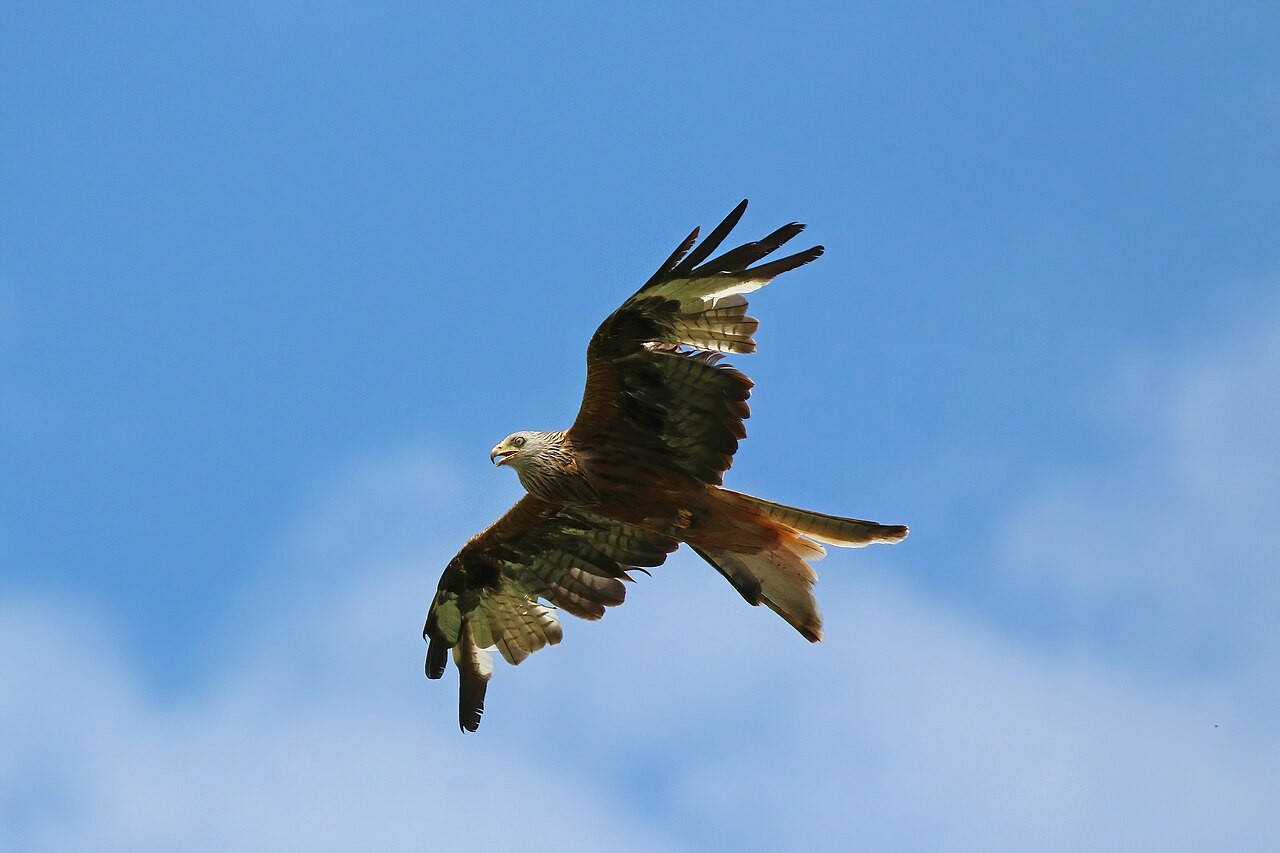
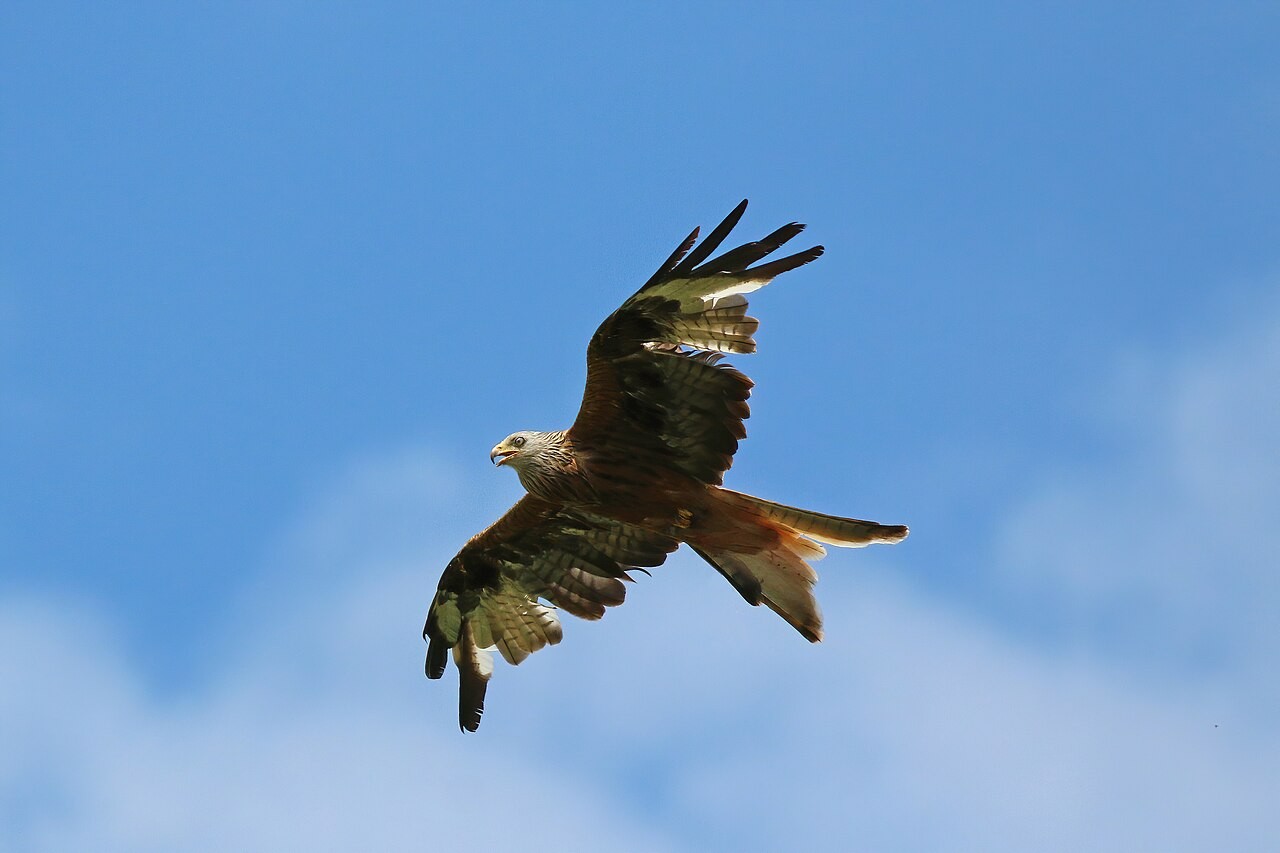
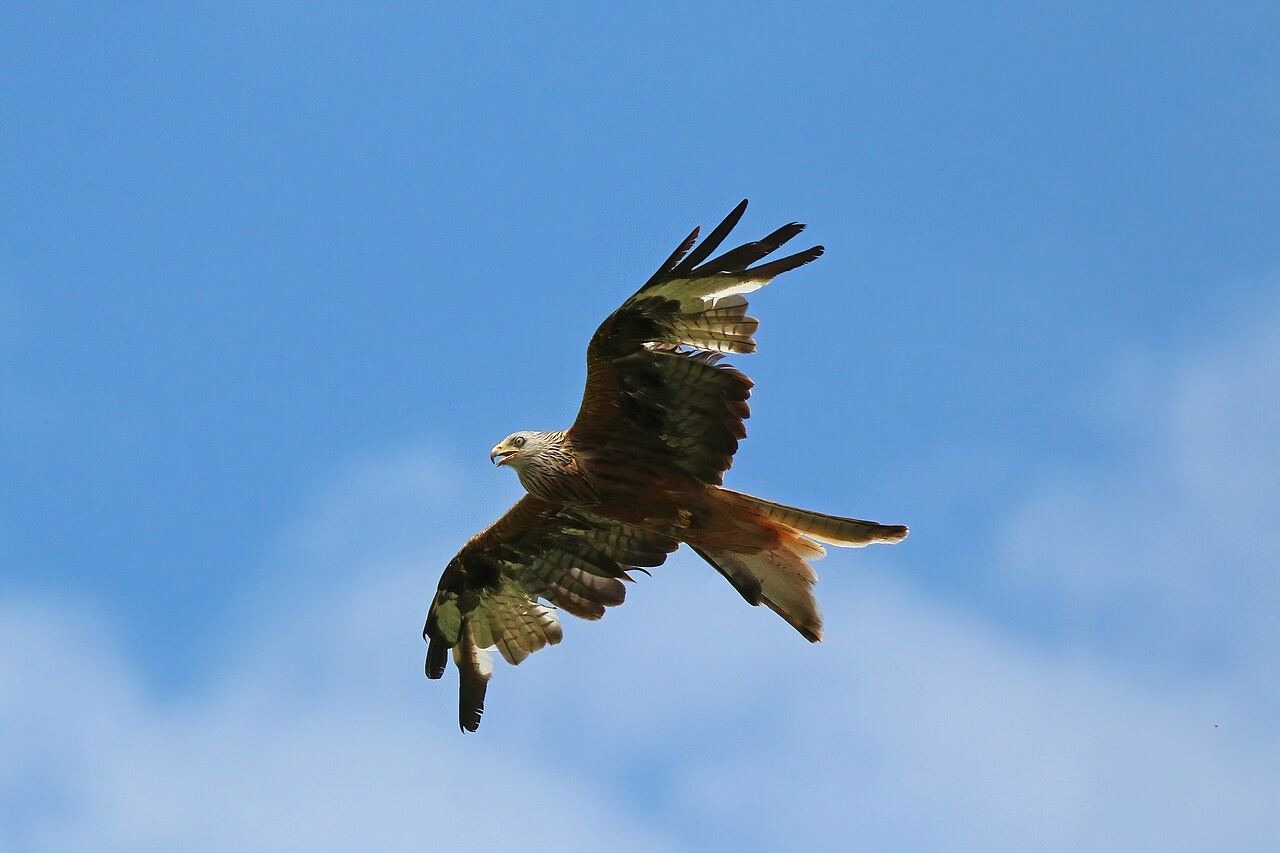
Red kite flying against a blue sky
Iconic bird of LuxembourgThe red kite
Photo: Charles J. Sharp via Wikimedia Commons · CC BY-SA 4.0.

Why go birdwatching in Luxembourg?

Luxembourg is small, but surprisingly rich in birdlife

Luxembourg is not a large country, and that is exactly what makes it appealing for a birding trip. In one day, you can combine wetlands along the Moselle with wooded valleys in the north or rocky forests in Mullerthal. The landscapes are close together, yet differ greatly in water, elevation, soil and vegetation.

For waterbirds and migrants, Haff Réimech near Remerschen is the best-known starting point. The former gravel pits along the Moselle, together with reedbeds, mudflats and shallow shores, form one of the country's richest birding areas. Spring and autumn migration bring extra variety, while ducks, sawbills and other waterbirds gather on open water in winter.

In the north, the scenery changes. The Sûre and Our cut through wooded slopes and plateaus, with quiet stream valleys where black stork, kingfisher, black woodpecker and birds of prey may occur. Around Junglinster, the White Ernz and the Moselle, you will find a mix of fields, orchards, dry grasslands and hedgerows. FaunaMap helps you find birding sites, recent sightings, hotspots and expected species for each location before you set out.

Landscapes and biodiversity

The main bird habitats in Luxembourg

Planning your birding around habitat, season and water levels improves your chances of a rewarding outing. Six landscape types form the basis of Luxembourg's best birding areas, from reed marshes and reservoirs to old beech forests and dry grasslands.

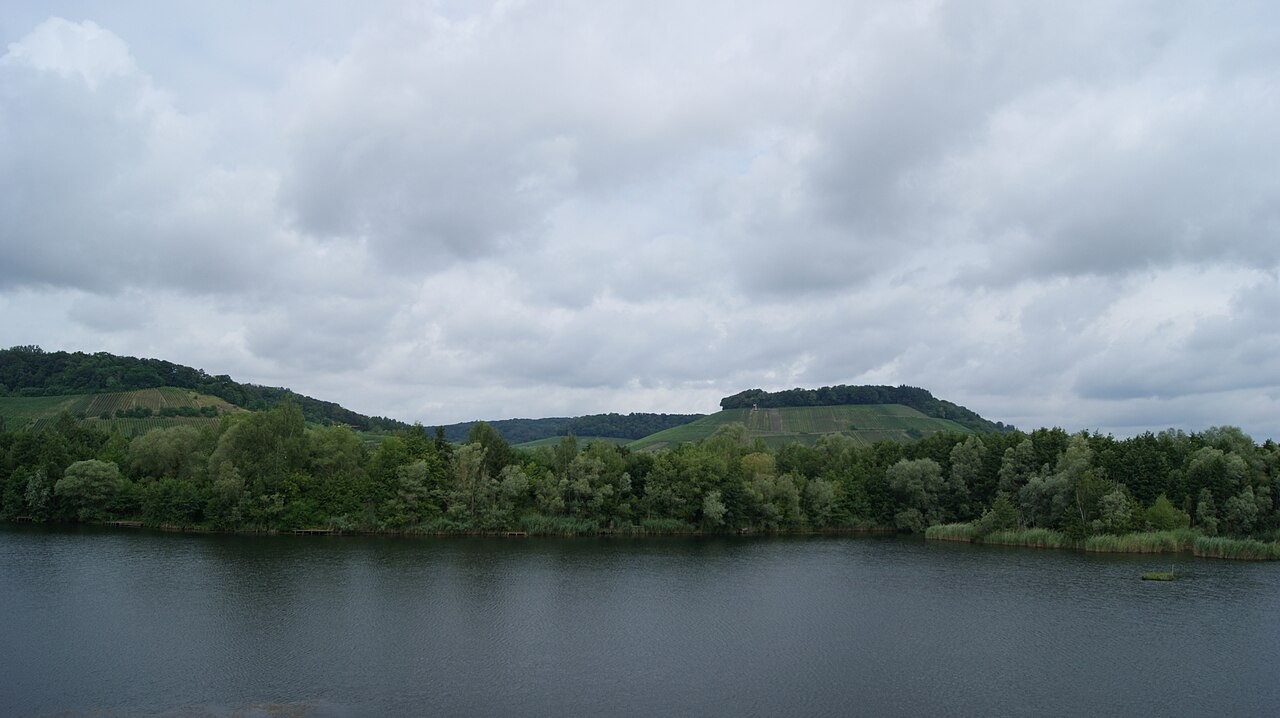
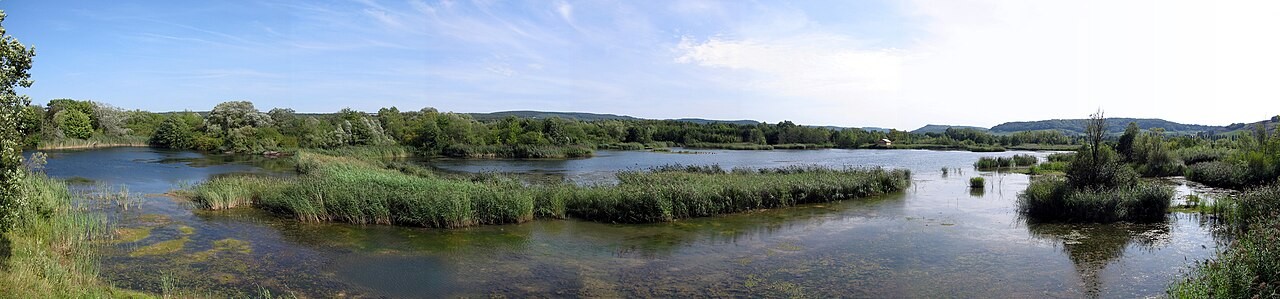
Panorama of Haff Réimech nature reserve with water and open shores
MMFE via Wikimedia Commons · CC BY-SA 3.0

Wetlands, reeds and gravel pits

The former gravel pits along the Moselle create shallow pools, reedbeds, mudflats and quiet resting places. Haff Réimech is especially important for breeding birds, migrants and wintering waterbirds. Use the marked paths and observation hides without disturbing the reed zones.

Typical species

  • Little Bittern
  • Great Reed Warbler
  • Great Crested Grebe
  • Common Pochard
  • Tufted Duck
Wooded river gorge in Manternacher Fiels nature reserve in Luxembourg
Jwh via Wikimedia Commons · CC BY-SA 3.0 LU

River valleys and streams

Along the Sûre, Our, Syre and smaller streams, steep banks, overhanging trees and clean running water create a different birding experience from the wetlands. Quiet river sections suit kingfishers, while old trees and deadwood in the valley forests attract woodpeckers.

Typical species

  • Kingfisher
  • Black Stork
  • Grey Wagtail
  • Grey Heron
  • White-throated Dipper
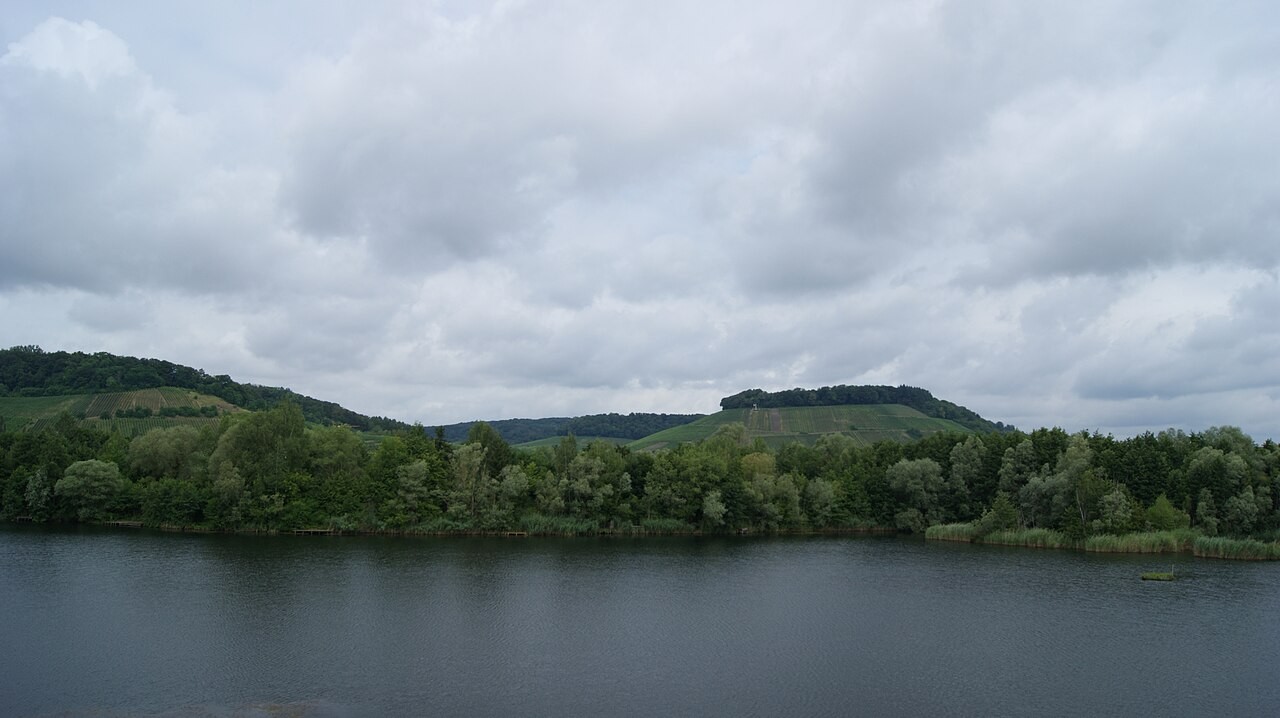
Water landscape near Biodiversum in Remerschen
Asurnipal-Remerschen via Wikimedia Commons · CC BY-SA 4.0

Reservoirs and open water

The Upper Sûre reservoir is Luxembourg's largest lake and, together with the banks of the Our and Moselle, forms an important habitat for waterbirds. From quiet viewpoints, you may see grebes, cormorants and ducks, while birds of prey and occasionally an osprey can appear above the shores.

Typical species

  • Great Crested Grebe
  • Great Cormorant
  • Goosander
  • Mallard
  • Osprey
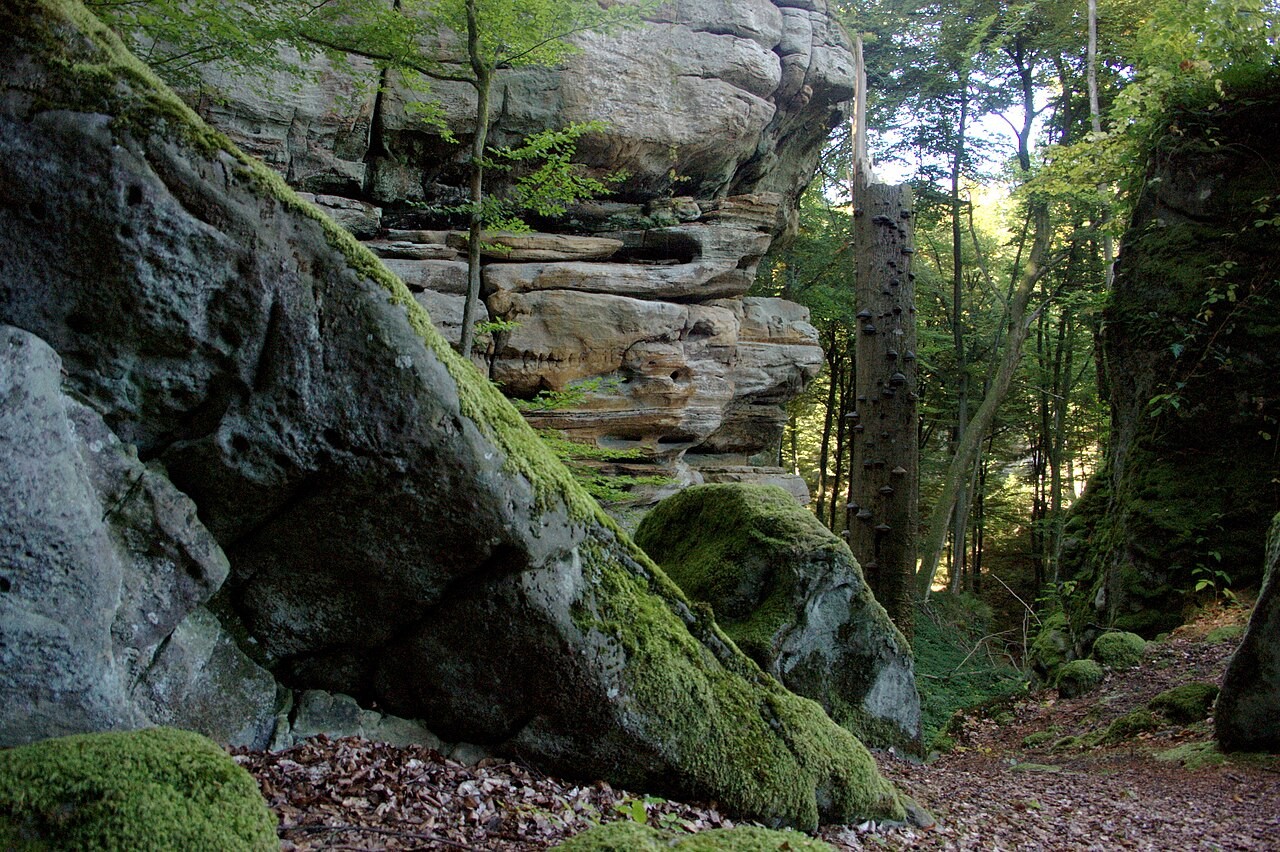
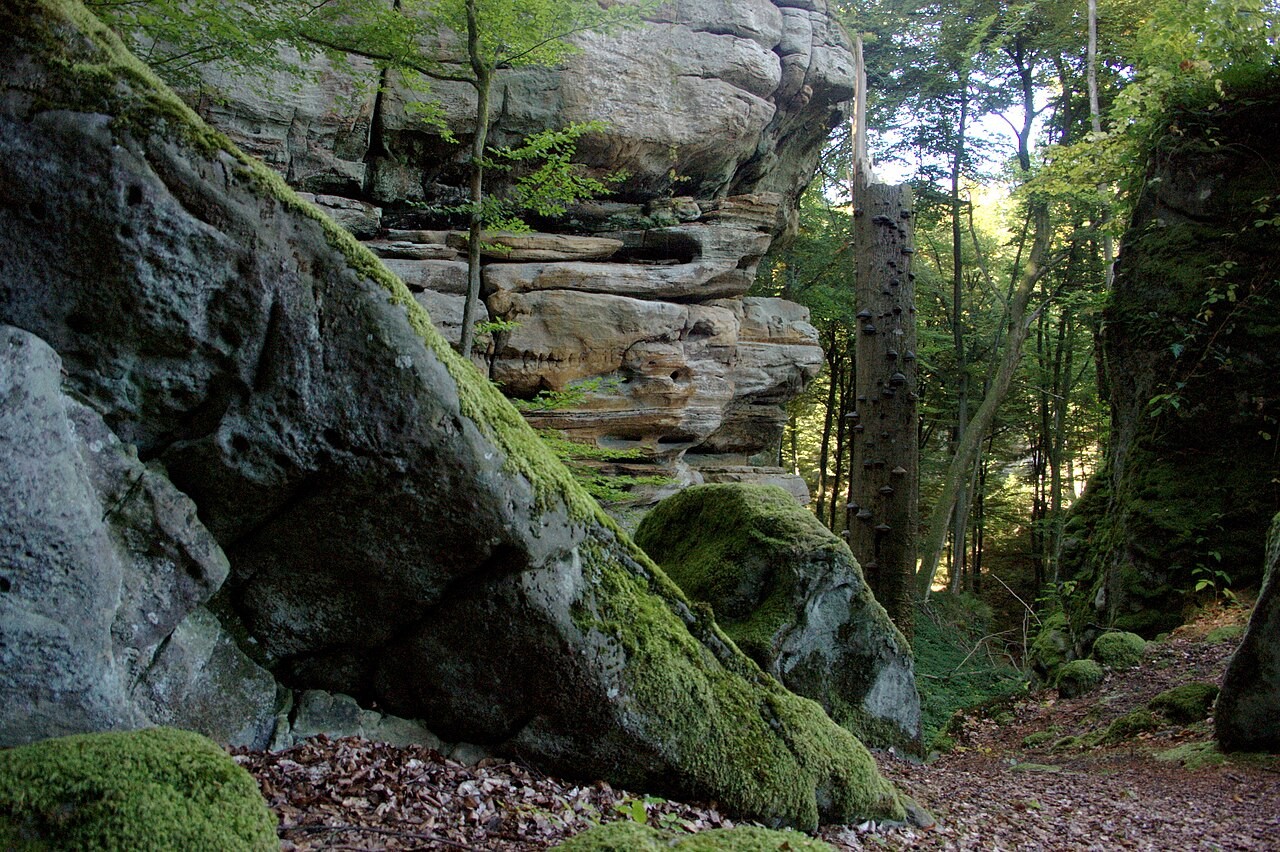
Sandstone rocks and beech forest in Mullerthal
Benowitsch via Wikimedia Commons · CC BY 3.0

Old beech forests and sandstone gorges

In Mullerthal and the eastern ravine forests, old beeches, rock walls, dark gorges and small streams alternate. Set out early and listen for woodpeckers before hiking sounds increase. Deadwood, mature trees and open woodland edges create valuable habitat for cavity-nesting birds.

Typical species

  • Black Woodpecker
  • Middle Spotted Woodpecker
  • Grey-headed Woodpecker
  • Raven
  • Goshawk
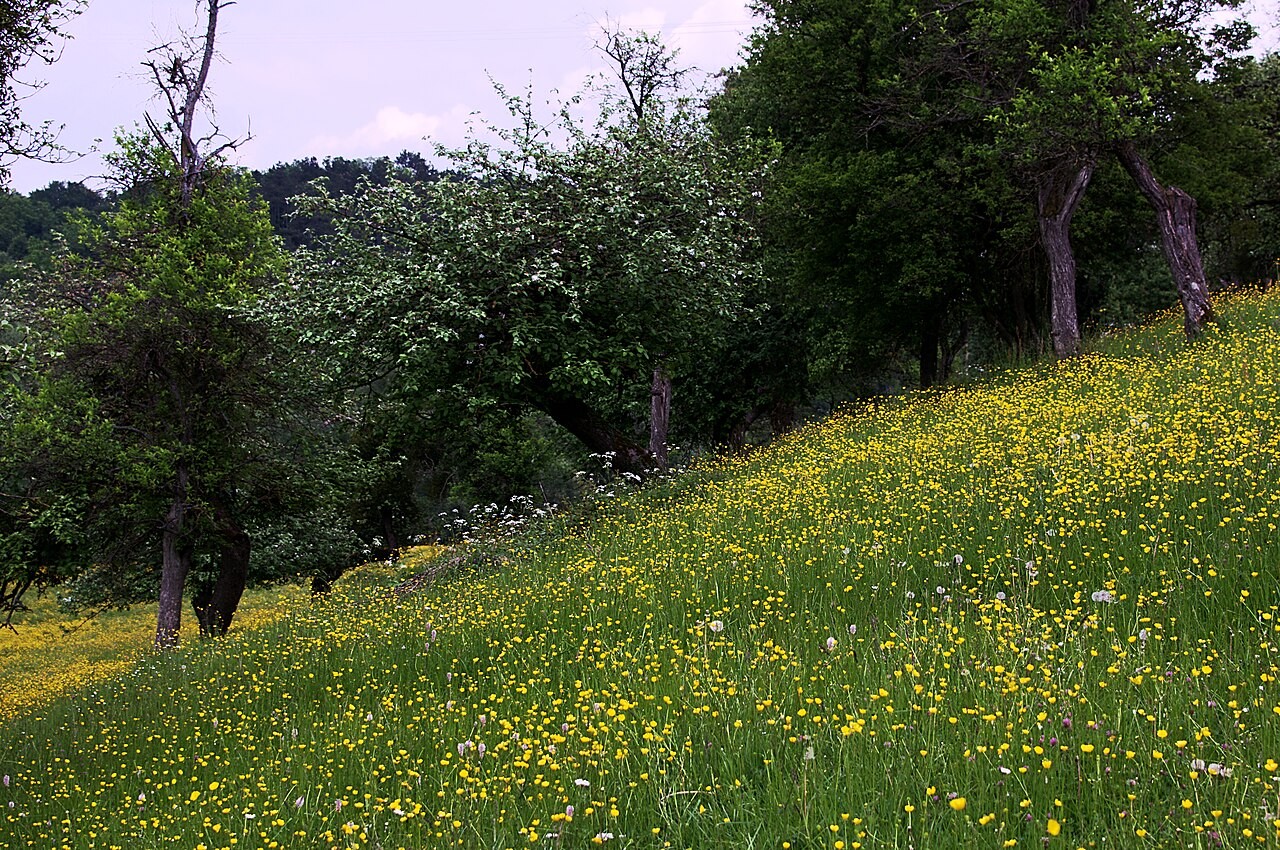
Red kite flying above open countryside
Illustrative image: Charles J. Sharp via Wikimedia Commons · CC BY-SA 4.0

Fields, orchards and village edges

The small-scale farmland around Guttland, Junglinster and the White Ernz consists of fields, grasslands, orchards and hedgerows. These transition zones are especially interesting for birds of prey and songbirds. Look for birds on fence posts, along unpaved roads and above flower-rich field margins.

Typical species

  • Red Kite
  • Common Buzzard
  • Skylark
  • Common Quail
  • Yellowhammer
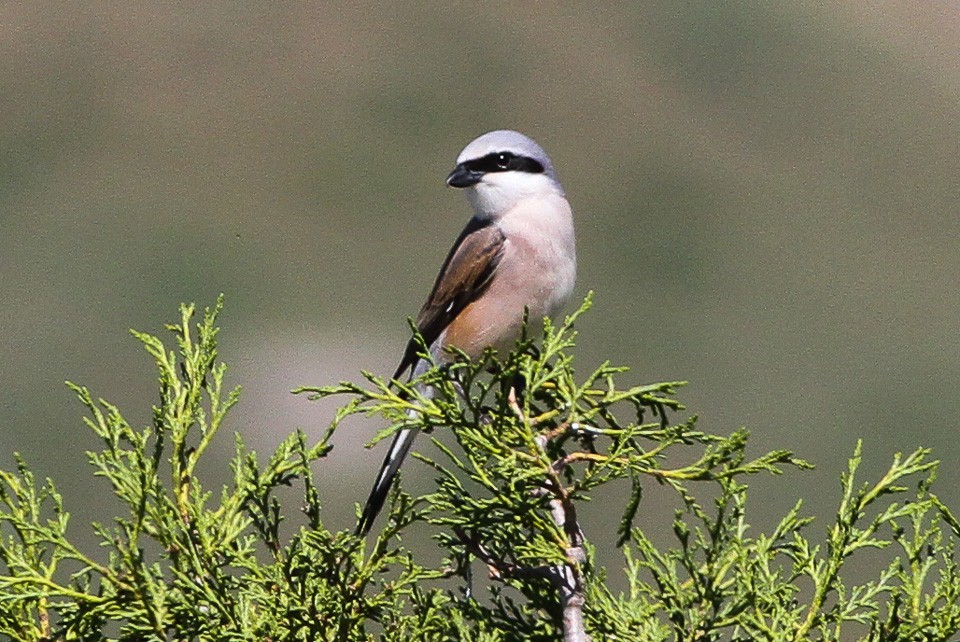
Red-backed Shrike perched on a branch
Illustrative image: Ron Knight via Wikimedia Commons · CC BY-SA 2.0

Dry grasslands, vineyards and hedgerows

On limestone slopes around Junglinster, the Moselle and some southern nature reserves, shrubs, juniper and flower-rich vegetation grow between open grassland and vineyards. These warm, varied habitats attract shrikes, larks and summer visitors.

Typical species

  • Red-backed Shrike
  • Golden Oriole
  • Wryneck
  • Hoopoe
  • Woodlark

Birdwatching throughout the year

Luxembourg bird calendar: what can you expect each season?

Luxembourg has something to offer in every month. In spring, woodland and wetland birds start singing, autumn brings a broad flow of migration, and in winter waterbirds gather on larger lakes and reservoirs.

WinterDecember to FebruarySpringMarch to MaySummerJune to AugustAutumnSeptember to November
  1. January

    Winter

    Winter ducks on open water

    At Haff Réimech, the Upper Sûre and other larger waters, look for Tufted Ducks, Common Pochards, Great Crested Grebes and sawbills. A Bittern may be hiding in the reedbeds. Around the Moselle, calm mornings often offer the clearest views.

    Recommended placesHaff Réimech, the Moselle and the Upper Sûre reservoir.

  2. February

    Winter

    Waterbirds and the first woodland sounds

    Winter visitors are still present, while woodpeckers and woodland birds become more active. Listen for the first drumming in old forests and check stream banks for kingfishers. In mild weather, the transition to spring is already noticeable.

    Recommended placesManternacher Fiels, Mullerthal and sheltered banks of the Sûre and Our.

  3. March

    Spring

    Migrants return

    The first summer visitors return to open country, woodland edges and stream valleys. Red Kites stand out in the landscape as songbirds establish their territories. In wetlands, early waders and ducks may still appear alongside winter visitors.

    Recommended placesGuttland, the White Ernz, the Syre Valley and the edges of Haff Réimech.

  4. April

    Spring

    Spring migration and birdsong

    April is an excellent month for birders who want to hear songbirds. Warblers, Blackcaps, swallows and other summer visitors fill wetlands and woodland edges. In northern valleys, the chance of a Black Stork increases, although the species remains shy and unpredictable.

    Recommended placesSchlammwiss, Haff Réimech, the Our Valley and woodland edges in Éislek.

  5. May

    Spring

    Peak month for breeding birds

    In May, many breeding birds are active and vegetation is still open enough to locate them easily. Look for Middle Spotted Woodpeckers in old forests, Red-backed Shrikes in varied farmland and Golden Orioles in wooded valleys.

    Recommended placesMullerthal, Junglinster, the White Ernz and nature reserves around the Moselle.

  6. June

    Summer

    Young birds and territorial behaviour

    The breeding season is in full swing. In reedbeds, you can see feeding flights by small marsh birds, while kingfishers skim low over rivers. Stay on the paths and avoid quiet banks and closed woodland areas during the breeding season.

    Recommended placesSchlammwiss, Haff Réimech, the Syre and Manternacher Fiels.

  7. July

    Summer

    The first signs of autumn migration

    From July, some waders and swallows become more visible as they head south. Shallow shores at Haff Réimech may hold resting birds. On warm days, Red Kites and buzzards riding thermals are easy to follow.

    Recommended placesHaff Réimech, the Moselle banks, open plateaus and reservoir viewpoints.

  8. August

    Summer

    Migrants along water and woodland edges

    Autumn migration gets underway. Look for groups of waders, wagtails and swallows on open shores and fields. Birds of prey use thermals above the plateaus, while reedbeds are most active early in the day.

    Recommended placesHaff Réimech, Schlammwiss, Éislek and the open countryside around Junglinster.

  9. September

    Autumn

    A strong month for migration

    September combines lingering summer visitors with growing numbers of migrants. At Schlammwiss, the reedbed plays an important role for passing birds. In open country, Wheatears, Whinchats, Meadow Pipits and birds of prey may appear.

    Recommended placesSchlammwiss, Haff Réimech, vineyards along the Moselle and open grasslands.

  10. October

    Autumn

    Visible migration and winter visitors

    In October, visible migration combines with the arrival of new winter visitors. Watch for flocks of finches and thrushes, passing raptors and the first larger numbers of ducks on lakes and reservoirs.

    Recommended placesOpen plateaus in Éislek, Haff Réimech, Schlammwiss and the Upper Sûre.

  11. November

    Autumn

    Reeds, water and late migrants

    The last songbirds pass through and waterbirds settle into their winter quarters. On cold, calm days, Haff Réimech and the larger reservoirs are good places to look for ducks, grebes, cormorants and occasionally a late migrant.

    Recommended placesHaff Réimech, the Moselle Valley, the Upper Sûre and sheltered stream valleys.

  12. December

    Winter

    Winter calm on the lakes

    Luxembourg returns to a winter landscape of ducks, sawbills, grebes and raptors above open country. Leafless trees make it easier to look for woodpeckers, ravens and birds of prey in the forests. Warm clothing and a telescope make longer observations more comfortable.

    Recommended placesHaff Réimech, the Upper Sûre, the Our Valley and woodland edges in Mullerthal.

Seasonal information and area examples: Luxembourg's national bird species list, Administration de la nature et des forêts and Visit Luxembourg.

Birding sites in Luxembourg

The best birding sites in Luxembourg: where can you go birdwatching?

From reed marshes along the Moselle to dark ravine forests in the east and wooded valleys in the Ardennes, Luxembourg offers surprising variety in a small area. Below are popular and reasonably accessible sites across the country. Always check current access rules, trail conditions and any quiet zones before you leave.

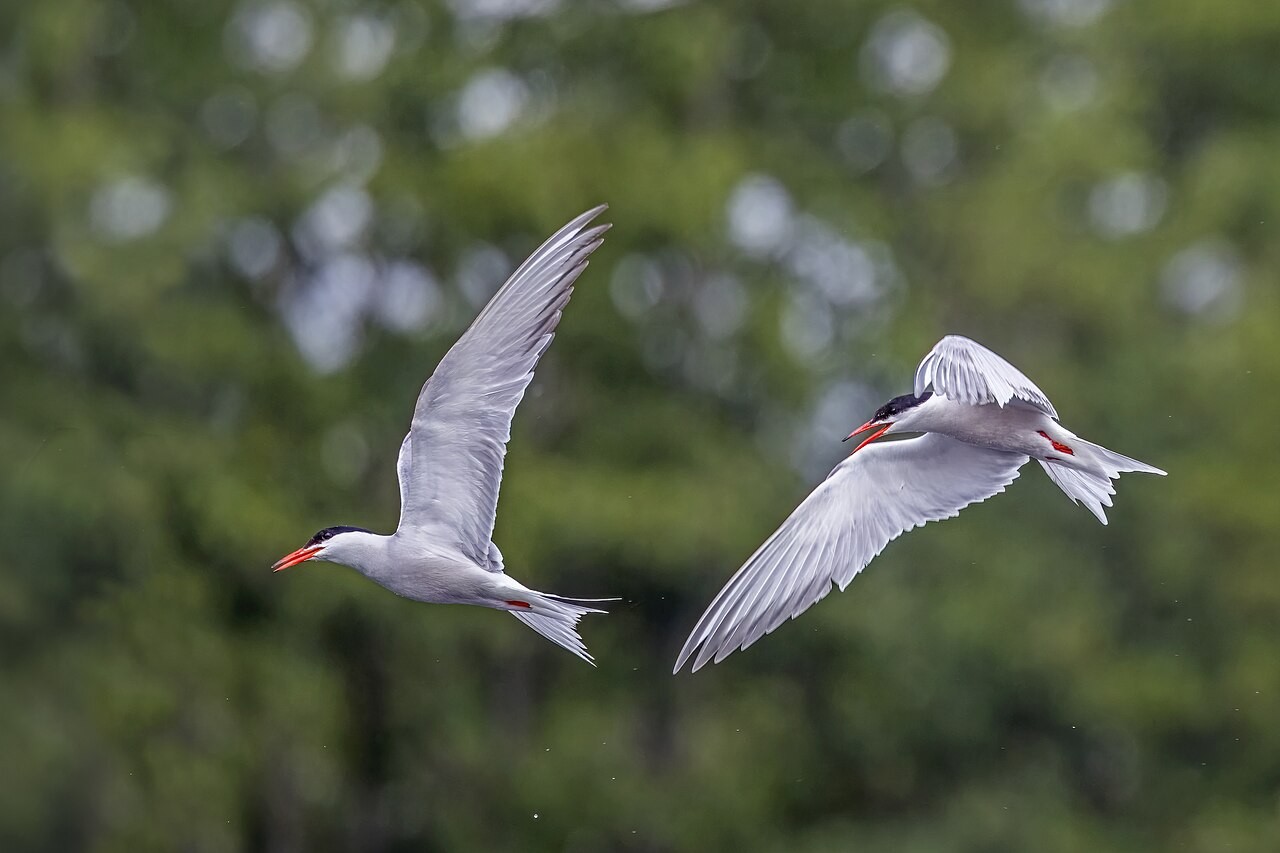
Common Terns in flight at Haff Réimech
Photo: Charles J. Sharp via Wikimedia Commons · CC BY-SA 4.0

Moselle

Wetland · reeds · gravel pits

Haff Réimech

Luxembourg's best-known birding site near Remerschen

For many birders, Haff Réimech is the best first destination in Luxembourg. The former gravel pits include open water, reeds, mudflats and observation points. The official nature trails of 3.7 and 1.6 kilometres are suitable for a relaxed walk. Biodiversum is a natural starting point for information about the area and local conservation measures.

Look for
Little Bittern, Great Crested Grebe, Great Reed Warbler, Common Pochard, Tufted Duck and migrating waders.
Plan around
Early morning, spring migration, autumn migration and calm weather with clear views across open water.
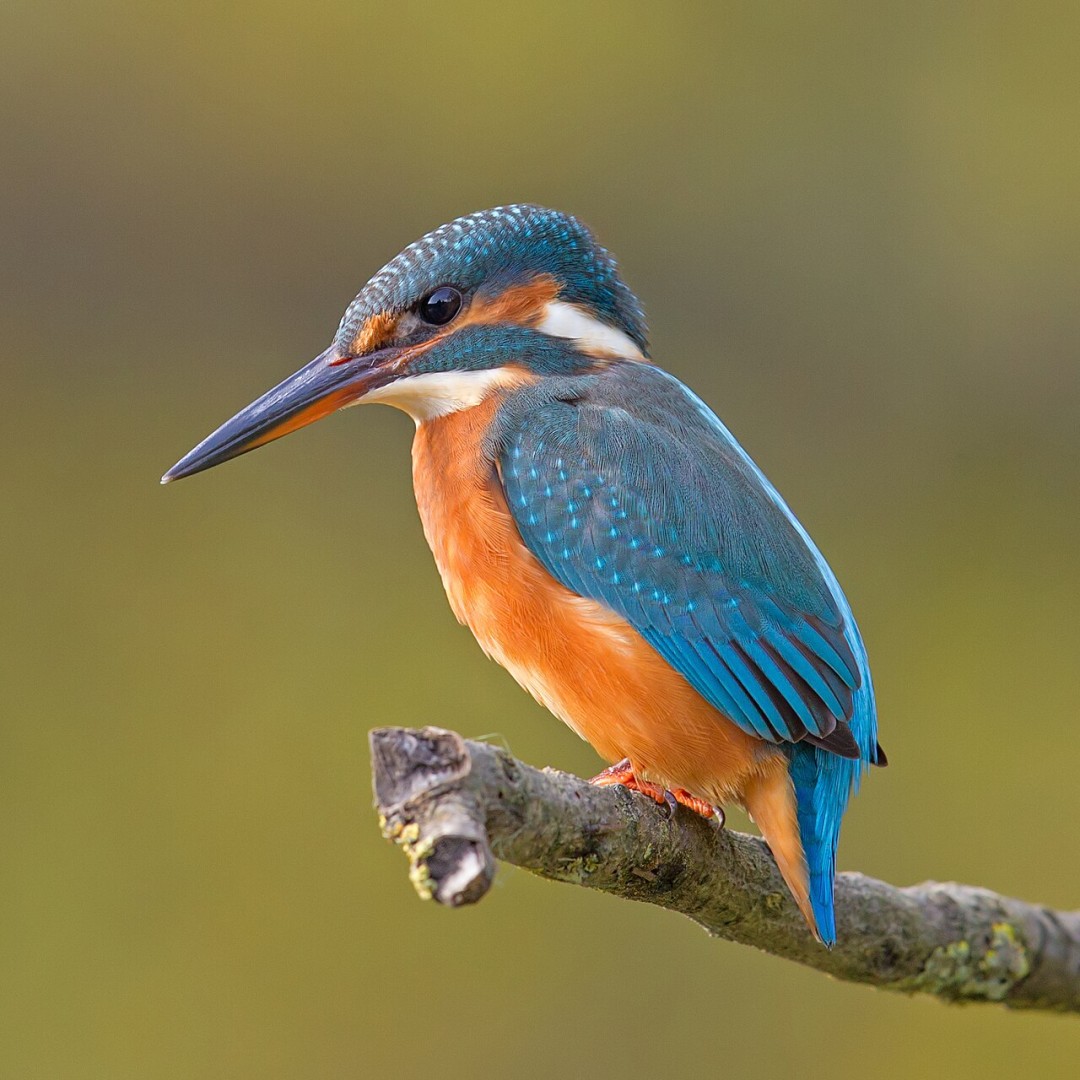
Kingfisher as an illustrative image for bird-rich wetlands
Illustrative image: Andreas Trepte via Wikimedia Commons · CC BY-SA 2.5

Guttland · eastern Luxembourg

Reeds · wet grassland · stream valley

Schlammwiss and the Syre Valley

An accessible wetland near Munsbach and Uebersyren

At around 375 hectares, Schlammwiss is Luxembourg's largest continuous reedbed. The nature trail near Mensdorf is about 3.56 kilometres long and follows the restored Syre, marshy grasslands and observation towers. The reedbed attracts migrants and birders who enjoy listening for reed-dwelling species. Bird-ringing stations also organise guided walks and activities.

Look for
Sedge Warbler, Eurasian Reed Warbler, Kingfisher, Sparrowhawk and White Stork.
Plan around
Spring and autumn, or a scheduled tour at the bird-ringing station.
Open water landscape in Luxembourg as an illustrative image for the Upper Sûre
Illustrative image: Asurnipal-Remerschen via Wikimedia Commons · CC BY-SA 4.0

Éislek

Reservoir · wooded slope · open water

Upper Sûre and Esch-sur-Sûre

Luxembourg's largest lake in the Upper Sûre Nature Park

The Upper Sûre reservoir covers around 4 square kilometres and lies between wooded slopes and open plateaus. The area around Esch-sur-Sûre combines walking trails, viewpoints and quiet shores. This is not a place where you will see the same list on every walk. Water levels, season and the shore you choose strongly influence what you find.

Look for
Great Crested Grebe, Great Cormorant, Goosander, Kingfisher, Red Kite and passing Osprey.
Plan around
Early morning, quiet inlets and a route with views over both water and woodland.
Black Stork as an illustrative image for the wooded Our Valley
Illustrative image: Merlin via Wikimedia Commons · CC BY-SA 3.0

Éislek · northeast

River valley · woodland · plateau

The Upper Our Valley

Quiet valleys between Vianden, Clervaux and the Belgian border

Our Nature Park covers around 420 square kilometres and combines high plateaus, wooded slopes and narrow river valleys. The Ourdall Promenade between Vianden and Stolzembourg is an accessible way to explore the landscape. For birders, quiet woodland edges, stream mouths and open viewpoints are especially interesting.

Look for
Black Stork, Kingfisher, Black Woodpecker, Raven and Red Kite.
Plan around
Spring and early summer, with plenty of time for quiet observation along the water.
Sandstone landscape in Mullerthal
Photo: Benowitsch via Wikimedia Commons · CC BY 3.0

Mullerthal · east

Beech forest · rocks · stream valley

Mullerthal and the White Ernz

Woodland birds, limestone grassland and open country around Junglinster

The region between Gréngewald, Junglinster and Mullerthal offers more than its famous rock formations. Protected landscapes along the White Ernz combine woodland, wet grasslands, fields, orchards and dry limestone slopes. This makes it possible to combine woodland birds with open-country species in a single day.

Look for
Red Kite, Middle Spotted Woodpecker, Red-backed Shrike, Skylark and Common Quail.
Plan around
An early start in the forest, followed by open grassland and hedgerows in the afternoon.
Red Kite as an illustrative image for open landscapes in Luxembourg
Illustrative image: Charles J. Sharp via Wikimedia Commons · CC BY-SA 4.0

Near Luxembourg City

Woodland edge · grassland · stream valley

Aarnescht and Grünewald

A practical choice for a short outing from the capital

If you do not want to drive straight to the north or the Moselle, explore the nature reserves around Niederanven, Senningerberg and Grünewald. Woodland edges, open grassland and small stream valleys offer opportunities for raptors, woodpeckers and songbirds. Its location makes the area suitable for a morning walk or an addition to a city break.

Look for
Red Kite, Sparrowhawk, Middle Spotted Woodpecker, Golden Oriole and Yellowhammer.
Plan around
Early morning, woodland edges with open views and trails outside the busiest hours.
Red-backed Shrike as an illustrative image for hedgerows and dry grasslands
Illustrative image: Ron Knight via Wikimedia Commons · CC BY-SA 2.0

Moselle · east

Vineyard · limestone grassland · hedgerow

Kelsbaach and the Moselle slopes

Open slopes and nature trails between Grevenmacher and Machtum

The Moselle region is interesting for more than waterbirds. The slopes around the river include vineyards, dry grasslands, shrubs and woodland edges. In warmer months, these transition zones suit shrikes, Wrynecks, larks and birds of prey. Combine a nature trail with views over the river and surrounding villages.

Look for
Red-backed Shrike, Wryneck, Woodlark, Red Kite and Hoopoe.
Plan around
May to July, focusing on warm slopes and quiet hedgerows along the trail.
Black Woodpecker as an illustrative image for old Luxembourg forests
Illustrative image: Иван Везенковић via Wikimedia Commons · CC BY-SA 4.0

Minett · south

Old forest · former mine · woodland edge

Ellergronn and the Minett nature reserves

Woodland, old mining landscapes and green spaces near Esch-sur-Alzette

Around Ellergronn and the former mining areas of Minett, woodland, rocky slopes, ponds and open spaces alternate. The landscape is less wetland-rich than Haff Réimech, but interesting for woodland birds and species of rough edges. Its location near Esch-sur-Alzette makes a visit easy to combine with public transport and urban facilities.

Look for
Black Woodpecker, Middle Spotted Woodpecker, Peregrine Falcon, Common Buzzard and Raven.
Plan around
Early morning in the forest and sunny afternoons for raptors above open slopes.

Popular birds of Luxembourg

Five remarkable Luxembourg birds and where to spot them

From the characteristic Red Kite above farmland to the shy Black Stork in northern river valleys, these five species make a birding trip through Luxembourg special. They are typical of the country and realistic target birds for birders who choose the right areas.

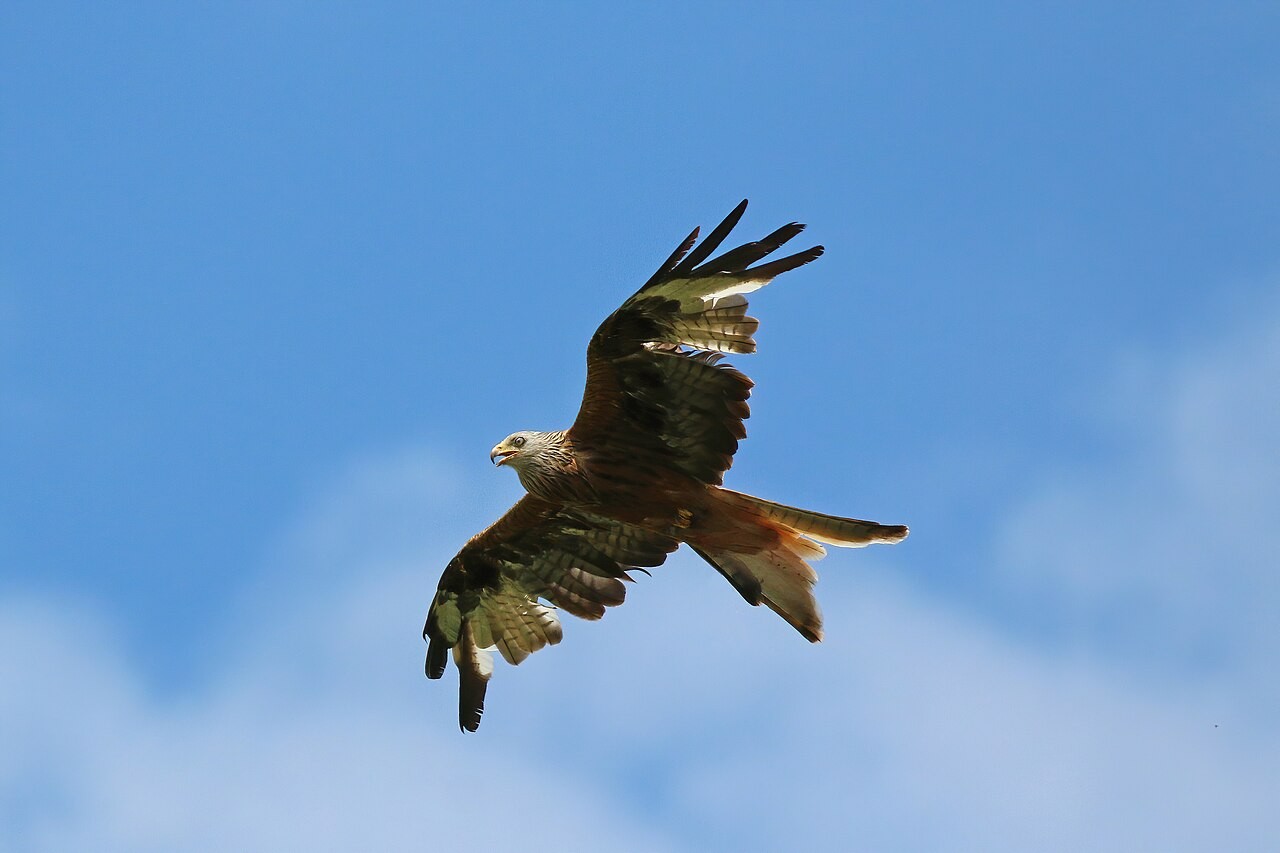
  1. Red Kite flying against a blue sky
    Photo: Charles J. Sharp, Wikimedia Commons, CC BY-SA 4.0

    Red Kite

    The Red Kite is one of Luxembourg's most recognisable birds of prey. Its deeply forked tail and long, narrow wings stand out as it circles low above open country. In the small-scale farmland around Junglinster, the White Ernz, Guttland and Éislek, it is a realistic target species.

    Where can you see Red Kites in Luxembourg?

    • Junglinster and the White Ernz · woodland edges, open grassland and fields
    • Guttland and the area around Luxembourg City · look above meadows and orchards
    • Éislek · scan open plateaus for raptors riding thermals
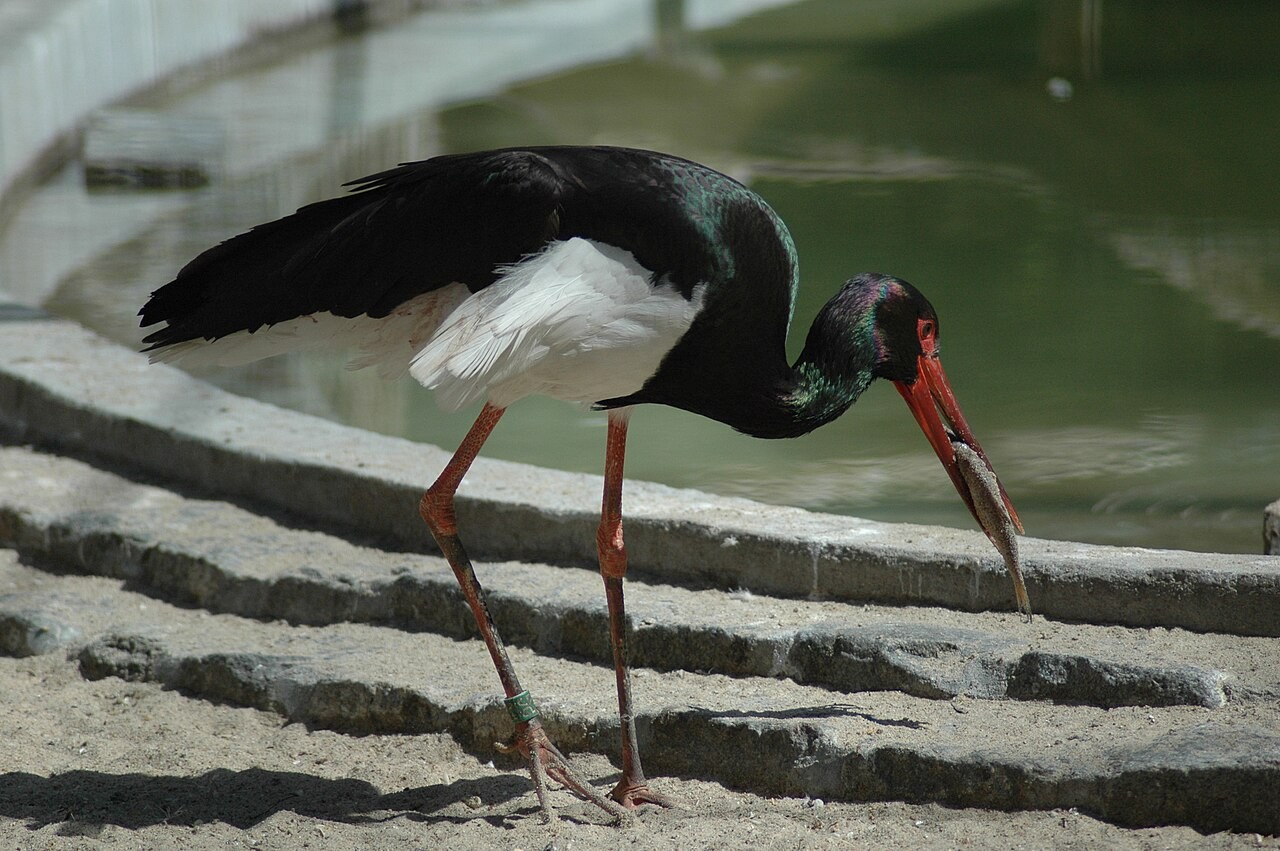
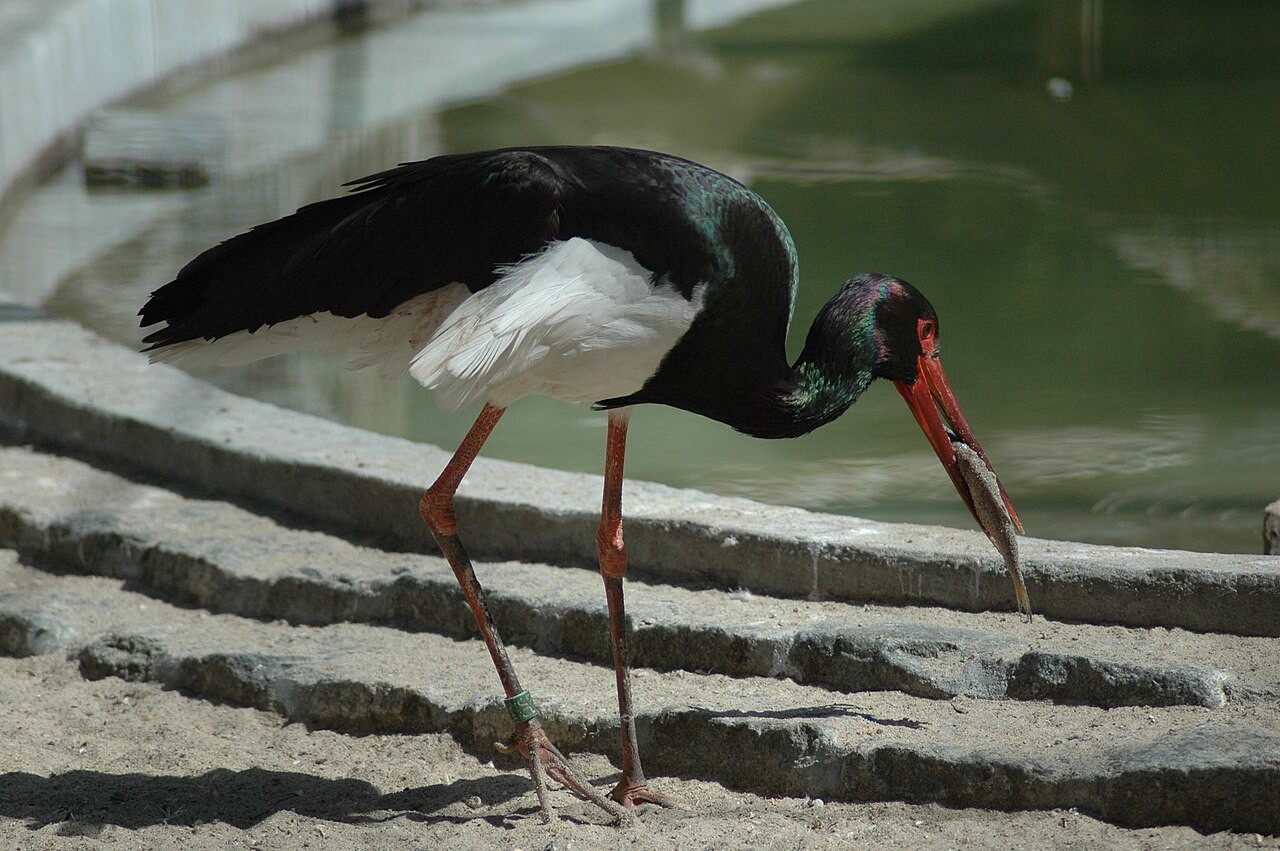
  2. Black Stork standing at the water's edge
    Photo: Merlin, Wikimedia Commons, CC BY-SA 3.0

    Black Stork

    The Black Stork is a shy woodland bird that uses river valleys, quiet streams and wet open areas. In flight, you may see its white belly and broad wings, but it usually remains at a distance. Seeing one in Luxembourg requires patience and a viewpoint with a clear view across the valley.

    Where can you see Black Storks in Luxembourg?

    • Upper Our Valley · quiet wooded valleys and open areas along the water
    • Upper Sûre and the northern protected valleys · look from a distance across rivers and grassland
    • Éislek · especially in spring and summer, without approaching nesting sites
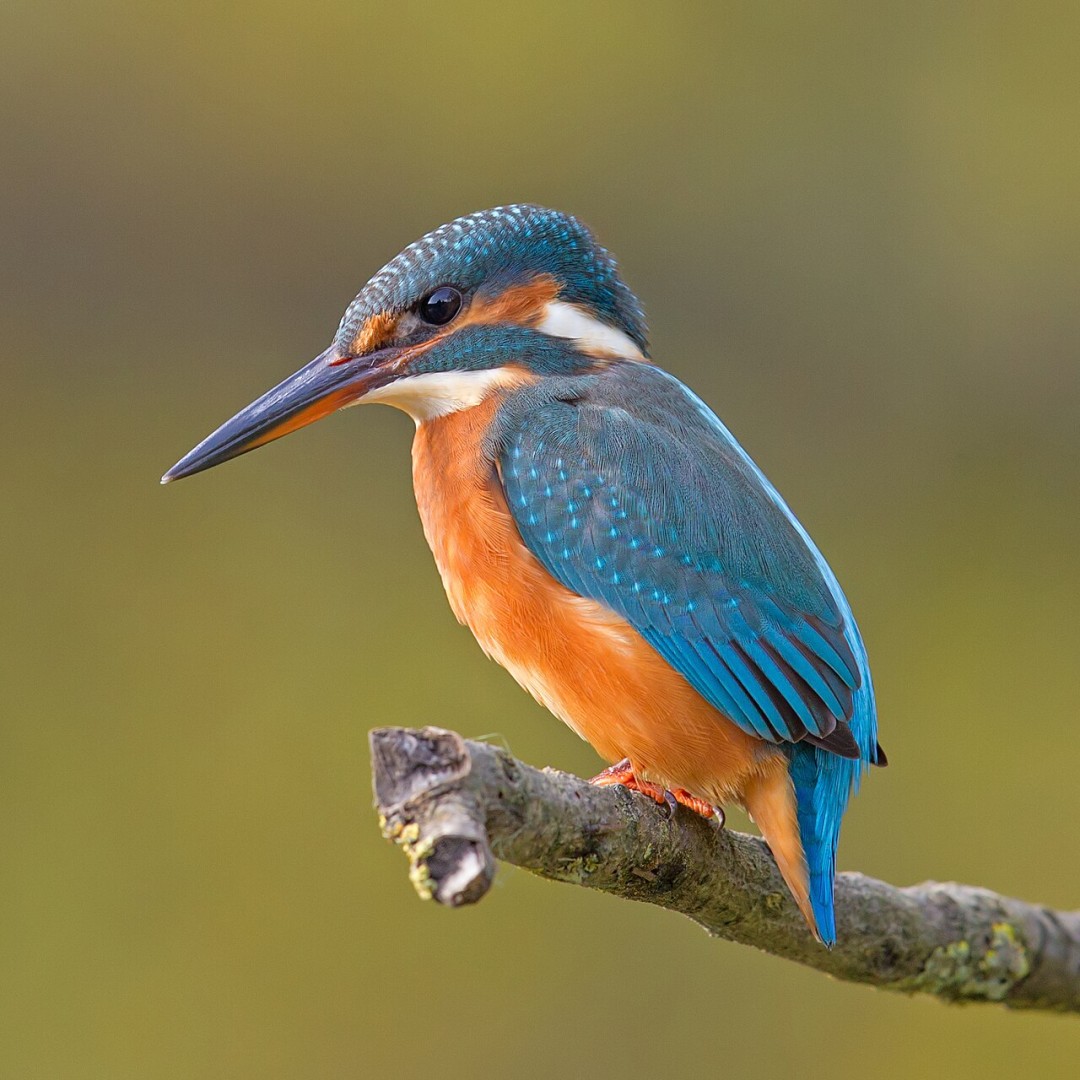
  3. Kingfisher perched on a branch above the water
    Photo: Andreas Trepte, Wikimedia Commons, CC BY-SA 2.5

    Kingfisher

    The Kingfisher is small, bright blue and fast. It uses quiet streams and riverbanks with steep edges for hunting and nesting. Do not only watch the water. Check overhanging branches and bare banks where it may perch briefly before shooting low across the river.

    Where can you see Kingfishers in Luxembourg?

    • Manternacher Fiels and the Syre · steep banks and slow-flowing water
    • Our Valley and Sûre Valley · search around quiet stream mouths and river bends
    • Schlammwiss and Haff Réimech · look along waterways and sheltered banks
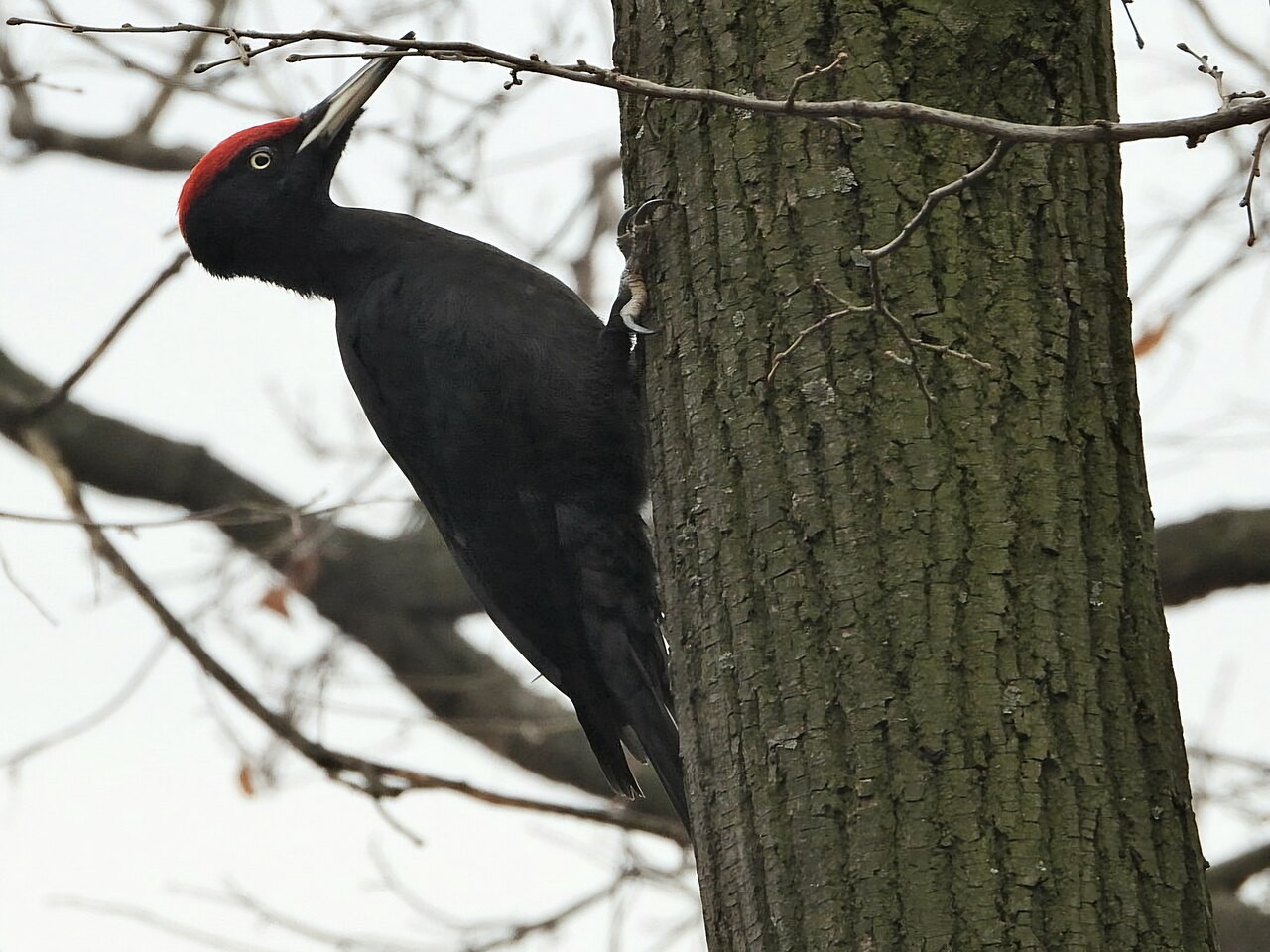
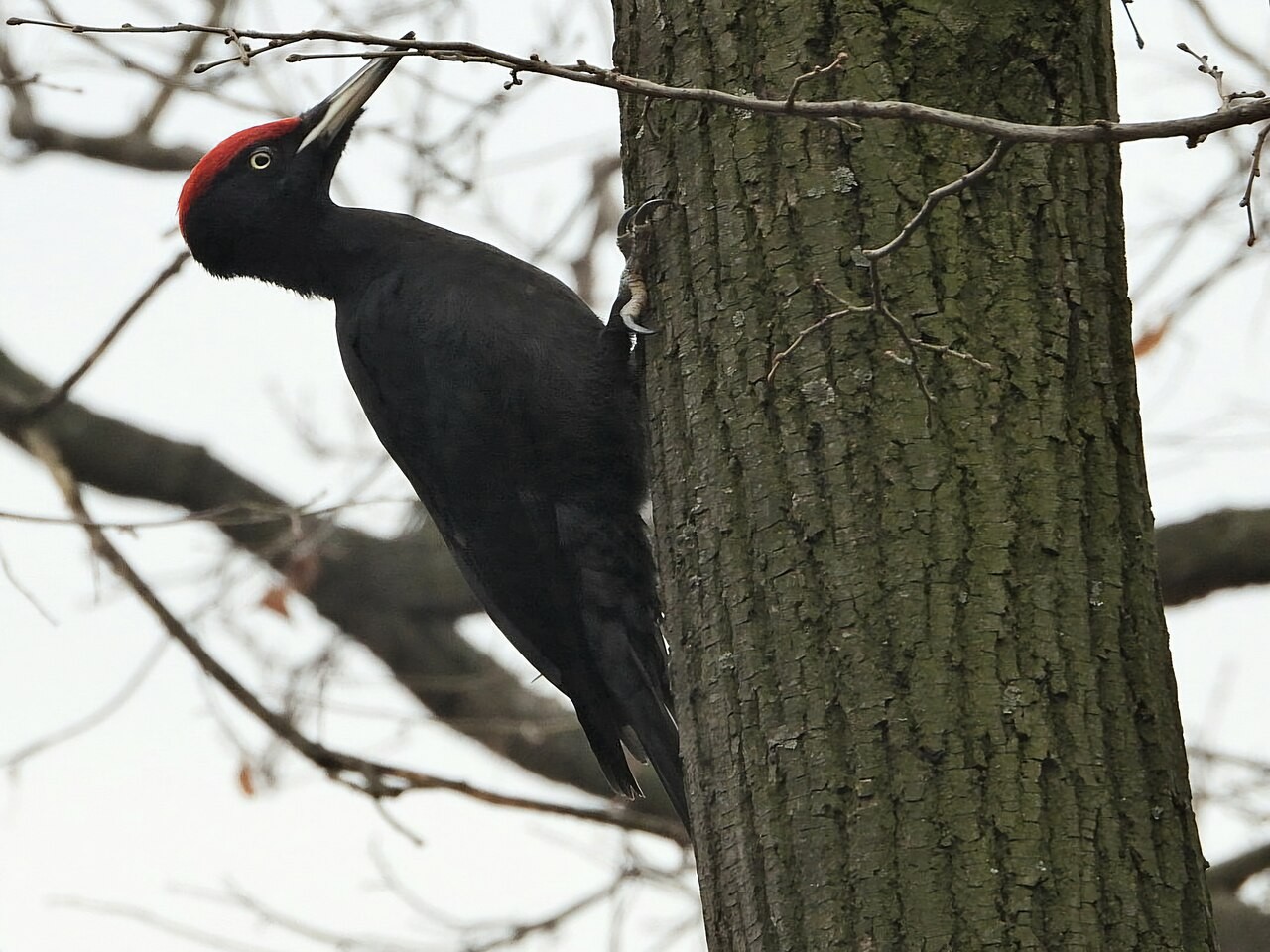
  4. Black Woodpecker against a tree trunk
    Photo: Иван Везенковић, Wikimedia Commons, CC BY-SA 4.0

    Black Woodpecker

    The Black Woodpecker is an impressive woodland bird and a good reason to head out early. You will often hear its powerful call or hammering in an old tree before you see it. Large forests with deadwood and thick trunks matter more than a specific viewpoint, so walking slowly and listening works better than covering many kilometres quickly.

    Where can you see Black Woodpeckers in Luxembourg?

    • Mullerthal · old beech forests and sandstone gorges
    • Manternacher Fiels · natural woodland with plenty of deadwood
    • Our Valley, Grünewald and Minett · woodland edges, mature trees and quiet trails
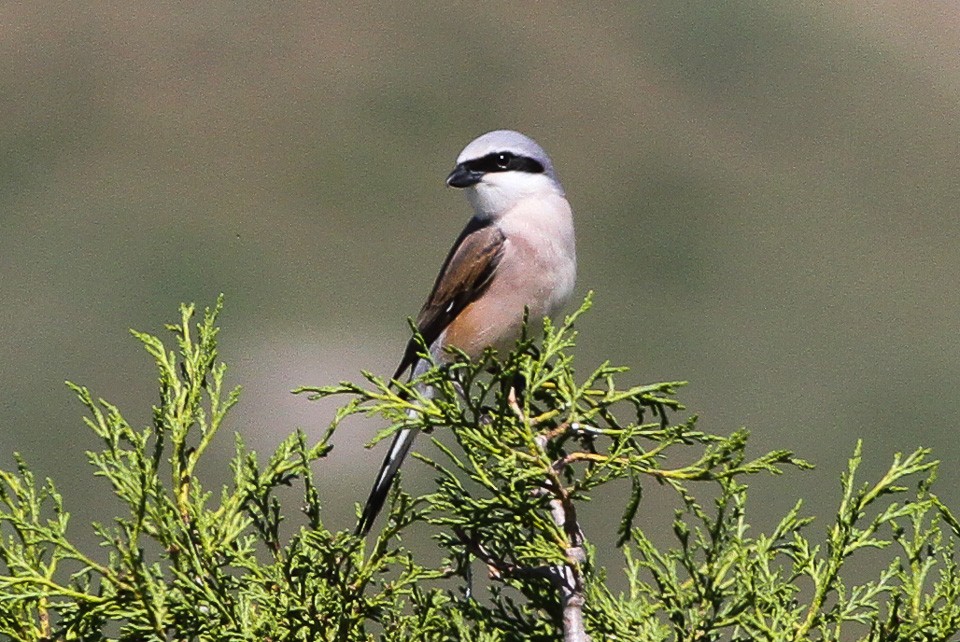
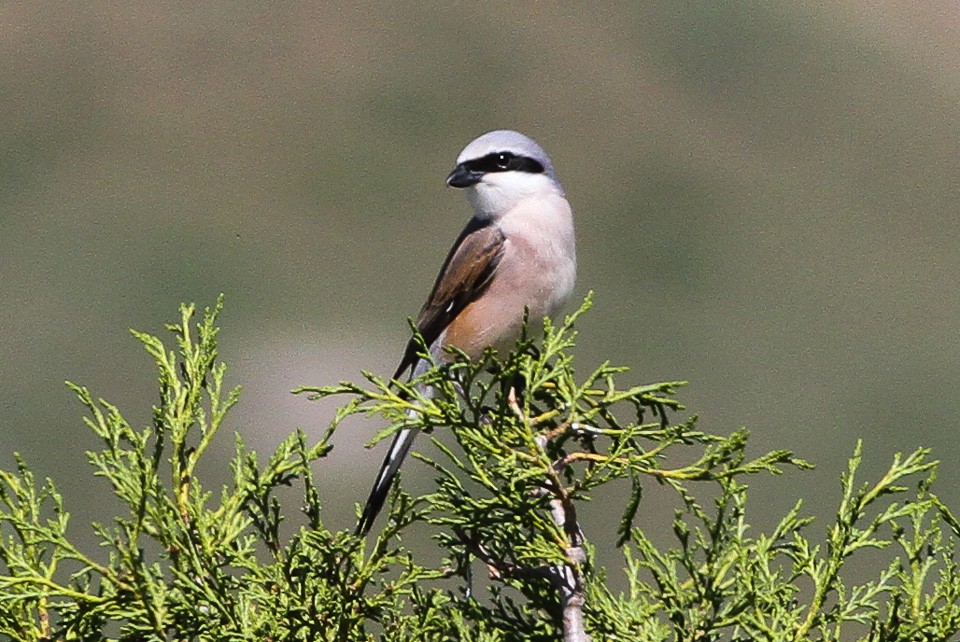
  5. Red-backed Shrike perched on a branch
    Photo: Ron Knight, Wikimedia Commons, CC BY-SA 2.0

    Red-backed Shrike

    The Red-backed Shrike is a summer visitor of hedgerows, rough grassland and scattered shrubs. The male stands out with its grey head and black eye stripe, but the species often sits quietly on an exposed branch. Search slowly along warm slopes and varied farmland edges.

    Where can you see Red-backed Shrikes in Luxembourg?

    • Junglinster and the White Ernz · dry grasslands, hedgerows and orchards
    • Moselle slopes and nature trails around Kelsbaach · warm shrub edges and vineyards
    • Open areas in Éislek · extensively managed grasslands and hedgerows

Useful tips and information

Practical questions about birdwatching in Luxembourg

Want to know where you have the best chance of seeing migrants in Luxembourg, which nature reserves suit a first visit or how to go birding without a car? Below you will find practical answers about birding sites, nature trails, access, seasons and bird species that are especially associated with Luxembourg.

For a first birding trip, Haff Réimech near Remerschen is usually the best choice. The area combines open water, reeds, mudflats and observation hides and has an exceptionally long species list. Variety is greatest in spring and autumn because of migration. If you are mainly looking for woodland and river specialists, choose the Our Valley, the Upper Sûre or Manternacher Fiels.

Schlammwiss is another strong choice for reedbed birds and migration. Mullerthal and the White Ernz are more interesting for woodpeckers, birds of prey, shrikes and species of old forests and open grassland. Use FaunaMap to select several birding sites in the same region before you leave.

April and May are the best months for birdsong, breeding birds and spring migration. September and October are strong for autumn migration, especially in wetlands, reedbeds and open landscapes. In winter, Haff Réimech, the Moselle and the Upper Sûre are interesting for ducks, grebes, sawbills and other waterbirds.

There is no single best month for all of Luxembourg. Choose the season based on your target species: spring for song and territorial behaviour, autumn for migration and winter for waterbirds.

Yes. Haff Réimech has marked nature trails and several observation hides. Official information lists routes of around 3.7 and 1.6 kilometres. You can walk independently from Biodiversum, but stay on the marked paths and keep your distance from reedbeds, resting areas and nesting birds.

Biodiversum provides additional context about the wetlands and biodiversity. Opening hours and temporary access rules can change, so check the current Biodiversum information and the official nature trails before your visit.

Haff Réimech, Schlammwiss and Manternacher Fiels are all good options. Haff Réimech has a bus stop at Remerschen, Al Schoul. From the Munsbach or Mensdorf area, you can walk to Schlammwiss. Manternacher Fiels is suitable for a train-based walk because the official CFL route connects railway stations with nature.

Public transport in Luxembourg is free, but check the last kilometre, route planning and any service changes. Before leaving, consult Visit Luxembourg and the route information for the CFL Manternacher Fiels walking route.

Red Kites are mainly found above open landscapes with woodland edges, grasslands and small-scale fields. Good regions include the White Ernz and the area around Junglinster, Guttland and the open plateaus of Éislek. Look up in calm weather when thermals develop, and also check fence posts and treetops along country roads.

A sighting is never guaranteed. Your chances improve when you choose an area where open country and woodland alternate. In FaunaMap, you can compare several birding sites in the same region in advance.

The best landscapes for Black Stork are the wooded river valleys of Éislek, especially around the upper Our and the Upper Sûre. Look from a quiet viewpoint across broad grasslands, stream mouths or river bends. The species is shy and may remain out of sight for much of the day.

Never search for nests or breeding sites and stay on the marked paths. Seeing a Black Stork is a matter of timing, distance and luck. The protected valleys are especially interesting in spring and summer.

Species recorded at Haff Réimech include Little Bittern, Great Crested Grebe, Great Reed Warbler, Common Pochard, Tufted Duck, Great Egret, Osprey and several waders. According to information from Luxembourg's nature conservation authorities, 253 bird species have been recorded in the area, including 156 migratory species.

The exact species list changes with the season, water level and weather. In spring, focus on breeding birds and song, in autumn on migrants, and in winter on ducks, grebes, sawbills and other waterbirds. Read the background information about Haff Réimech before planning your visit.

Many nature trails and public viewpoints can be visited without an entrance ticket. Biodiversum at Haff Réimech lists free admission, but opening hours may vary by season. Guided tours, special activities, parking or certain facilities may still involve a charge.

Access does not mean that every part of a reserve is open. Nature reserves may have quiet zones, temporary closures, restricted paths or dog rules. Always check the site manager's information, stay on the route and give breeding and resting birds priority.

Discover more while birdwatching

  • See recent bird sightingsSee which birds have recently been spotted near you.
  • Explore biodiverse nature areasFind the best places to spot birds and other wildlife.
  • Find sightings by speciesQuickly find sightings of the bird species you want to see.