Birdwatching · bird migration · nature reserves

Birdwatching in England: the best birding sites by season

Birdwatching in England means walking along sea cliffs, estuaries, reedbeds, heathlands and bird-rich reservoirs. Discover England's best birding sites, learn which species to expect each month and plan a birdwatching trip through popular nature reserves from Norfolk to Northumberland and Kent to Devon.

  • Expected bird species by location
  • Birdwatching spots and hotspots in England
  • Keep track of your own species list
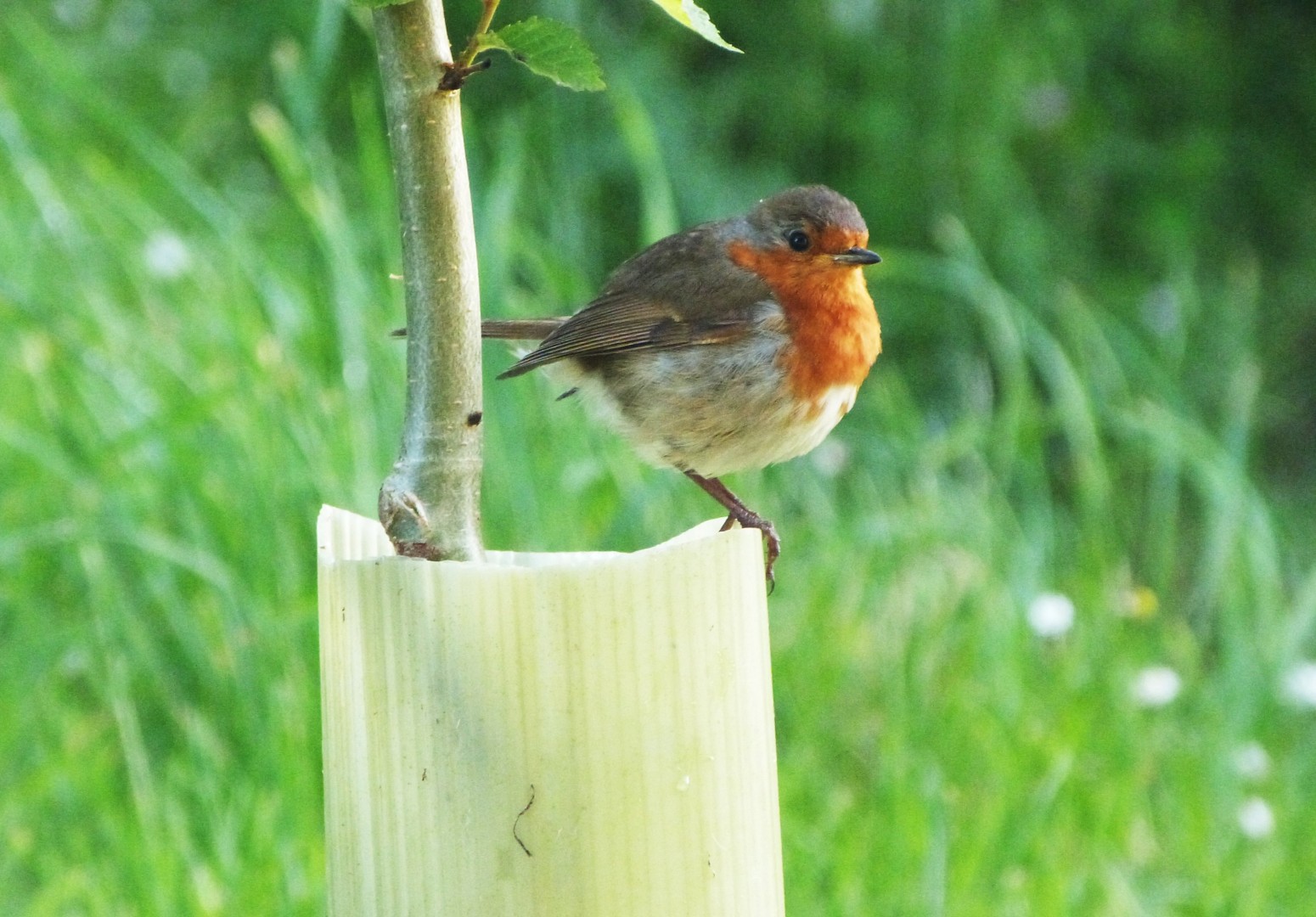
European Robin on a branch in England
England's iconic birdThe European Robin
Photo: Peter Broster · Wikimedia Commons · CC BY 3.0.

Why go birdwatching in England?

From Atlantic coast to heathland: England is a compact birding destination

England is appealing to birdwatchers because different landscapes lie close together. Migrating birds arrive along the east coast from Scandinavia and mainland Europe. The south has estuaries and vegetated shingle, central England has large reservoirs and lowland wetlands, while the north and west offer sea cliffs, heathland and open uplands.

The coasts of Norfolk, Suffolk, Kent and Yorkshire form a natural route for spring and autumn migration. At Titchwell Marsh, Minsmere and Dungeness, mudflats, saltmarshes, dunes, reedbeds and shallow lagoons sit side by side. This means you can see waders and terns, as well as wetland birds, raptors and songbirds, all in one day. The cliffs at Bempton and the islands off Northumberland also offer one of England's most impressive seabird spectacles.

England is practical for a first birdwatching holiday too. Many nature reserves have hides, well-marked trails, visitor centres and clear accessibility information. With FaunaMap, you can find birdwatching spots, recent sightings, hotspots and expected species by location, then match your walk to the season, habitat and time available.

Landscapes and biodiversity

The most important bird habitats in England

Choosing a birding site based on habitat and season increases your chances of seeing characteristic English bird species. From tidal landscapes and seabirds to reedbeds and heathland, these six habitats form the basis of a varied birdwatching trip through England.

Birdwatchers at the Exe Estuary in Devon
Robin Stott · CC BY-SA 2.0

Estuaries, mudflats & saltmarshes

On the Exe, Humber, Wash, Thames and other estuaries, the tide determines where birds feed and rest. At low tide, waders spread across mudflats and channels; around high tide, they gather at safe roosting sites. Sea walls, footpaths and viewpoints often provide wide open views.

Typical species

  • Avocet
  • Curlew
  • Knot
  • Bar-tailed Godwit
  • Redshank
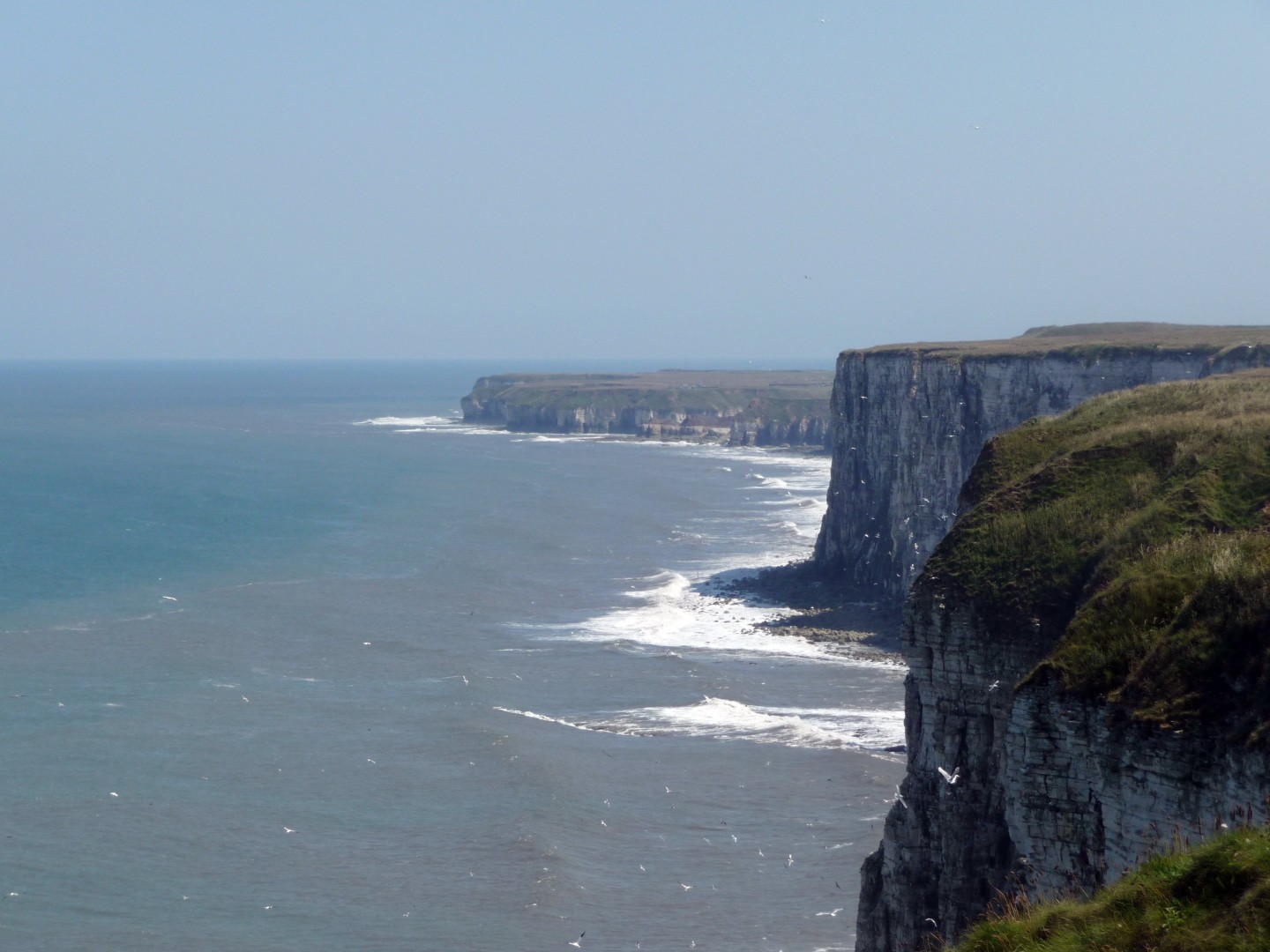
The high sea cliffs of Bempton on the Yorkshire coast
JD554 · CC BY-SA 3.0

Sea cliffs & islands

The chalk cliffs of Yorkshire and the rocky coast of Northumberland provide nesting sites for large seabird colonies. In spring and summer, birds seem to cling to the cliff faces. With binoculars, you can watch gannets, auks and gulls in flight, while terns and petrels hunt offshore.

Typical species

  • Gannet
  • Puffin
  • Guillemot
  • Razorbill
  • Kittiwake
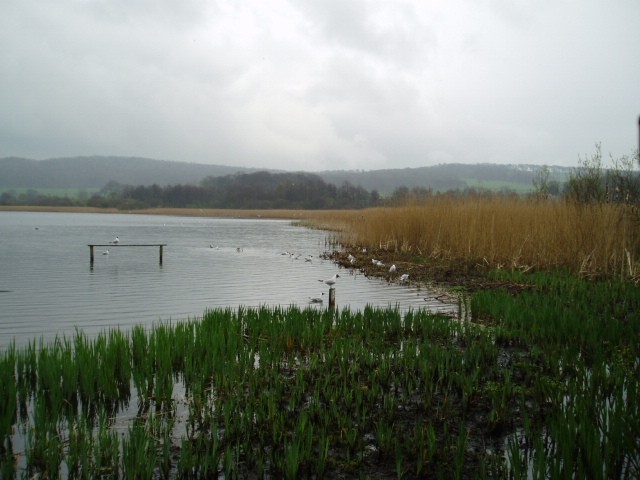
Wide reedbeds at Leighton Moss in Lancashire
Martyn B · CC BY-SA 2.0

Reedbeds, wetlands & lakes

In the lowland wetlands of Norfolk, Suffolk, Lancashire and Somerset, reedbeds and shallow pools are important for breeding birds, winter visitors and migrants. In spring, listen for reed warblers and bearded tits. At dusk, you may hear a bittern booming or see a marsh harrier flying low over the reeds.

Typical species

  • Bittern
  • Bearded Tit
  • Marsh Harrier
  • Water Rail
  • Great Egret
Open heathland in the New Forest in southern England
Lewis Clarke · CC BY-SA 2.0

Heathland, bogs & open uplands

The heathlands of the New Forest, Dartmoor, Exmoor and the northern moorlands support species that need open country rather than dense woodland. On warm spring days, woodlarks sing above the scrub. In summer, nightjars appear at dusk, while curlews and birds of prey can be seen over the open northern moors.

Typical species

  • Dartford Warbler
  • Woodlark
  • Nightjar
  • Curlew
  • Red Grouse
Path through dunes at Titchwell on the Norfolk coast
Pauline E · CC BY-SA 2.0

Dunes, vegetated shingle & coastal marshes

Dunes, shingle ridges, vegetated shingle and wet coastal marshes form a transition between land and sea. Along the east coast, these habitats are important resting places during migration. Walk quietly along the edge of dune scrub, search for songbirds in the bushes and scan shallow water for plovers, terns and waders.

Typical species

  • Wheatear
  • Little Tern
  • Skylark
  • Kentish Plover
  • Ruddy Turnstone
View across Rutland Water in central England
Northerner · CC0 1.0

Reservoirs, rivers & parkland

Large reservoirs such as Rutland Water combine open water, islands, muddy shores and grassland. Along English rivers and through parkland, you can look for woodpeckers, kingfishers and birds of prey. In winter, large flocks of ducks and geese gather, while fish-eating species attract attention in spring and summer.

Typical species

  • Osprey
  • Kingfisher
  • Goosander
  • Little Grebe
  • Red Kite

Birdwatching throughout the year

Birdwatching calendar for England: what can you expect each season?

England offers a different birding experience in every season. In winter, geese, ducks and waders dominate the estuaries. Spring brings songbirds, migrants and seabird colonies. Migration starts building again from summer, while coastal sites fill with passage migrants in autumn.

WinterDecember to FebruarySpringMarch to MaySummerJune to AugustAutumnSeptember to November
  1. January

    Winter

    Winter birds on the coast

    Estuaries and coastal lagoons are at their best for large winter flocks. Look for curlews, knots, dunlins, Brent Geese and wigeons. Hen Harriers and Short-eared Owls may be active over open grassland.

    Recommended placesExe Estuary, the Wash, Dungeness, Slimbridge and the Norfolk coast.

  2. February

    Winter

    First signs of spring

    Most winter visitors are still present, but the days are getting longer. Song activity increases in woods and parks, while kingfishers are often active along rivers. On mild days, the first migrant songbirds begin to arrive.

    Recommended placesRiverbanks, wetlands with hides, parks and sheltered coastal sites.

  3. March

    Spring

    Spring migration begins

    Chiffchaffs and Sand Martins are among the first summer visitors to return. Woodlarks begin singing on the heath, while Marsh Harriers and waders become more active across wetlands.

    Recommended placesNew Forest, Titchwell Marsh, Minsmere and the reedbeds of Lancashire.

  4. April

    Spring

    Migration and returning seabirds

    April is a strong month for visible migration along the east coast. The first puffins arrive on the Farne Islands, while gannets, guillemots and razorbills quickly increase on cliffs such as Bempton.

    Recommended placesBempton Cliffs, the Farne Islands, Dungeness and the Suffolk coast.

  5. May

    Spring

    Peak month for birdwatching trips

    In May, birdsong is everywhere. Reedbed birds are singing, waders are breeding and seabird colonies are fully occupied. The Farne Islands and Bempton are especially impressive, while Minsmere offers chances for bittern and avocet.

    Recommended placesFarne Islands, Bempton Cliffs, Minsmere, Titchwell and Rutland Water.

  6. June

    Summer

    Breeding season and ospreys

    June combines breeding seabirds with young songbirds, terns and wetland species. At Rutland Water, Osprey is a major target species. In the evening, nightjars may be heard across heathland.

    Recommended placesRutland Water, New Forest, Farne Islands and reedbeds in Norfolk.

  7. July

    Summer

    First autumn migrants

    From July onwards, the first adult waders and young birds begin moving south. Groups of Spotted Redshanks, Greenshanks and Dunlins gather on mudflats and coastal lagoons. Seabird colonies remain lively well into the month.

    Recommended placesTitchwell, Minsmere, Exe Estuary and the Yorkshire coast.

  8. August

    Summer

    Waders on passage

    Autumn migration becomes visible along the coast. Passing waders use English estuaries and lagoons as refuelling stops. Terns, swallows and raptors are also moving through the country. Wind direction can have a major effect on species variety.

    Recommended placesLarge coastal wetlands, Dungeness, Gibraltar Point and the Wash.

  9. September

    Autumn

    The east coast as a migration route

    September is an excellent month for migration. Coastal bushes may hold wheatears, whinchats, flycatchers and warblers. At sea, skuas and petrels pass by in favourable winds.

    Recommended placesDungeness, Minsmere, Spurn and the north Norfolk coast.

  10. October

    Autumn

    Winter visitors begin to arrive

    From October, more geese, ducks, thrushes and Golden Plovers arrive from the north and east. The coast remains attractive for migrants, while reservoirs and wetlands hold increasingly large groups of waterbirds.

    Recommended placesRutland Water, Slimbridge, Exe Estuary, Dungeness and Norfolk.

  11. November

    Autumn

    Large flocks of waterbirds

    In November, estuaries, lakes and quiet coastal marshes become the main focus. Look for wigeons, pintails, geese and waders. In clear weather, raptors may be seen hunting over grassland and reedbeds.

    Recommended placesSlimbridge, Rutland Water, Exe Estuary and the English east coast.

  12. December

    Winter

    Bewick's Swans and winter flocks

    December is a good month for large winter gatherings. Bewick's Swans arrive at Slimbridge, while thousands of ducks and waders gather in estuaries. Hen Harriers and Short-eared Owls are possible highlights over open heath and coastal grassland.

    Recommended placesSlimbridge, Exe Estuary, the Wash, Dungeness and the Northumberland coast.

Seasonal information and site examples: RSPB Minsmere, National Trust Farne Islands, Rutland Water Nature Reserve and New Forest National Park.

Birding sites in England

The best birding sites in England: where can you go birdwatching?

England offers a wide choice of nature reserves and bird-rich landscapes that are easy to visit. This selection combines popular sites with varied habitats, from reedbeds and reservoirs to seabird cliffs, heathland and tidal wetlands. Always check current opening hours, access rules, tides and any boat reservations before you leave.

Dunes and coastal path at Titchwell Marsh in Norfolk
Photo: Pauline E · Wikimedia Commons · CC BY-SA 2.0

Norfolk

Reedbed · lagoon · coast

Titchwell Marsh

A complete birding site on the north Norfolk coast

Titchwell Marsh is one of the best places for birdwatching in England if you want to combine several habitats in one morning. From the visitor centre, you can walk through woodland, reedbeds, saltmarsh, freshwater lagoons and out to a wide beach. The paths are easy to follow and there are several viewing points, making the reserve suitable for beginners and experienced migration watchers.

Look for
Avocet, Bearded Tit, Marsh Harrier, Bittern and passage waders.
Plan around
Tide, wind direction and the walk to the beach; buses run via King's Lynn.
Island Mere Hide at RSPB Minsmere in Suffolk
Photo: Roger Jones · Wikimedia Commons · CC BY-SA 2.0

Suffolk

Reedbed · scrape · heath

RSPB Minsmere

A top site for wetland birds and migration

Minsmere combines reedbeds, shallow lagoons, wet grassland, heathland and vegetated shingle on the North Sea coast. The reserve is known for Bittern, Avocet, Bearded Tit and Marsh Harrier, while migration can bring many rare visitors. The different trails make it possible to plan either a short birding walk or a full day in the reserve.

Look for
Bittern, Avocet, Bearded Tit, Marsh Harrier and Ruddy Turnstone.
Plan around
Spring and autumn for migration; check admission details and temporary route changes beforehand.
View across Rutland Water in England
Photo: Northerner · Wikimedia Commons · CC0 1.0

Leicestershire & Rutland

Reservoir · lagoon · grassland

Rutland Water

One of the best places for Osprey and waterbirds

Rutland Water is an internationally important wetland with around 1,000 acres of nature reserve, numerous hides and two visitor centres. The reservoir is best known for its successful Osprey project. In autumn, muddy shores attract waders, while large groups of ducks and geese can rest on the water in winter.

Look for
Osprey, Greenshank, Goosander, Wigeon and Kingfisher.
Plan around
Ospreys are most likely during the breeding season; the nature reserve requires a day permit.
The high cliffs of Bempton on the English North Sea coast
Photo: JD554 · Wikimedia Commons · CC BY-SA 3.0

East Yorkshire

Sea cliffs · seabirds

Bempton Cliffs

Spectacular seabird colonies above the North Sea

From the cliff paths at Bempton, you look straight across at thousands of seabirds nesting on the ledges. Between April and August, gannets, guillemots, razorbills, kittiwakes and fulmars are constantly on the move. Puffins are present but less predictable than the larger colonial species. The viewpoints are close to the visitor centre.

Look for
Gannet, Guillemot, Razorbill, Kittiwake, Fulmar and Puffin.
Plan around
April to August for the colonies; bring warm clothing and watch for strong winds on the cliffs.
Landscape of the Farne Islands off the Northumberland coast
Photo: Lewis Clarke · Wikimedia Commons · CC BY-SA 2.0

Northumberland

Islands · cliffs · sea

Farne Islands

England's best-known site for puffins

A boat trip from Seahouses takes you around the islands and, during the breeding season, sometimes ashore on Inner Farne. Around 200,000 seabirds use the islands for breeding. The National Trust also reports around 43,000 breeding pairs of puffins. Between May and July, the cliffs are filled with auks, terns, kittiwakes, eiders and puffins.

Look for
Puffin, Razorbill, Guillemot, Arctic Tern, Eider and Shag.
Plan around
Book a boat trip in advance; most breeding seabirds leave after July.
Dungeness nature reserve on the Kent coast
Photo: Simon Huguet · Wikimedia Commons · CC BY-SA 2.0

Kent

Shingle · wetlands · migration

Dungeness

One of the best migration sites in southern England

Dungeness sits on a headland projecting into the English Channel, making it a funnel for birds arriving from mainland Europe. Behind the shingle are freshwater pools, reedbeds and grassland. In spring and autumn, small songbirds and rare visitors can be found in the vegetation, while raptors hunt above the wetlands.

Look for
Hobby, Marsh Harrier, Bittern, waders and migrant songbirds.
Plan around
Spring and autumn for migration; the Discovery Trail is flat and suitable for an easy walk.
The Exe Estuary near Cockwood in Devon
Photo: Robin Stott · Wikimedia Commons · CC BY-SA 2.0

Devon

Estuary · mudflats · railway

Exe Estuary

An accessible winter site for waders

The Exe Estuary is a strong choice for anyone wanting to go birdwatching in southwest England without visiting a remote reserve. In winter, large numbers of waders and ducks feed across the mudflats. The railway from Exeter to Topsham and Exmouth, the Avocet Line, offers views of the estuary at several points.

Look for
Avocet, Spotted Redshank, Curlew, Redshank, Ringed Plover and Little Egret.
Plan around
Winter and high tide; use the railway for a car-free birdwatching trip along the estuary.
Heathland in the New Forest in Hampshire
Photo: Lewis Clarke · Wikimedia Commons · CC BY-SA 2.0

Hampshire

Heathland · woodland edge · open country

New Forest National Park

A stronghold for heathland birds in southern England

The New Forest is more than woodland. Open heathland, wet valleys, gorse and ancient trees combine to create a special birding destination. Dartford Warbler is one of the park's specialities. In spring, woodlarks and Tree Pipits are active, while on summer evenings you can listen for nightjars across quiet heathland.

Look for
Dartford Warbler, Woodlark, Nightjar, Tree Pipit and Hobby.
Plan around
March to August; stay on marked paths to avoid disturbing ground-nesting birds.
Wetland landscape of WWT Slimbridge on the Severn
Photo: Philip Halling · Wikimedia Commons · CC BY-SA 2.0

Gloucestershire

Wetland · Severn · hides

WWT Slimbridge

An excellent choice for winter birds and beginners

Slimbridge overlooks wetlands beside the Severn and has thirteen hides and observatories. The site is interesting all year, but in winter the Bewick's Swans, geese, ducks and waders are the main attractions. Many viewpoints are accessible, and volunteers are available in several hides to help with identification.

Look for
Bewick's Swan, Wigeon, Golden Plover, Curlew and Kingfisher.
Plan around
Winter for swans and waterbirds; book ahead if you plan to visit on a busy day.
Reedbeds at Leighton Moss in Lancashire
Photo: Martyn B · Wikimedia Commons · CC BY-SA 2.0

Lancashire

Reedbed · lake · woodland edge

RSPB Leighton Moss

The largest reedbed in northwest England

Leighton Moss is one of the best places in northwest England for Bittern, Bearded Tit and Marsh Harrier. The extensive reedbed is mixed with open water, woodland edges and several hides. The site is also relatively easy to reach by train via Silverdale, followed by a walk to the reserve.

Look for
Bittern, Bearded Tit, Marsh Harrier, Water Rail and Great Egret.
Plan around
Spring for birdsong and summer for wetland activity; allow time for the Sky Tower and reedbed trails.

Popular birds of England

Five iconic English birds and where to see them

From colourful puffins and fast kingfishers to Red Kites, Bitterns and Avocets, these are five species that make a birdwatching trip through England extra special. They are iconic birds of different English landscapes and realistic target species with good planning.

  1. Puffin on the Farne Islands in Northumberland
    Photo: Charlie From Bristol, Wikimedia Commons, CC BY 2.0

    Puffin

    For many birdwatchers, the puffin is the ultimate target species on a trip to England. Its colourful bill, waddling walk and nest on rocky islands make it unforgettable. The species is best viewed from a boat or on an island during the breeding season.

    Where can you see puffins in England?

    • Farne Islands · the best choice for large numbers, especially from May to July
    • Bempton Cliffs · scan the cliffs in spring and summer, but expect sightings to be less predictable
    • Northumberland Coast · combine a boat trip with coastal sites around Seahouses and Lindisfarne
  2. Kingfisher along a river in Kent, England
    Photo: Phil Armitage, Wikimedia Commons, public domain

    Kingfisher

    Seeing a kingfisher skim across still water is one of the most memorable moments in English birdwatching. Look along slow-flowing rivers, canals and sheltered ponds for a bright blue flash. Patient observation from a hide works better than walking continuously along the bank.

    Where can you see kingfishers in England?

    • WWT Slimbridge · watch from the Kingfisher Hide and along quiet pools
    • Rutland Water · promising banks, streams and sheltered viewpoints around the reservoir
    • Lowland rivers and canals · especially quiet stretches with overhanging branches and clear water
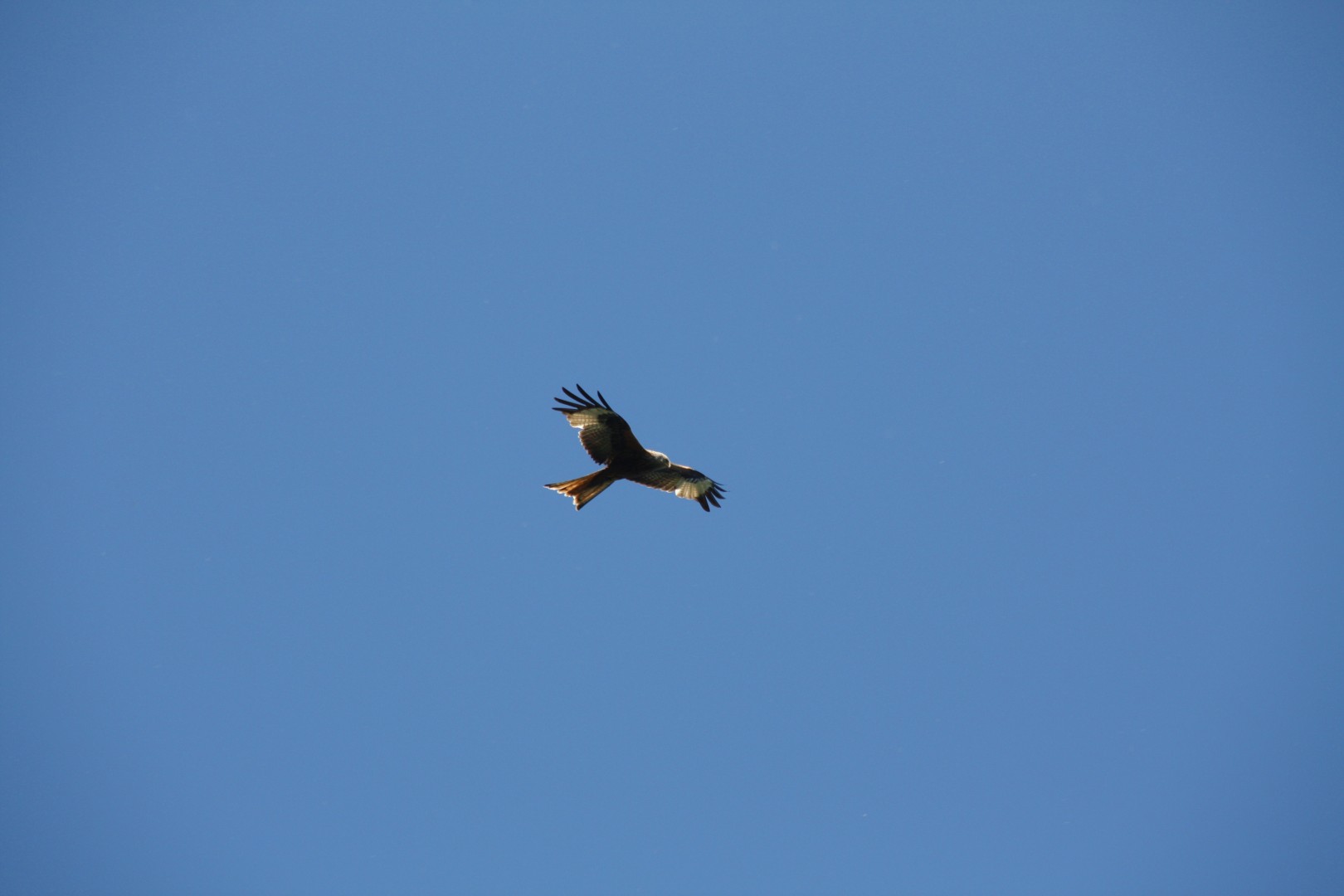
  3. Red Kite flying above an English landscape
    Photo: Zephyris, own work via Wikimedia Commons, CC BY-SA 3.0

    Red Kite

    The Red Kite is one of the most striking birds of prey in southern and central England. Its forked tail and broad wings stand out against a bright sky. Unlike many rare raptors, it is regularly seen in the right places, often soaring above open land and woodland edges.

    Where can you see Red Kites in England?

    • The Chilterns · a well-known region for Red Kites over hills, farmland and village edges
    • Buckinghamshire and Oxfordshire · scan open grassland and woodland edges, especially in calm weather
    • Yorkshire and northern England · locally present around suitable reintroduction and breeding areas
  4. Bittern in the reeds at Minsmere in Suffolk
    Photo: Jo Garbutt, Wikimedia Commons, CC BY 2.0

    Bittern

    Bitterns are more often heard than seen. Their deep, far-carrying call from a reedbed is a classic sound of English wetlands. If you stay patient near a hide, you may spot a streaked bird between the reeds or see it flying low across the marsh.

    Where can you see Bitterns in England?

    • RSPB Minsmere · reedbeds and shallow lagoons with several observation points
    • Titchwell Marsh · listen in the reeds and check current reserve updates for sightings
    • RSPB Leighton Moss · an extensive reedbed with hides and a Sky Tower
  5. Avocet on a shallow lagoon at Titchwell Marsh
    Photo: Charles J. Sharp, Wikimedia Commons, CC BY-SA 4.0

    Avocet

    With its black-and-white plumage and upturned bill, the Avocet is one of the most recognisable birds of English coastal wetlands. It sweeps its bill from side to side through shallow water to find small animals. At the right lagoon or estuary, it can often be watched well from a hide.

    Where can you see Avocets in England?

    • Titchwell Marsh · freshwater lagoons and saltmarsh on the north Norfolk coast
    • Minsmere · shallow lagoons and breeding islands on the Suffolk coast
    • Exe Estuary · especially in winter along mudflats and tidal channels
    • Rutland Water · suitable for Avocets during spring migration and the breeding season

Useful tips and information

Practical questions about birdwatching in England

Planning a birdwatching trip to England, wondering where to see puffins or ospreys, or looking for a nature reserve you can visit without a car? Below you will find practical answers about seasons, transport, access rules, tides and recent bird sightings.

The best and most reliable choice is the Farne Islands off the Northumberland coast. Boat trips leave from Seahouses, travelling around the islands and sometimes landing on Inner Farne during the season. Most puffins are present from roughly May to July. After late July, many seabirds head back out to sea.

Bempton Cliffs in Yorkshire also offers a chance of seeing puffins, alongside large numbers of gannets, guillemots, razorbills and kittiwakes. Puffins sit low on the cliffs there and are less predictable than on the Farne Islands. Check the latest information from the National Trust and the RSPB before you travel.

April and May are excellent months for the greatest combination of birdsong, breeding birds and spring migration. If you want to see seabirds, plan your trip between May and July. September and October are often strong for autumn migration along the east coast, especially with favourable winds. In winter, estuaries, large lakes and wetlands attract geese, ducks, waders and birds of prey.

The best month therefore depends on your target species. Use the birdwatching calendar on this page and check FaunaMap beforehand to see which species are expected at a particular site.

Rutland Water is one of the best-known places to see an Osprey in England. The Rutland Osprey Project protects the breeding birds, and Lyndon Nature Reserve has viewpoints and observation areas. The best period is spring and summer, when the birds have returned from their wintering grounds.

Other large lakes and wetlands can also attract ospreys during migration. Sightings are never guaranteed, so check the latest information from Rutland Water Nature Reserve before you travel and allow time for patient observation by the water.

Kingfishers live along quiet rivers, streams, canals and sheltered ponds. Ideally, watch from a fixed hide or a quiet path looking towards low branches above clear water. The bird often appears briefly and close to the surface, so moving slowly and waiting is more effective than covering long distances.

Good starting points include WWT Slimbridge, Rutland Water and other wetlands with quiet banks. WWT Slimbridge has several observation points and a Kingfisher Hide. Always follow local guidance and keep away from nesting sites.

Leighton Moss is one of the easiest options: you can walk to the reserve from Silverdale station. The Exe Estuary is accessible via the Avocet Line between Exeter, Topsham and Exmouth. Bempton Cliffs also has a railway station, although it is around a mile and a half walk from the reserve. Dungeness can be reached by bus, but the walk from the stop to the visitor centre is longer.

Titchwell Marsh can be reached from King's Lynn by bus or taxi. Always check the latest timetable with the transport provider and read the site's visitor information. Routes and frequencies change by season.

It depends on the manager and the site. Some nature reserves and public viewpoints are free, while reserves run by organisations such as the RSPB, WWT or Wildlife Trusts may charge admission, parking fees or a day permit. Rutland Water requires a day permit for the nature reserve. At Minsmere and several other RSPB reserves, non-members may need to pay admission.

A visitor centre, boat trip or special guided walk may also cost extra. Always check the latest information before you leave. The official UK government website provides general information about access to nature reserves and national parks.

Winter is excellent for geese, ducks and waders. In estuaries such as the Exe, the Wash and the Humber, curlews, redshanks, knots and dunlins feed across the mudflats. At Slimbridge, Bewick's Swans and large groups of waterbirds are major attractions. In reedbeds and open grassland, you may see Hen Harriers, Short-eared Owls and Marsh Harriers.

Cold weather can bring additional species to the coast and open wetlands, but distribution changes quickly with water levels, frost and food availability. Check recent sightings and expected species in FaunaMap shortly before your visit.

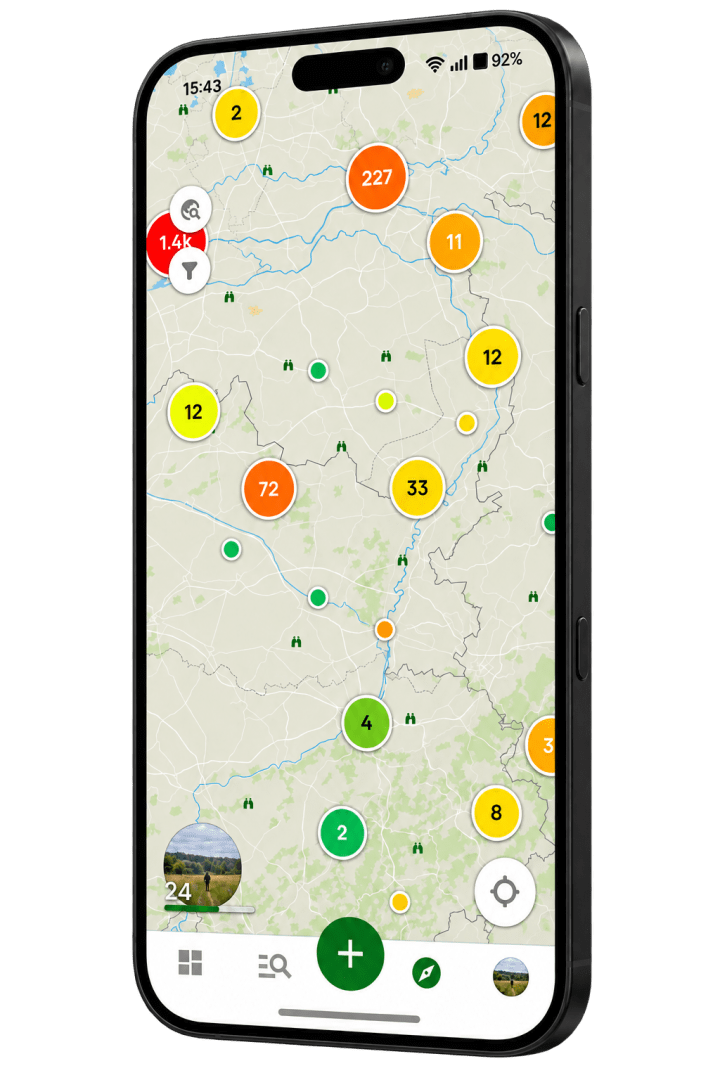
In FaunaMap, you can explore England on an interactive map with recent bird sightings, birdwatching spots, hotspots and expected species by location. Select a nature reserve in advance, see which species are expected nearby and record your own sightings while you are out.

This is especially useful in large areas such as the Norfolk Coast, Dungeness, Rutland Water and the Severn wetlands, where birds can quickly move in response to weather, tides and water levels.

Explore England in FaunaMap

Discover more while birdwatching

  • See recent bird sightingsSee which birds have recently been spotted near you.
  • Explore biodiverse nature areasFind the best places to spot birds and other wildlife.
  • Find sightings by speciesQuickly find sightings of the bird species you want to see.