Birding areas · bird migration · bird species

Birdwatching in the Netherlands: the best birding areas by season

You can go birdwatching in the Netherlands all year round, but every season and birding area has its own species and highlights. Discover the best birding spots along the Wadden Sea, in peat meadows, beside rivers, in the delta and across vast wetlands. Find out which bird species to expect in each area and when to see them.

  • Expected bird species by location
  • Birdwatching hotspots worldwide
  • Keep track of your own species list
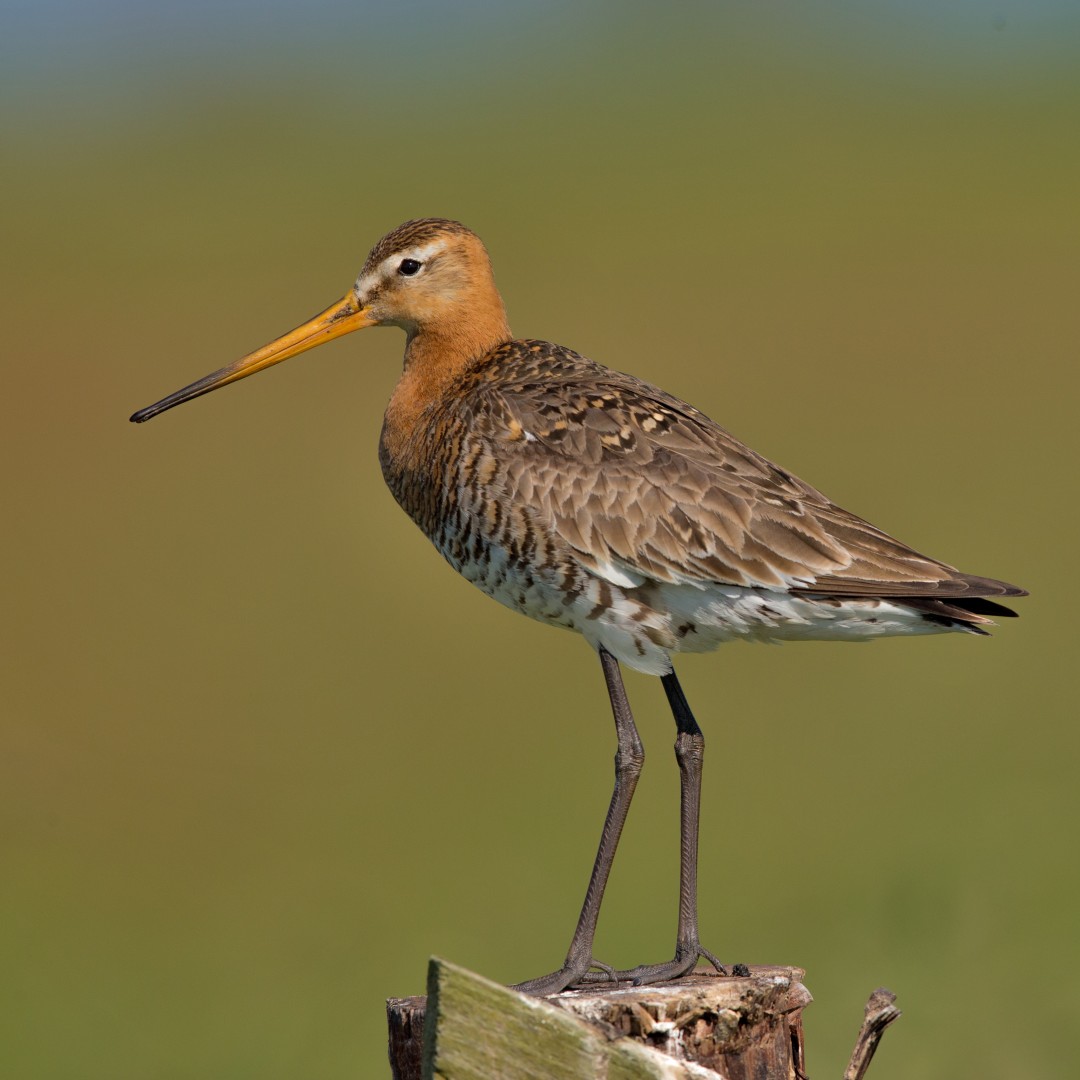
Black-tailed Godwit perched on a wooden post, looking left
National bird of the NetherlandsBlack-tailed Godwit
Photo: Black-tailed Godwit, Andreas Trepte · CC BY-SA 2.5.

Why go birdwatching in the Netherlands?

The Netherlands is a major crossroads for bird migration

The Dutch coast lies along the East Atlantic Flyway. With mudflats, polders, wetlands and dunes close together, the birdlife changes with every season. That variety makes every walk different: within a short distance, you can explore a new landscape and find completely different birds.

Along the Wadden Sea and in the Zeeland Delta, the tides set the rhythm. At low tide, waders feed on exposed mudflats; at high tide, they gather at high-tide roosts. Spring and autumn migration bring extra species, while islands, salt marshes and dunes provide breeding habitat for terns and plovers.

Further inland, you will find wet meadows, the IJsselmeer region, rivers, wetlands, heathland and woodland. Look for Black-tailed Godwits and Northern Lapwings in spring, and watch for geese and ducks in winter. FaunaMap shows current sightings, hotspots and species that are likely at each location based on more than twenty years of historical data.

Landscapes and biodiversity

The most important bird habitats in the Netherlands

Choosing a location based on habitat, season and water levels increases your chances of seeing the right species at the right time. Together, these six landscape types form the heart of the Dutch birding landscape.

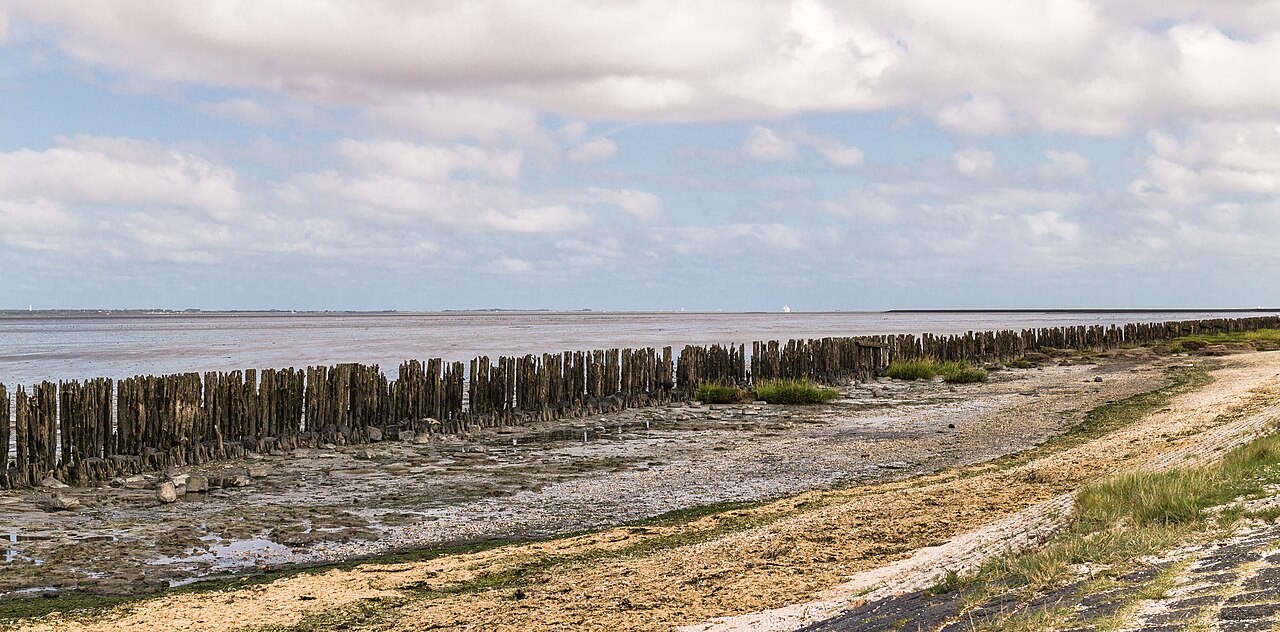
Exposed mudflats and breakwaters along the Wadden Sea near Paesens-Moddergat
Dominicus Johannes Bergsma · CC BY-SA 4.0

Wadden Sea and salt marshes

At low tide, waders feed on the exposed mudflats. As the tide comes in, they move to salt marshes and inland resting areas along the Wadden Islands and the Frisian and Groningen coast.

Typical species

  • Red Knot
  • Bar-tailed Godwit
  • Dunlin
  • Pied Avocet
  • Common Shelduck
Open water and wetland habitat in the Oostvaardersplassen
Agnes Monkelbaan · CC BY-SA 4.0

Wetlands, reedbeds and open water

The extensive reedbeds of the Oostvaardersplassen and the waters of Weerribben-Wieden reward quiet observation. In spring, birds often reveal themselves through song, while open water attracts large groups of ducks in winter.

Typical species

  • Bluethroat
  • Eurasian Bittern
  • Bearded Reedling
  • Western Marsh Harrier
  • Great Egret
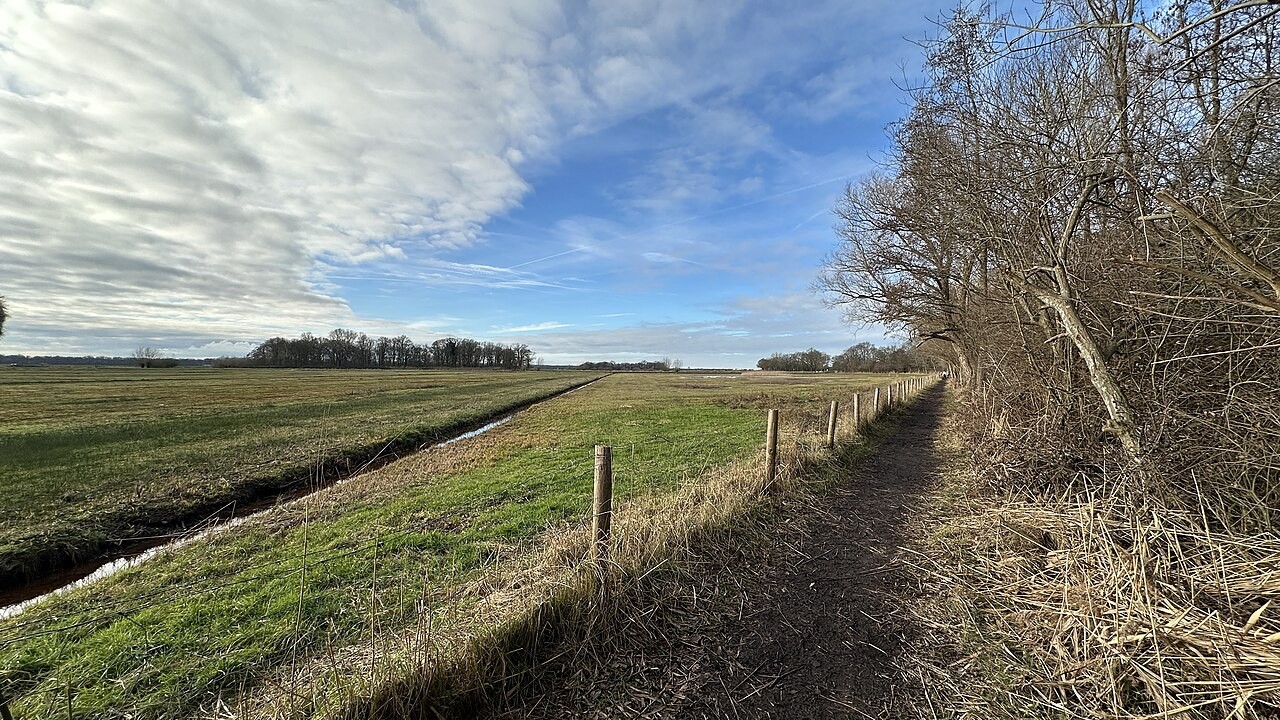
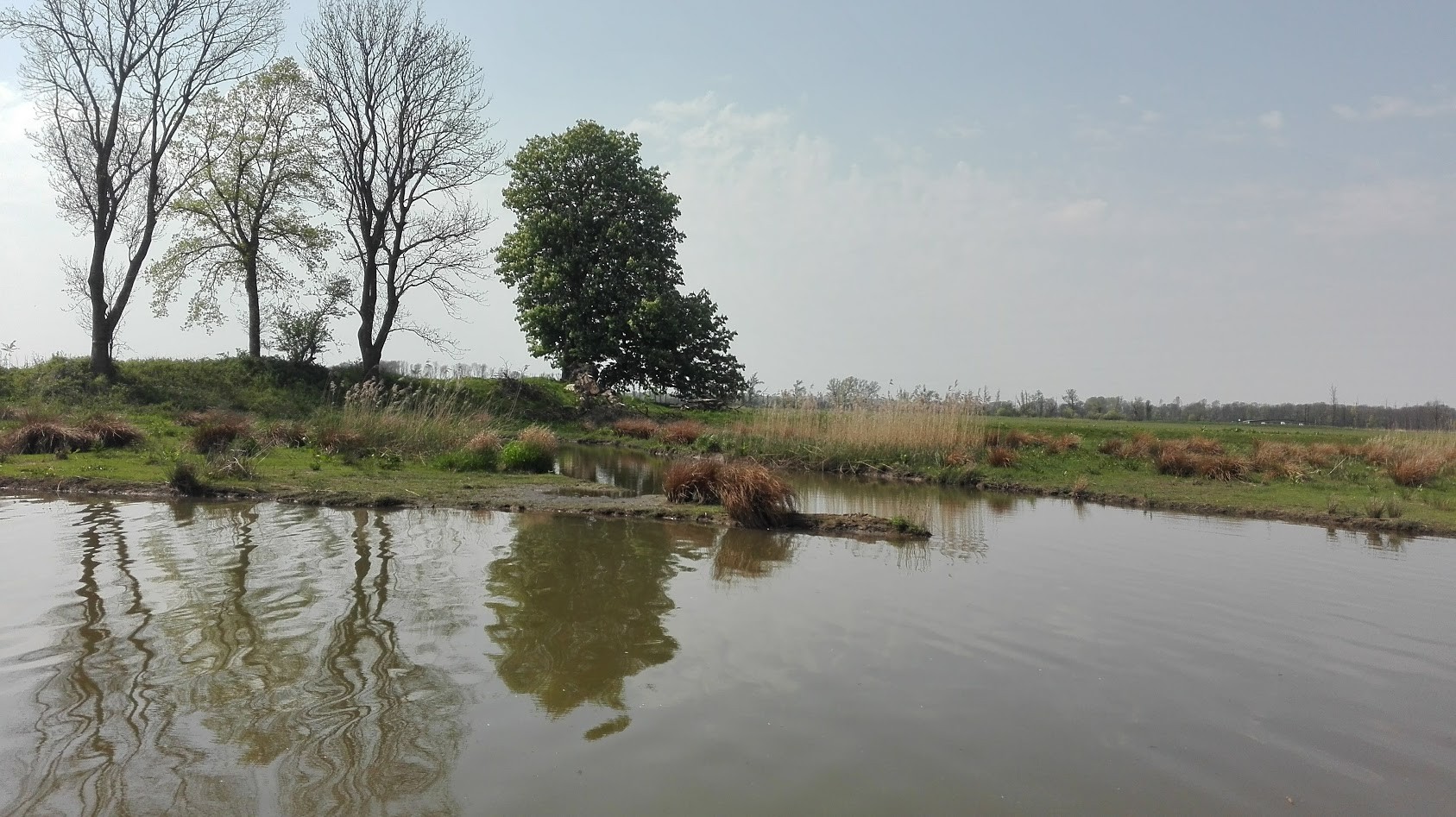
Grassland and a ditch in the Gement polder, with a path beside a row of trees
Klankbeeld · Wikimedia Commons · CC BY 4.0

Peat meadows and farmland

In Waterland, Eemland and southwest Friesland, high water levels and flower-rich meadows make the difference. Shallow flooded fields attract groups of Black-tailed Godwits in early spring. Later, meadow birds defend their breeding territories here.

Typical species

  • Black-tailed Godwit
  • Northern Lapwing
  • Common Redshank
  • Eurasian Oystercatcher
  • Eurasian Skylark
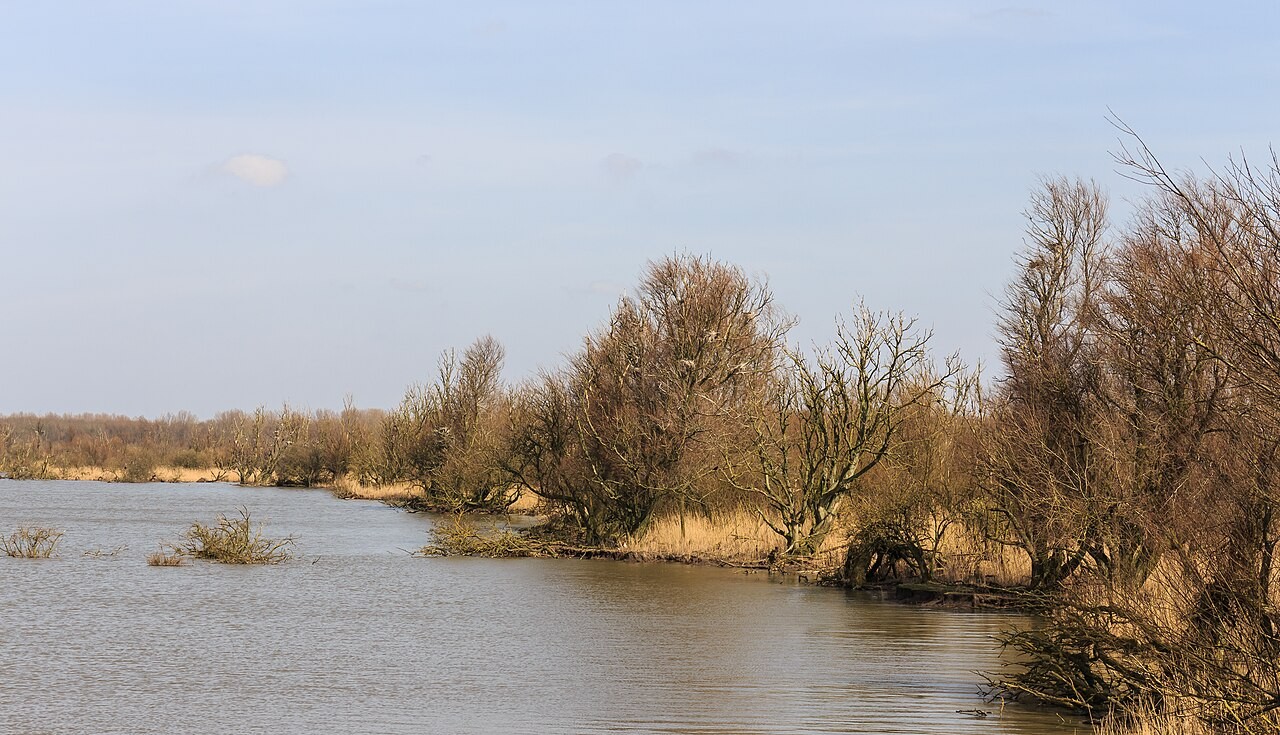
The Bevert creek winding through the Biesbosch near Werkendam
Jan Dijkstra · CC BY-SA 4.0

Rivers and the Delta

Floodplains along the Rhine, Waal and IJssel change with the water level. In the Biesbosch, freshwater tides, creeks and willow woodland come together. Around the Oosterschelde, birds feed on mudflats at low tide and rest in brackish pools when the tide is high.

Typical species

  • White-tailed Eagle
  • Osprey
  • Eurasian Spoonbill
  • Common Kingfisher
  • Pied Avocet
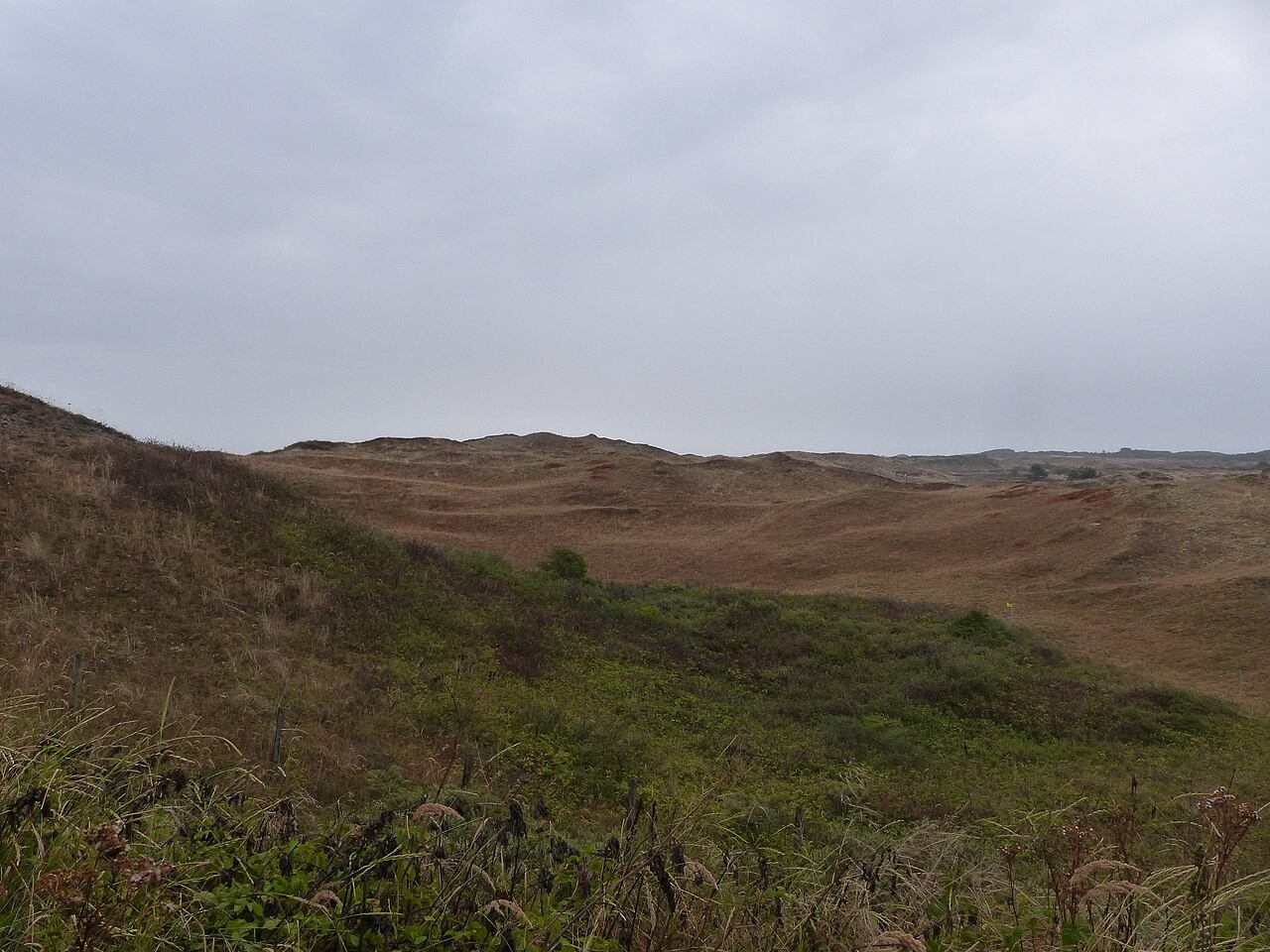
Dune landscape on Texel
Elekes Andor · CC BY-SA 4.0

Dunes and the North Sea coast

From Texel to Walcheren, the coast acts as a natural guide for migrating birds. Shrubby dunes provide cover for songbirds. With onshore winds, seabirds can move closer to the coast, especially in autumn.

Typical species

  • Common Nightingale
  • Northern Wheatear
  • Sanderling
  • Northern Gannet
  • Sandwich Tern
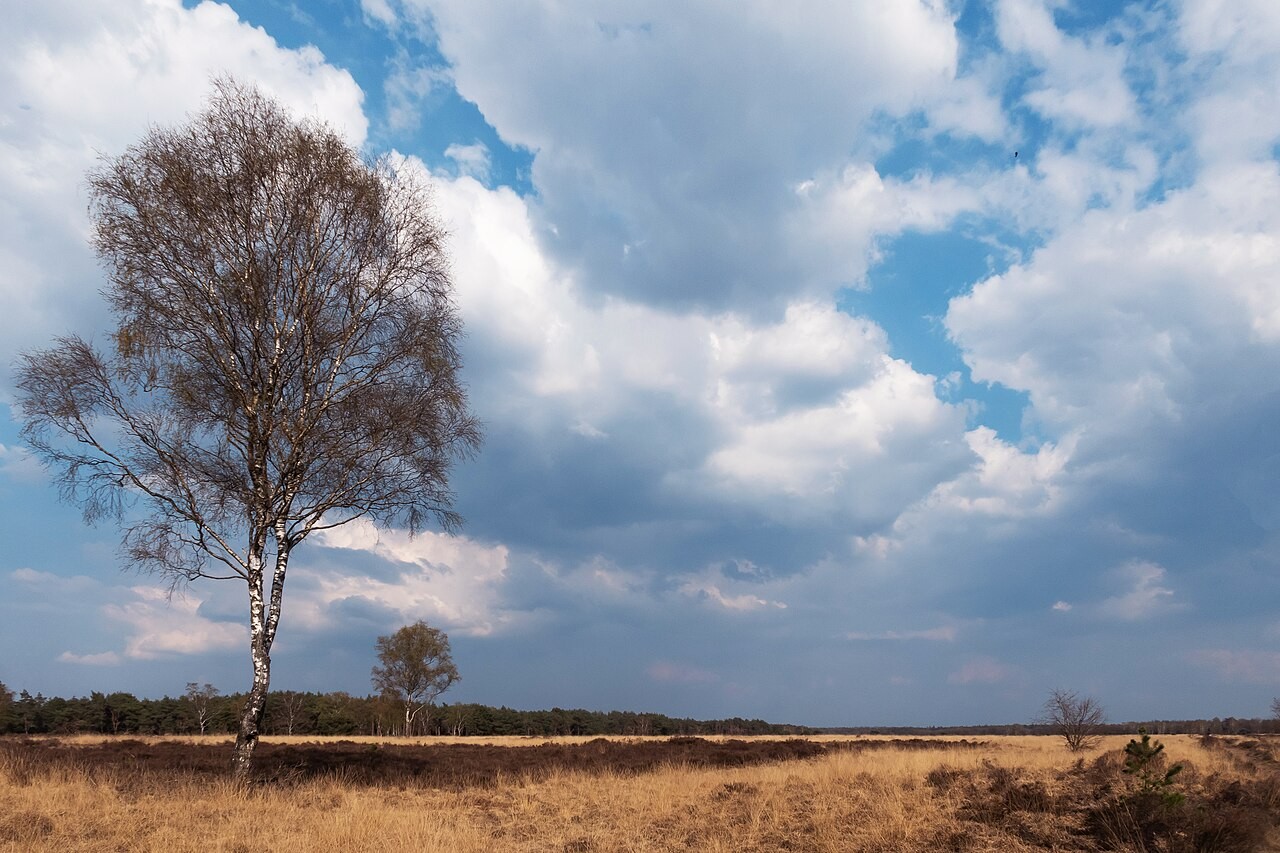
Tree and heathland between Stroe and Kootwijk on the Veluwe
Michielverbeek · CC BY-SA 4.0

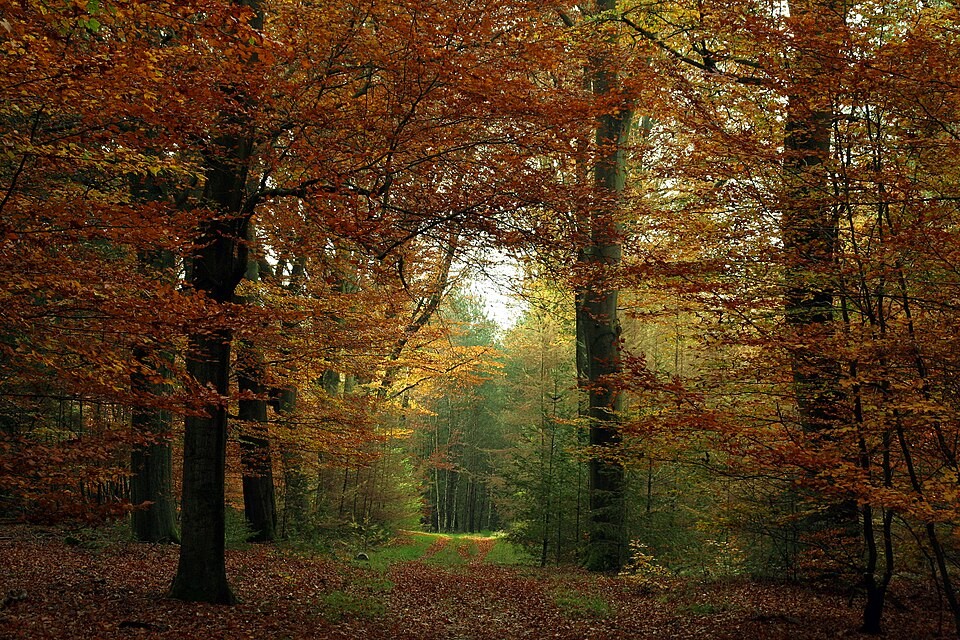
Raised bogs, heathland and woodland

The Veluwe and the sandy soils of Drenthe offer space for woodland birds and open heathland species. Fochteloërveen adds a rare raised bog landscape. In spring, explore woodland edges and listen for calls and birdsong.

Typical species

  • Black Woodpecker
  • European Honey Buzzard
  • Wood Lark
  • European Nightjar
  • Common Crane

Birdwatching throughout the year

Birding calendar for the Netherlands: what can you expect each season?

From winter geese and mergansers to singing reedbed birds and migrating waders, every season reveals a different part of Dutch biodiversity.

WinterDecember to FebruarySpringMarch to MaySummerJune to AugustAutumnSeptember to November
  1. January

    Winter

    Geese and ducks

    The Wadden Sea, Lauwersmeer, IJsselmeer, Delta and river areas attract winter groups of Greater White-fronted Geese, Barnacle Geese and Eurasian Wigeons. Mergansers and a Peregrine Falcon can also be seen over open water and farmland.

    Recommended placesGrasslands, floodplains, lakes and quiet water edges. During frost, flocks may move to other areas.

  2. February

    Winter

    Winter visitors and the first meadow birds

    Winter visitors are still present in large numbers. In mild years, the first Black-tailed Godwits return, while Northern Lapwings are already active in open farmland. Search polders and floodplains for calling and feeding birds.

    Recommended placesFrisian lakes, peat meadows, floodplains and the Wadden region.

  3. March

    Spring

    Meadow birds return

    The return of meadow birds gets underway. Black-tailed Godwits, Northern Lapwings, Common Redshanks and Eurasian Oystercatchers search for food and suitable breeding sites. From the second half of March, Bluethroats may start singing loudly in reedbeds.

    Recommended placesWet polders, grasslands beside lakes and reed-fringed ditches.

  4. April

    Spring

    Birdsong and spring migration

    Spring migration and birdsong arrive together. Bluethroats, Marsh Warblers and Barn Swallows fill reedbeds and ditch banks with sound, while waders rest along mudflats, dunes and other wetlands.

    Recommended placesLauwersmeer, Biesbosch, the Wadden Sea and coastal polders.

  5. May

    Spring

    Peak month for songbirds and wetlands

    Many summer visitors have now returned. Listen for Marsh Warblers, Icterine Warblers and Eurasian Golden Orioles, and scan shallow water for Common Terns, Black Terns and Eurasian Spoonbills. On islands and along the coast, a good migration day can produce extra species.

    Recommended placesReedbed wetlands, dunes, island polders and the southwestern Delta.

  6. June

    Summer

    Breeding season in full swing

    In peat meadows, dunes, heathland and wetlands, you can see territorial behaviour, feeding flights and sometimes newly fledged young. Stay on marked paths and give sensitive breeding areas the quiet they need.

    Recommended placesOostvaardersplassen, Biesbosch, dunes and meadow bird reserves.

  7. July

    Summer

    Autumn migration begins

    Autumn migration is already becoming visible. Waders such as Bar-tailed Godwits, Dunlins and Common Greenshanks gather on mudflats and in estuaries, while Eurasian Spoonbills make use of shallow water and muddy edges.

    Recommended placesWadden Sea, Western Scheldt, Oosterschelde and Haringvliet. Plan around high and low tide.

  8. August

    Summer

    Waders and raptor migration

    Migration gathers pace. Waders rest along the coast and large lakes, while an Osprey or European Honey Buzzard may pass over wetlands and rivers. Swallows gather before departure, bringing the evening sky to life.

    Recommended placesCoast, IJsselmeer, Biesbosch and river floodplains.

  9. September

    Autumn

    Autumn migration along the coast and wetlands

    Coast and open landscapes act as funnels for autumn migration. Northern Wheatears, Whinchats, European Stonechats, pipits and raptors use dunes, polders and dikes as stopover sites. With favourable winds, visible migration can be spectacular.

    Recommended placesWadden coast, North Sea coast, coastal dikes, polders and heathland.

  10. October

    Autumn

    Peak autumn migration

    October is often the peak of autumn migration. Look for groups of finches and thrushes, passing Meadow Pipits and raptors. In Limburg and the eastern Netherlands, Common Cranes may fly over with easterly winds.

    Recommended placesWoodland edges, coast, open fields and viewpoints with a clear horizon.

  11. November

    Autumn

    Open water and wintering birds

    Choose wide viewpoints beside open water and respect closed resting zones for wintering waterbirds. Eurasian Wigeons, Greater White-fronted Geese, Barnacle Geese, European Golden Plovers and Eurasian Curlews may gather in coastal areas, polders and river landscapes.

    Recommended placesWadden Sea, IJsselmeer, Delta and river areas.

  12. December

    Winter

    Winter visitors across the landscape

    The Netherlands becomes a winter refuge for birds from the north. Geese, ducks, thrushes and raptors concentrate where water stays open and food is available. During cold spells, flocks move to sheltered coasts and floodplains.

    Recommended placesFrisian lakes, Lauwersmeer, Zeeland Delta and the major rivers.

Seasonal information and area examples: Vogelbescherming Nederland, Natuurmonumenten and Staatsbosbeheer.

Birding areas in the Netherlands

The best birding areas in the Netherlands: where can you go birdwatching?

From the salty mudflats of the Wadden Sea to raised bogs, river landscapes and Veluwe woodland, the Netherlands offers a remarkable variety of bird habitats within a short distance. This selection brings together popular and accessible birding areas, each shaped by its own mix of tides, migration, water levels and breeding activity.

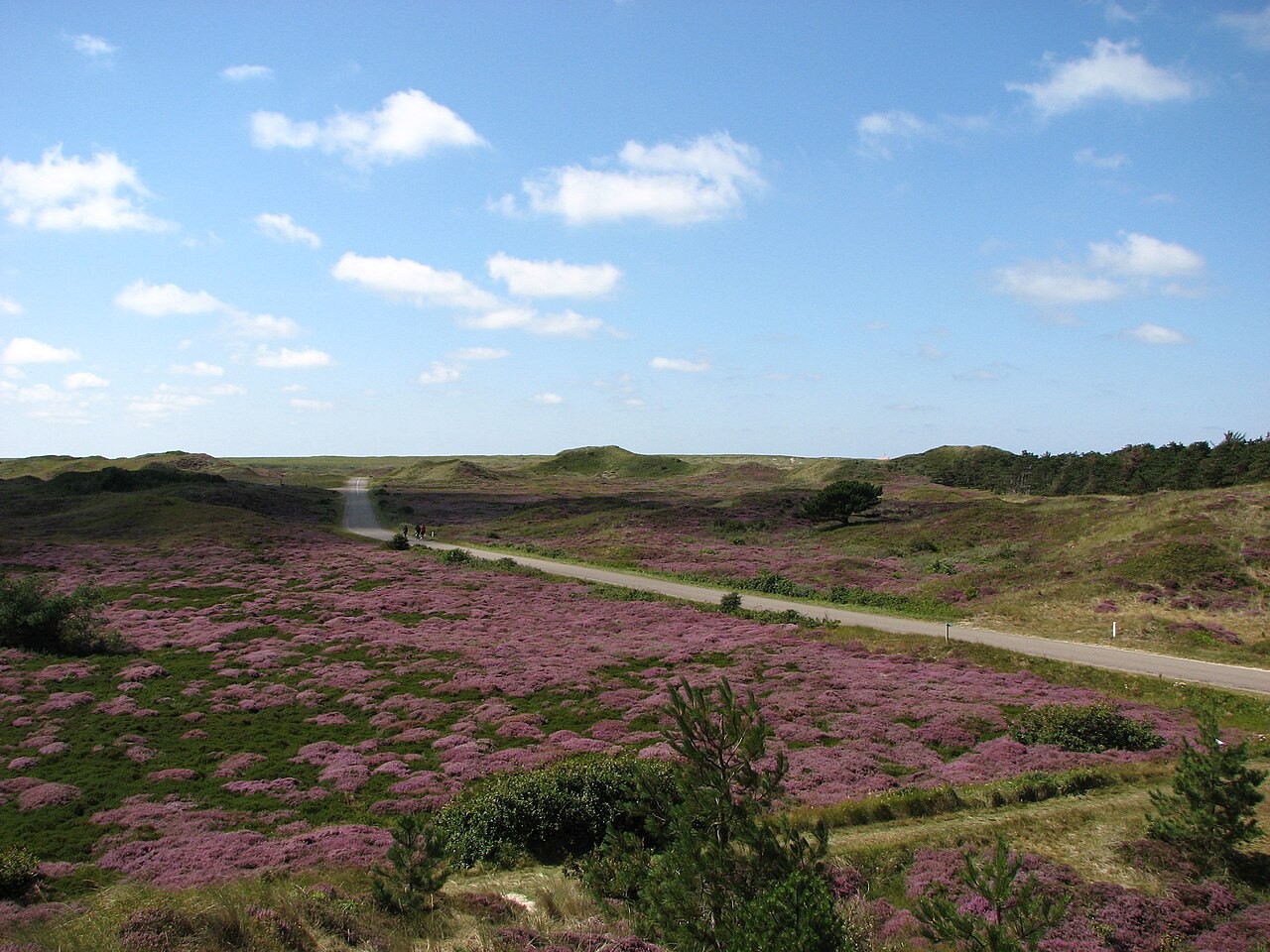
Typical dune landscape on Texel with heathland, sandy path and low dunes
Photo: Stormbeest · Wikimedia Commons · public domain

Wadden region

Mudflats · dunes · polder

Texel and the Wadden Sea

Bird Boulevard, Frisian coast and Groningen salt marshes

On Texel, mudflats, dunes and freshwater lakes are all within cycling distance. Follow the Bird Boulevard along the eastern side and combine inland lakes with views across the Wadden Sea. Along the mainland coast, the salt marshes near Holwerd and Noordpolderzijl offer a wide-open landscape with a very different character.

Look for
Red Knot, Bar-tailed Godwit, Eurasian Spoonbill, Common Eider and Brent Goose.
Plan around
The incoming tide, wind conditions and the ferry crossing to the island.
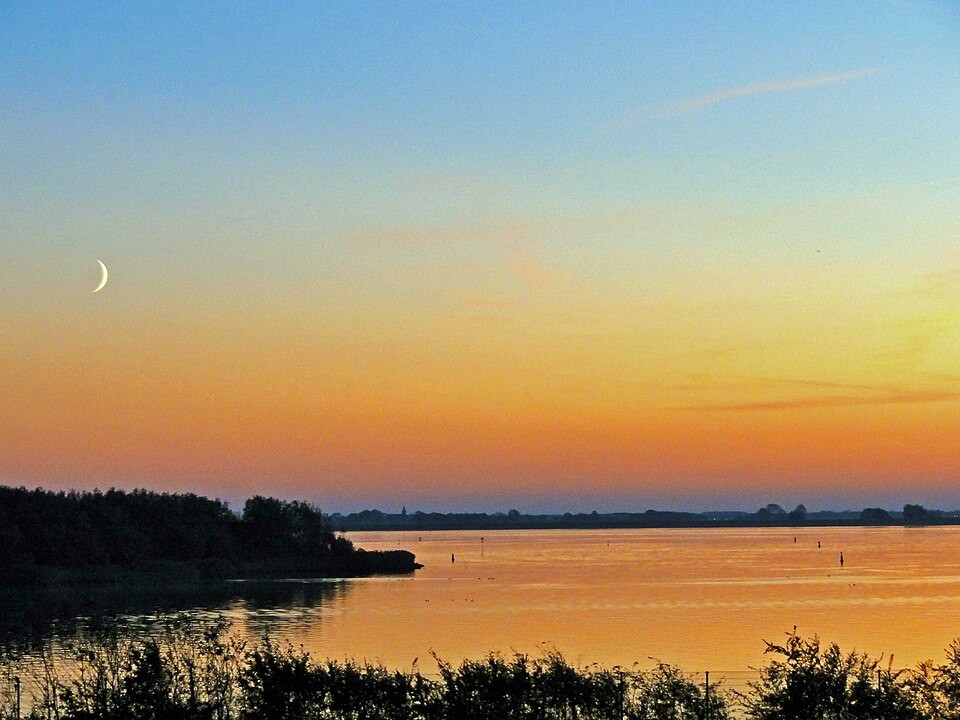
Lauwersmeer near Lauwersoog at sunset
Photo: Gouwenaar · Wikimedia Commons · CC0

Friesland and Groningen

Open water · reeds · mudflats

Lauwersmeer

From Jaap Deensgat to Ezumakeeg

This former sea inlet is now a varied landscape of freshwater, reedbeds and open grassland. In spring and autumn, the shallow shores attract many waders, while large groups of geese and ducks arrive in winter. Visit several viewpoints, as wind and water levels strongly influence where the birds gather.

Look for
White-tailed Eagle, Eurasian Spoonbill, Pied Avocet, Eurasian Teal and Barnacle Goose.
Plan around
Water levels, shelter and the distance between viewpoints.
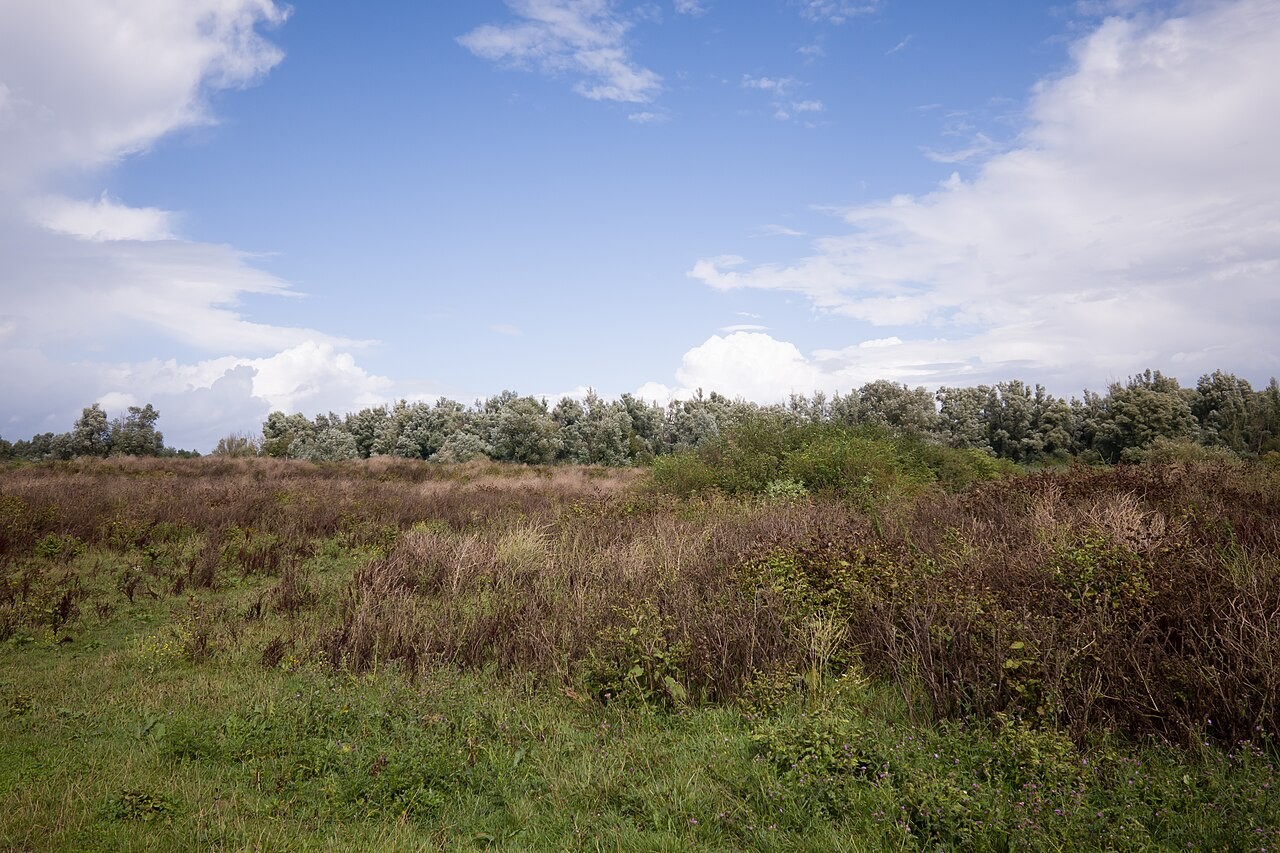
Landscape with shrubs and trees in the Oostvaardersplassen
Photo: © Alice Wiegand · Wikimedia Commons · CC BY-SA 4.0

Flevoland

Wetland · reedbed

Oostvaardersplassen

Between Almere and Lelystad

Extensive reedbeds and open water make this an excellent area for wetland birds and White-tailed Eagles. Start at the visitor centre on the Lelystad side or at De Oostvaarders in Almere. You can see many species from the accessible edges, while the closed core area provides the birds with peace and quiet.

Look for
White-tailed Eagle, Bearded Reedling, Bluethroat and Great Egret.
Plan around
Your chosen entrance, morning light and seasonal closures.
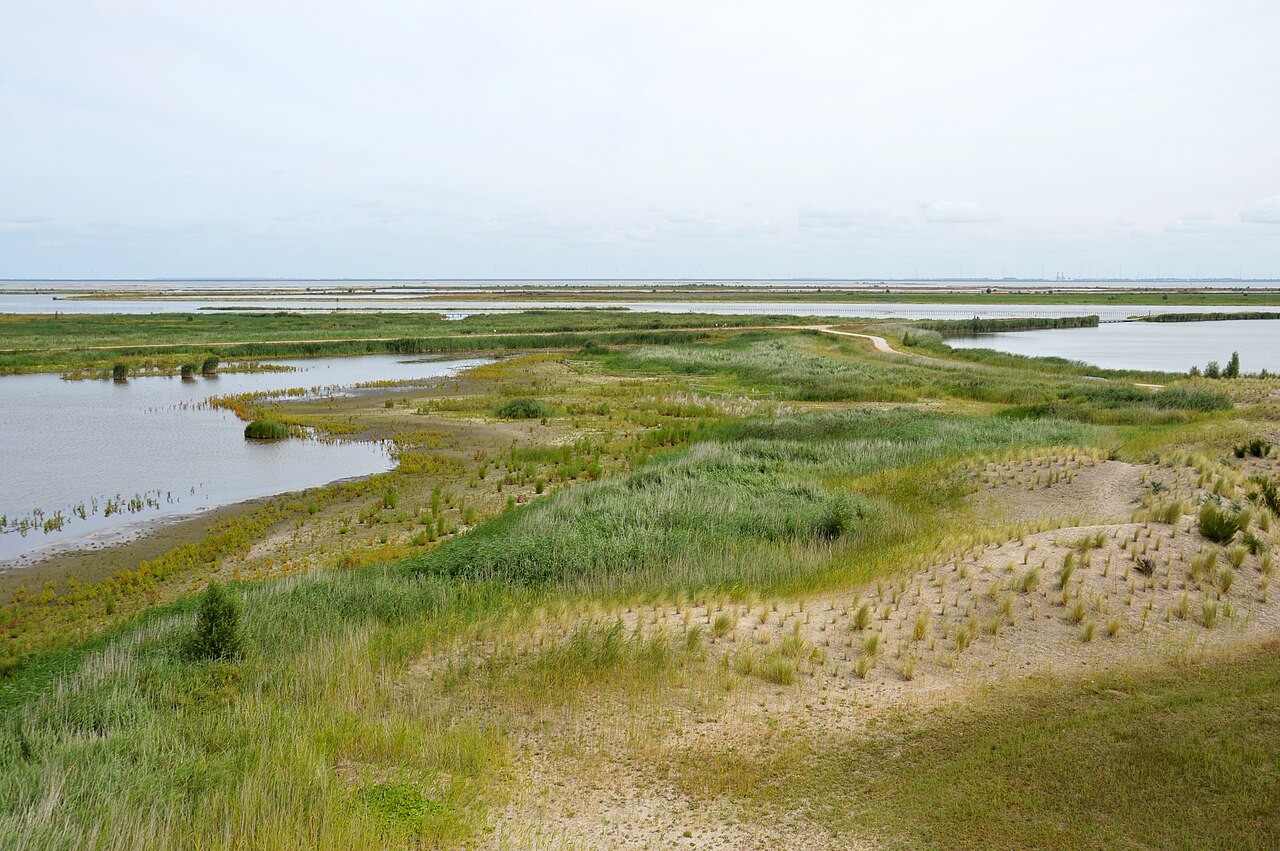
Shallow water, reedbeds and sandy shores on Marker Wadden
Photo: DimiTalen · Wikimedia Commons · CC0

Flevoland

Islands · mudflats · open water

Marker Wadden

A day on the islands in Lake Markermeer

These man-made nature islands offer birds shallow water, mudflats and reedbeds in the middle of Lake Markermeer. From the harbour island, you can walk to several hides and an observation tower. In this open landscape, bird behaviour is easy to watch: terns dive for fish and waders feed along the waterline.

Look for
Common Tern, Pied Avocet, Common Ringed Plover, Bearded Reedling and Eurasian Spoonbill.
Plan around
A reserved boat crossing, return time and the wind forecast.
Water and reedbeds in the Noordwaard area of the Biesbosch
Photo: Tymorias · Wikimedia Commons · CC BY-SA 4.0

North Brabant and South Holland

Freshwater tides · creeks

The Biesbosch

Noordwaard, Hardenhoek and Dordtse Biesbosch

Wide creeks, willow woodland and shallow polders give the Biesbosch its distinctive character. The open parts of Noordwaard attract many waterbirds and raptors. From the water, you experience the creeks at close range, while dikes and viewpoints offer a quiet way to scan the open landscape for birds.

Look for
White-tailed Eagle, Osprey, Bluethroat, Common Kingfisher and Eurasian Spoonbill.
Plan around
The area you want to visit, water levels and any excursion or boat trip.
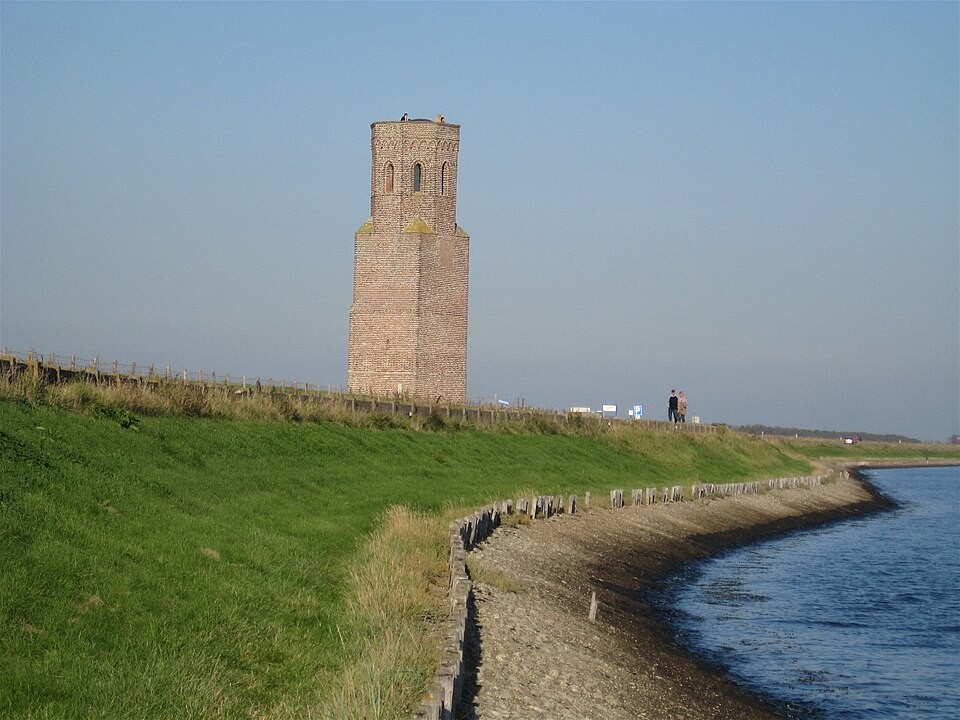
Plompe Tower beside the Oosterschelde near Schouwen
Photo: A. van der Linde · Wikimedia Commons · CC BY-SA 3.0

Zeeland

Brackish water · mudflats · inland pools

South coast of Schouwen

Prunje, inland pools and Plompe Tower

Along the Oosterschelde, the sea dike overlooks a varied landscape of mudflats, brackish pools and wet grassland. Inland nature reserves provide resting areas when the mudflats are covered at high tide. Combine the Prunje with a stop at Plompe Tower for wide views across the Zeeland landscape.

Look for
Pied Avocet, Common Redshank, Eurasian Spoonbill, Brent Goose and Barnacle Goose.
Plan around
The Oosterschelde tide and the location of resting areas.
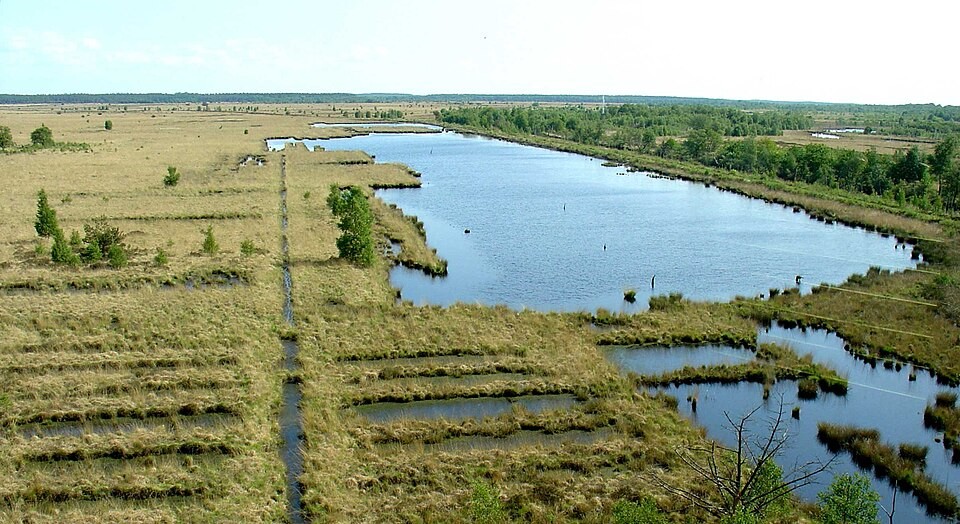
Open raised bog landscape of Fochteloërveen
Photo: Gouwenaar · Wikimedia Commons · CC0

Friesland and Drenthe

Raised bog · open landscape

Fochteloërveen

View the raised bog from De Zeven observation tower

This is one of the Netherlands' special raised bog areas, where Common Cranes have bred again since 2001. From De Zeven, you can look out across the open peatland, with pools, wet heath and wide stretches of raised bog. Seeing a Common Crane is always special, but Whinchats, other songbirds and hunting raptors also make a visit worthwhile.

Look for
Common Crane, Whinchat, European Stonechat and Hen Harrier in winter.
Plan around
Accessible paths, quiet zones and closed roads.
Woodland path in Veluwezoom National Park
Photo: Leen Pauwels · Wikimedia Commons · CC BY-SA 3.0 NL

Gelderland

Mature woodland · heathland · glacial ridge

Veluwezoom National Park

Woodland near Rheden and heathland around Posbank

For woodland and heathland birds, Veluwezoom offers a very different landscape from the watery birding areas elsewhere in the Netherlands. Walk early along woodland edges and listen for woodpeckers. Above the heath, you may hear Wood Larks, while on warm days raptors can appear over the landscape later in the morning.

Look for
Black Woodpecker, Common Raven, Wood Lark, European Honey Buzzard and European Stonechat.
Plan around
An early start, opening hours and busy periods around Posbank.

Iconic birds of the Netherlands

Five special Dutch birds and where to see them

From the elegant Eurasian Spoonbill and iconic Black-tailed Godwit to the striking Pied Avocet, mysterious Eurasian Bittern and impressive White-tailed Eagle, these are five of the Netherlands' most remarkable birds. Find out where to see them and why they belong on every birder's list.

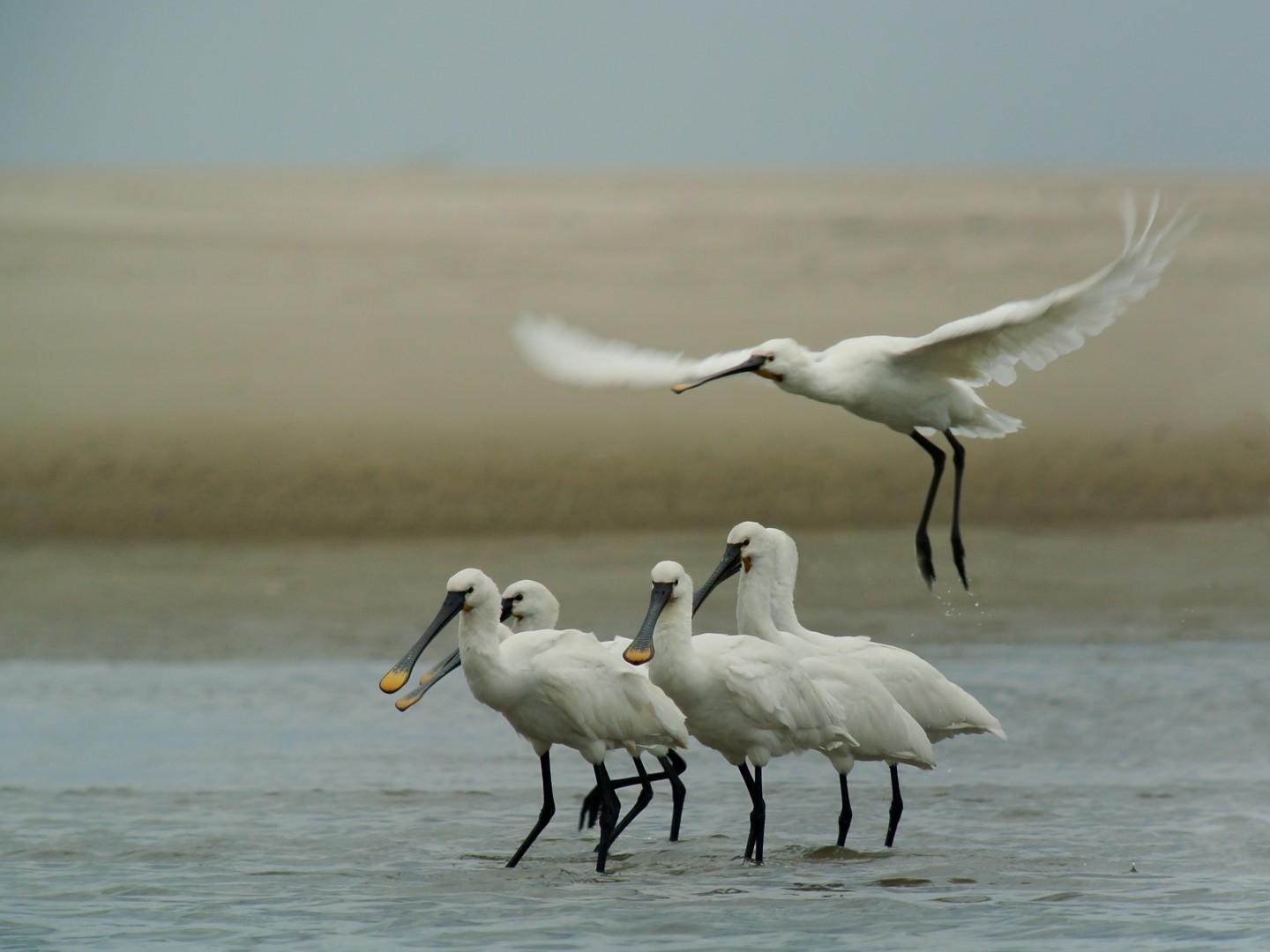
  1. Eurasian Spoonbills in a shallow lagoon on Schiermonnikoog
    Photo: Frank Vassen, Wikimedia Commons, CC BY 2.0

    Eurasian Spoonbill

    The white Eurasian Spoonbill is a familiar sight along the Wadden Sea and in other shallow wetlands. Look for its long, flat bill as it sweeps through the water to find food.

    Where can you see Eurasian Spoonbills in the Netherlands?

    • Wadden region, especially Texel, Schiermonnikoog and the Groningen Wadden coast
    • Nieuw Land National Park, including Lepelaarplassen, Oostvaardersplassen and Marker Wadden
    • Southwestern Delta, the Oosterschelde and Western Scheldt, including Saeftinghe
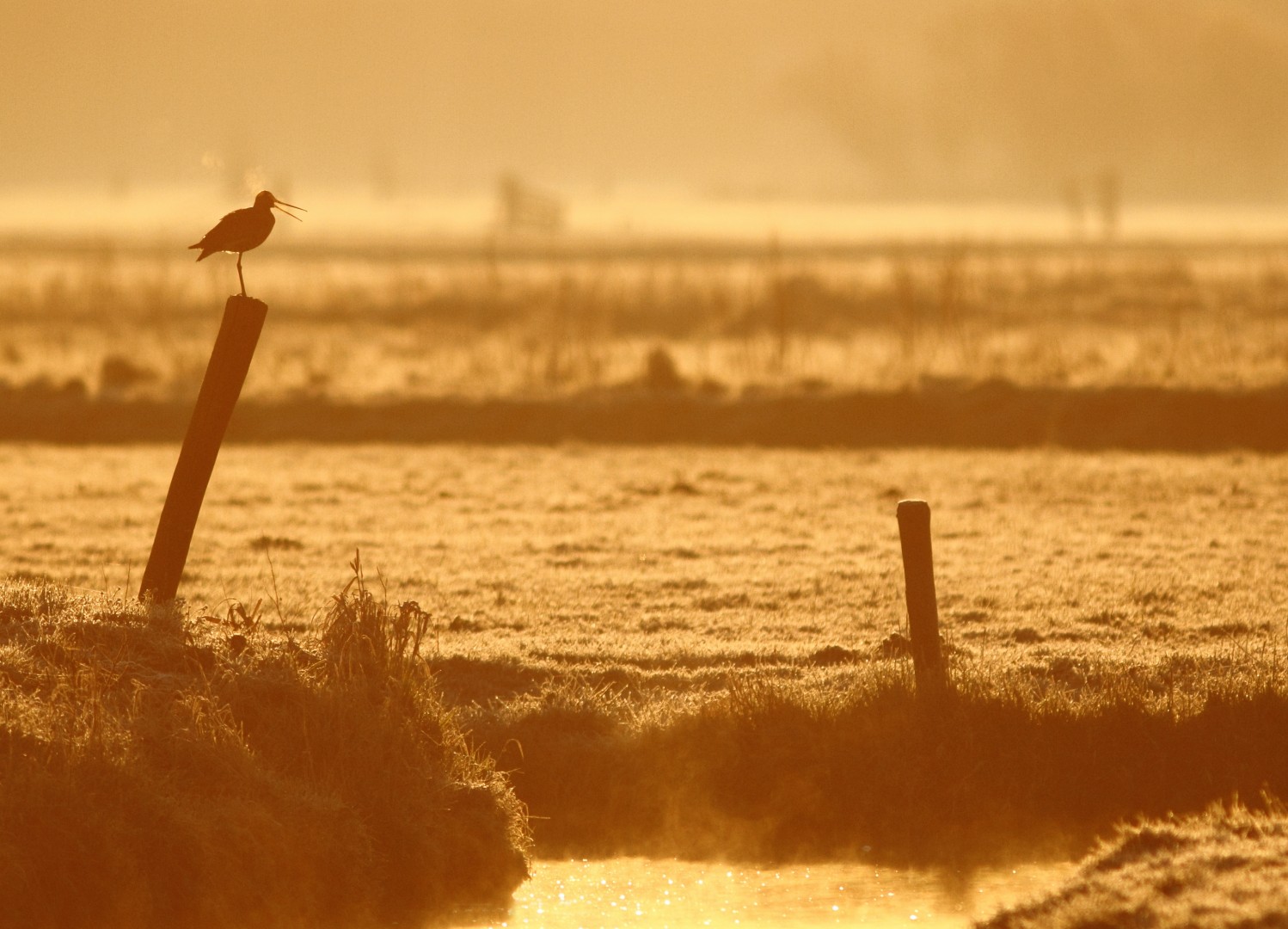
  2. Black-tailed Godwit at sunrise in the Dutch peat meadow landscape
    Photo: Bouke ten Cate, Wikimedia Commons, CC BY-SA 4.0

    Black-tailed Godwit

    The Black-tailed Godwit is the sound of spring in the Netherlands. In wet meadow bird areas, you can see it displaying, sounding the alarm and feeding beside ditches. It is a classic species for anyone who wants to see meadow birds in the Netherlands.

    Where can you see Black-tailed Godwits in the Netherlands?

    • Eemland, open, wet grasslands around Lake Eemmeer
    • Waterland and Polder Zeevang, wet peat meadows north of Amsterdam
    • Southwest Friesland, flower-rich Frisian meadow bird areas and shallow flooded fields
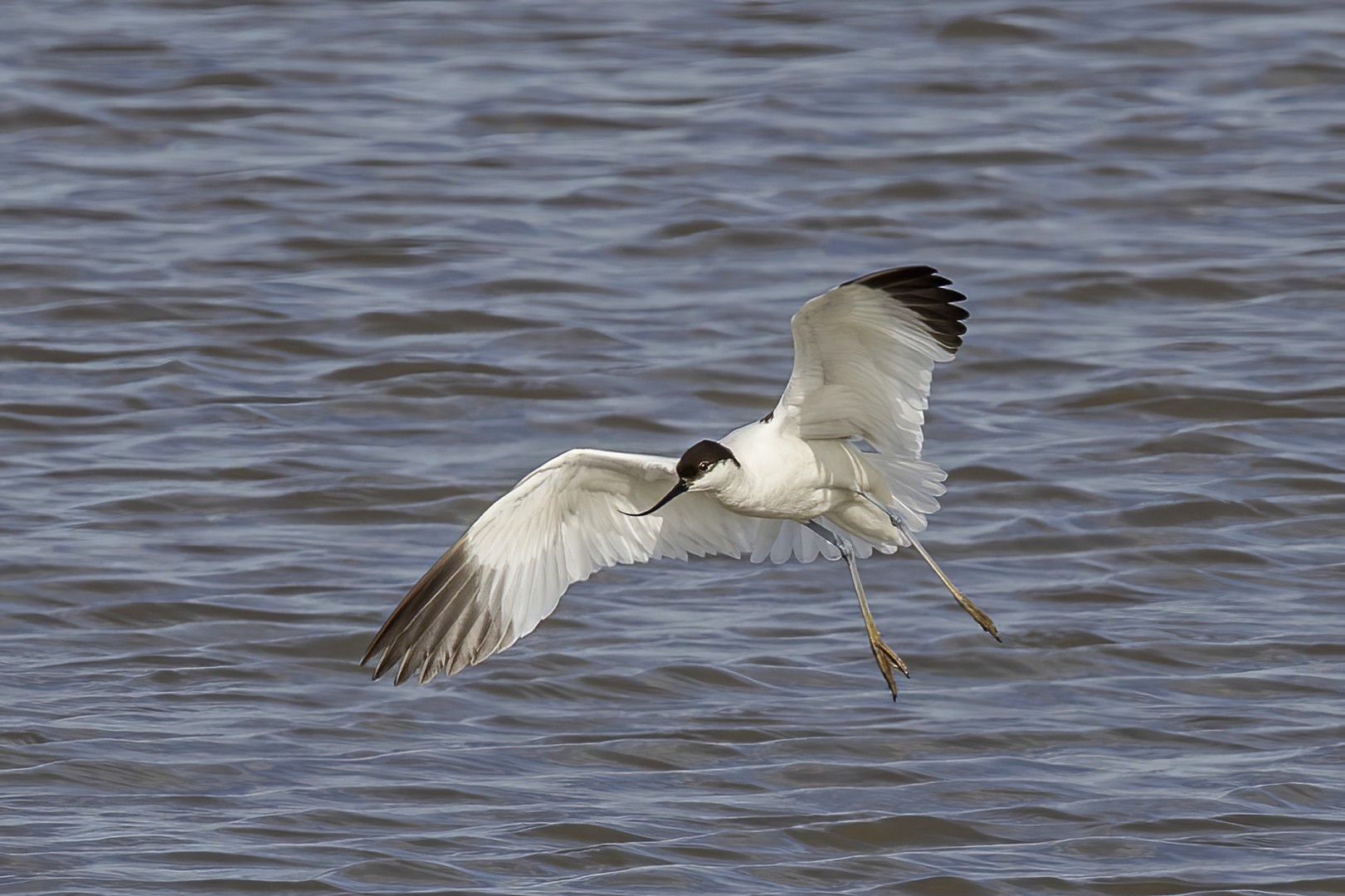
  3. Pied Avocet in adult plumage, flying low over the water
    Photo: Charles J. Sharp, Wikimedia Commons, CC BY-SA 4.0

    Pied Avocet

    With its upturned bill and black-and-white plumage, the Pied Avocet is unmistakable. Look for it around coastal lagoons, salt marshes and shallow lakes, where it sweeps its bill from side to side to find food.

    Where can you see Pied Avocets in the Netherlands?

    • Wadden Sea, the coasts of Texel, Friesland and Groningen, including the Dollard
    • Oosterschelde, mudflats, salt marshes and new nature areas in Zeeland
    • Haringvliet, Grevelingen and Krammer-Volkerak, important waters in the southwestern Delta
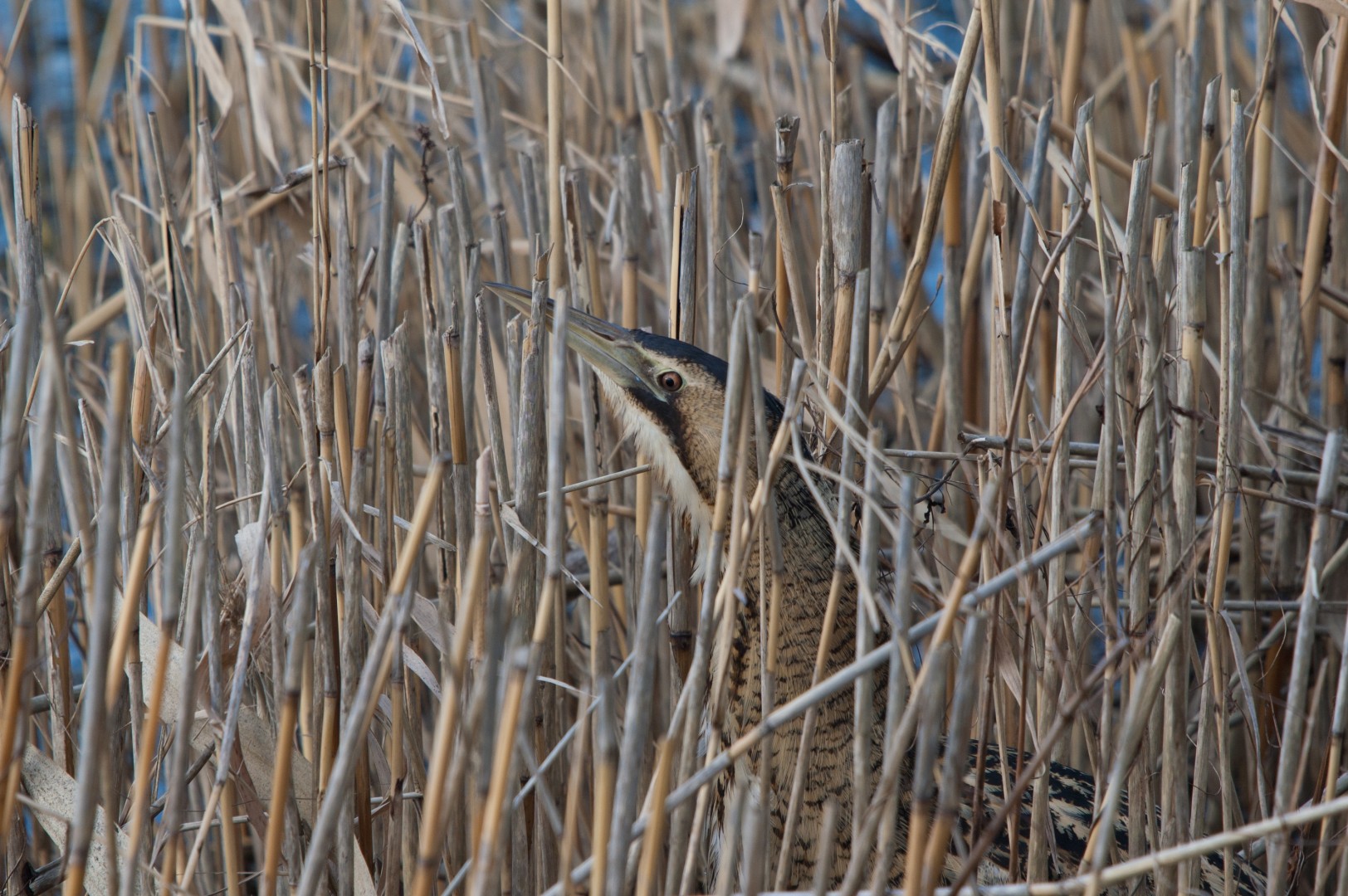
  4. Eurasian Bittern hidden among reeds
    Photo: Peter Nijland, Wikimedia Commons, CC BY-SA 4.0

    Eurasian Bittern

    This secretive reedbed heron is more often heard than seen. Patience pays off: between the reed stems, you may suddenly spot its striped neck and heavy bill. It is a species best enjoyed through quiet observation.

    Where can you see Eurasian Bitterns in the Netherlands?

    • Weerribben-Wieden, extensive lowland peat wetlands with large reedbeds
    • Oostvaardersplassen, reedbeds and shallow water in Flevoland
    • Zwarte Meer and Drontermeer, important reed areas in the IJssel Delta and Veluwe lakes
    • Vechtplassen and Ilperveld, promising peat wetlands around Utrecht and Amsterdam
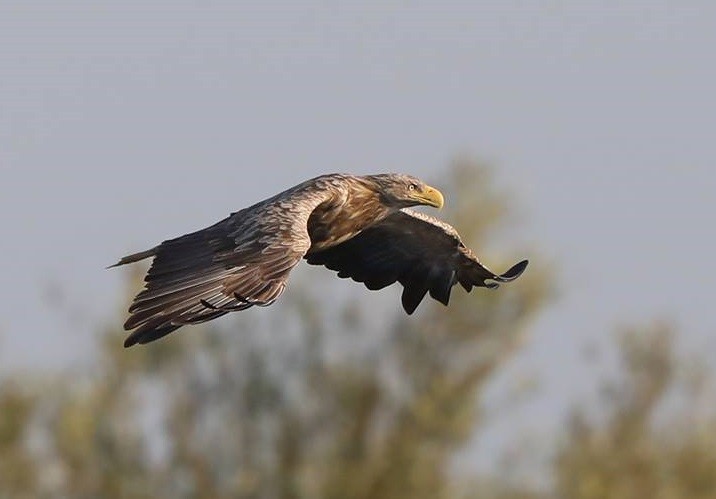
  5. White-tailed Eagle flying over the Biesbosch
    Photo: DaMatriX, Wikimedia Commons, CC BY-SA 4.0

    White-tailed Eagle

    The White-tailed Eagle is the impressive raptor of the Dutch delta and large wetland areas. Adults stand out with their broad wings and white tails. Look high above lakes, rivers and rugged floodplains.

    Where can you see White-tailed Eagles in the Netherlands?

    • The Biesbosch, especially Noordwaard and Tongplaat
    • Oostvaardersplassen and Lepelaarplassen, large wetlands with abundant fish and waterbirds
    • Lauwersmeer, from the southern viewing hill or near Ezumakeeg
    • De Alde Feanen and the Frisian lakes, watery landscapes with good feeding conditions

Helpful tips and information

Practical questions about birdwatching in the Netherlands

Want to know where you have the best chance of seeing migrating birds in the Netherlands, how to reach birding areas or what you need for a successful visit? Below you will find practical information about birding areas, bird hides, access, tides and current sightings.

For large numbers and a wide variety of migrating birds, the Wadden Sea, southwestern Delta and IJsselmeer region are the best places to start. In spring and autumn, Texel, Schiermonnikoog, the Frisian coast and Balgzand are especially interesting. Around high tide, waders and ducks gather on salt marshes and high-tide roosts, so you can watch large flocks from a dike or viewpoint.

In the southwestern Delta, Haringvliet, Oosterschelde and Western Scheldt are important for coastal birds, Eurasian Spoonbills and terns. Marker Wadden and the Oostvaardersplassen are strong choices for migrating waterbirds and wetland species. You can also view the overview of important bird areas in the Netherlands.

There are several bird-rich places you can reach without a car, although the final kilometres may require walking, cycling or taking a ferry. Zuid-Kennemerland National Park is one of the easiest options. From Overveen railway station, it is about a fifteen-minute walk to De Kennemerduinen Visitor Centre. Bus 81 from Haarlem also stops at De Kennemerduinen.

For Marker Wadden, take public transport to Bataviahaven in Lelystad and continue by ferry. On the western side of the Oostvaardersplassen, De Oostvaarders nature centre is about a thirty-minute walk from Almere Oostvaarders station. Check current routes and timetables before you leave through Zuid-Kennemerland National Park, Natuurmonumenten and the transport provider.

Many bird hides and viewpoints can be visited without a separate entrance ticket. Natuurmonumenten has a nationwide overview of viewpoints and bird hides, including bird-rich routes around Naardermeer. In the Oostvaardersplassen, you can visit De Zeearend hide, the Praambult viewpoints and several locations along the Oostvaardersdijk from the edges of the reserve.

Along the Wadden coast, dike viewpoints such as Zwarte Haan and the area around Den Oever are easy to reach. Keep in mind that parking, a ferry or a guided excursion may still cost money. Always check whether a viewpoint is temporarily closed to give birds some peace and quiet. View the Natuurmonumenten overview, the birdwatching locations in the Oostvaardersplassen and the information about Zwarte Haan.

Useful starting points for birders include the Oostvaardersplassen Visitor Centre in Lelystad, De Oostvaarders Nature Centre in Almere, Biesbosch Centre Dordrecht and De Kennemerduinen Visitor Centre in Overveen.

You can usually find area maps, walking and cycling routes, current access rules and activities there. In the Biesbosch, visitor centres are also departure points for boat trips and canoe tours. Opening hours and programmes vary by season, so check them with the site manager before you visit.

There is no single nationwide access policy for all nature reserves and national parks. In many areas, you can walk for free on marked paths during the day, but some sections may be closed or accessible only with a guide. Staatsbosbeheer says that most of the nature it manages is accessible, with local rules at the entrance.

Costs often relate to parking, a ferry, a visitor centre or an excursion. Natuurmonumenten charges a contribution at several car parks for non-members, including multiple entrances to Zuid-Kennemerland National Park. Before you leave, check access, parking, dog rules and temporary closures with the site manager. See the Staatsbosbeheer access rules and the current information about the Natuurmonumenten parking contribution.

For large flocks, the incoming tide and high tide are usually the most impressive. At low tide, many waders feed on the exposed mudflats. As the water rises, they move to high-tide roosts to rest. From a dike or official viewpoint, you can then see large groups of Red Knots, Eurasian Oystercatchers, Eurasian Curlews, Bar-tailed Godwits and Pied Avocets.

Ideally, plan your visit around one to one and a half hours before high tide and keep your distance from resting areas. At low tide, birds are more spread out, but you can often see their feeding behaviour more clearly. Check tide times beforehand and follow local guidance. Visit Wadden explains this for Zwarte Haan and also provides information about suitable viewpoints along the Wadden coast.

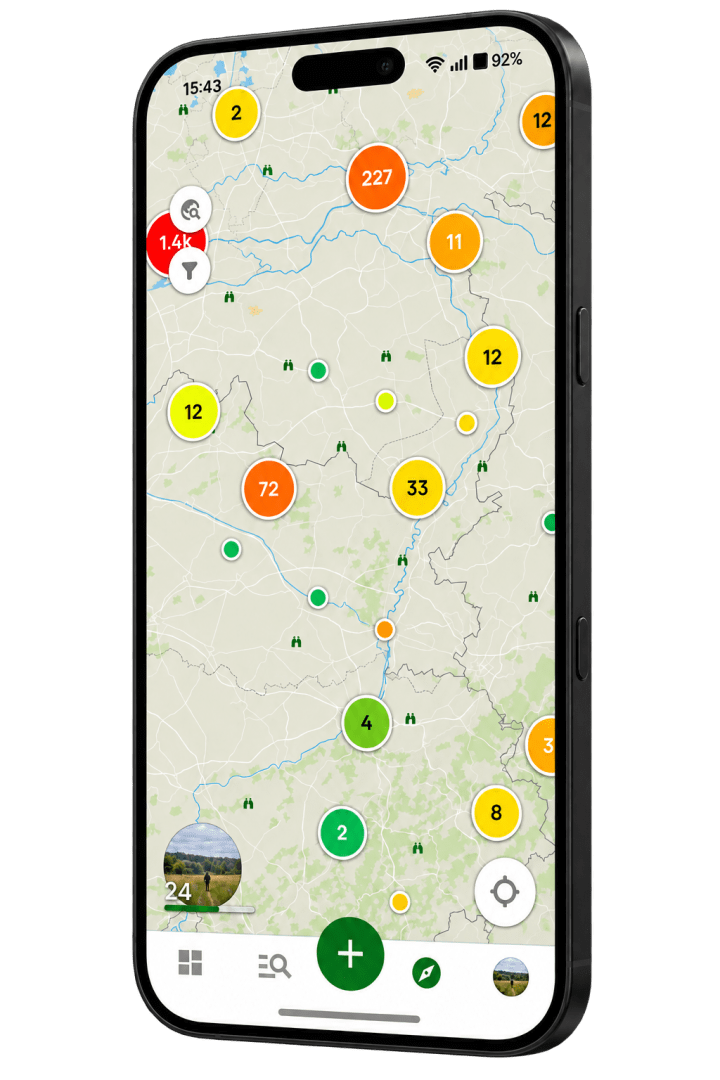
On FaunaMap, you can find current bird sightings from the Netherlands on an interactive map. You can easily record your own field observations and view sightings from other users. You will also find birdwatching hotspots worldwide, plus expected species for each location based on more than twenty years of historical data.

Open FaunaMap before you leave to choose an interesting area and record what you find.

View current sightings in FaunaMap

Discover more while birdwatching

  • See recent bird sightingsSee which birds have recently been spotted near you.
  • Explore biodiverse nature areasFind the best places to spot birds and other wildlife.
  • Find sightings by speciesQuickly find sightings of the bird species you want to see.